 lop News
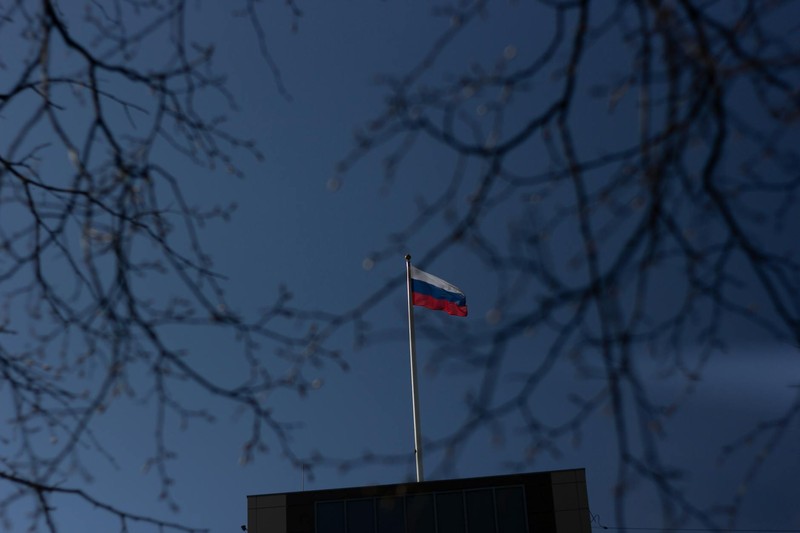
For seven decades, India kept foreign soldiers off its soil as a matter of sovereign principle. That principle now has an expiration date.
India and Russia have signed a defense agreement allowing the two countries to share military bases, ports, and airfields — and to station up to 3,000 troops on each other’s territory, according to Nikkei Asia. The pact marks the most significant deepening of Delhi-Moscow military cooperation in years, and a quiet departure from the diplomatic tradition that once defined India’s place in the world.
A Posture Abandoned
India was the cornerstone of the Non-Aligned Movement, the Cold War coalition of nations that refused to choose between Washington and Moscow. The principle was not merely strategic. It was foundational to how India saw itself: a democracy that traded with everyone, depended on no one, and hosted no foreign military presence.
The new agreement does not establish permanent bases. But allowing another country’s warships in your ports and soldiers on your territory is a different order of intimacy than buying fighter jets or running joint exercises. Analysts cited by Nikkei Asia describe the pact as a signal of deepened trust between Moscow and Delhi.
The timing sharpens the symbolism. Russia remains under comprehensive Western sanctions for its invasion of Ukraine. India has declined to condemn the invasion at the United Nations, continued purchasing discounted Russian crude, and maintained defense procurement ties that predate the Soviet collapse.
Simultaneously, Delhi has been strengthening its relationships with Washington, Tokyo, and Canberra through the Quad security dialogue, casting itself as a counterweight to China in the Indo-Pacific. The apparent contradiction is the strategy: India wants Russian arms, American alliances, and European investment — and has so far managed all three without paying a visible diplomatic price.
This agreement tests that balance. For Moscow, it is proof that a major power is willing to deepen military cooperation despite the Western sanctions regime. For Washington and its allies, it is a fresh complication. The more integrated India’s military infrastructure becomes with Russia’s, the harder it is to treat India as a reliable partner in any coordinated effort to isolate Moscow.
The Missing Third Party
The most notable absence from the agreement is the country it does not mention. Russia’s strategic partnership with China has intensified since 2022, driven partly by Moscow’s economic and diplomatic isolation. India and China, meanwhile, remain locked in a tense military standoff along their Himalayan border — a dispute that has produced casualties on both sides in recent years.
The pact suggests Delhi believes it can sustain a separate relationship with Moscow regardless of how closely Russia and China align, according to Nikkei Asia’s analysts. Whether that assumption holds is less certain. Moscow’s growing economic dependence on Beijing would make any forced choice between the two partnerships straightforward — and unlikely to favor Delhi.
What the Framework Actually Permits
The practical consequences depend on implementation details that have not been publicly disclosed. The agreement permits up to 3,000 troops, shared port access, and airfield usage. Whether those provisions are exercised regularly or left dormant as a diplomatic signal is a question of political will, not legal authority.
India and Russia already conduct joint military exercises. The difference now is institutional: a legal basis that normalizes the presence of Russian forces on Indian territory, and Indian forces on Russian soil. In peacetime, that could mean logistics coordination and routine port calls. In a crisis, the infrastructure would already be in place.
The Bets Being Placed
The agreement fits a broader pattern. India has been systematically diversifying its strategic relationships — acquiring French aircraft, joining American-led security arrangements, sustaining Russian defense supplies, and now opening its military infrastructure to Moscow. It is the diplomatic equivalent of portfolio hedging.
Whether that approach holds depends on how much pressure the West chooses to apply. Washington has signaled, so far, that it needs Delhi as a counterweight to Beijing more than it needs India to sever ties with Moscow. There is little indication that calculation is about to change.
For India, the pact is a wager that the emerging multipolar order rewards flexibility over allegiance. For Russia, it is evidence that sanctions have not produced total isolation. And for the principle that the world’s largest democracy would remain genuinely non-aligned, it is the latest — and most concrete — contradiction.
Discussion (8)