 lop News
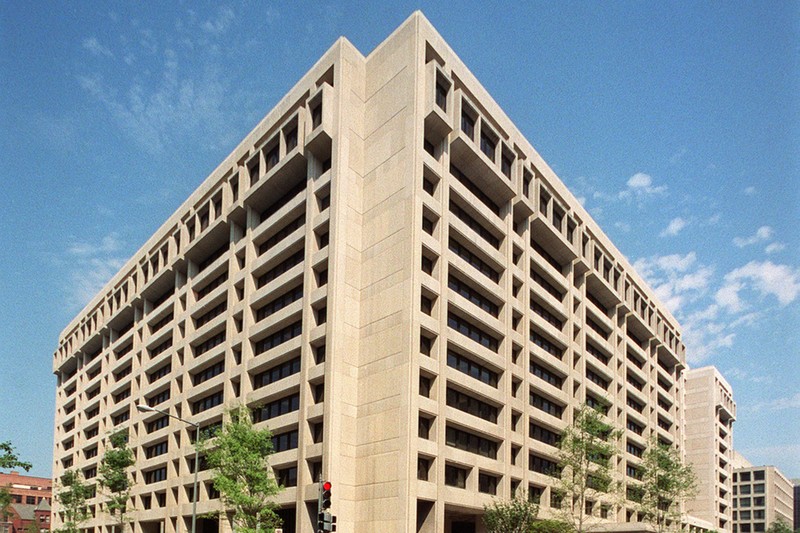
The International Monetary Fund doesn’t use the word “recession” lightly. It used it today.
In its latest World Economic Outlook update, released April 14, the Fund cut its global growth forecast and issued a blunt warning: if the war involving Iran escalates further, the world economy could contract. Not slow down. Contract. The distinction matters, and the IMF chose its language with the deliberate precision of an institution that knows governments are watching.
According to Reuters, the revised outlook reflects mounting damage from the conflict — specifically its disruption of energy markets and critical shipping routes in the Middle East. The IMF’s baseline forecast already bakes in some economic drag from the fighting. What grabbed attention was the downside scenario: a broader confrontation that could push global output below zero.
The Transmission Mechanism: Oil, Trade, and the Strait of Hormuz
The pathway from geopolitical crisis to global recession runs through two chokepoints — one literal, one financial.
The literal one is the Strait of Hormuz, through which roughly one-fifth of the world’s oil supply transits daily. Any sustained disruption to that flow sends crude prices spiking, and spikes in oil prices have a reliable historical habit of preceded recessions. The 1973 oil embargo, the 1990 Gulf War, the 2008 price surge — the pattern is well-established enough that the IMF doesn’t need to spell it out. The Fund’s warning implicitly draws on this history.
The financial transmission works in parallel. Higher energy costs feed directly into producer prices, which feed into consumer prices, which force central banks to choose between tolerating inflation or choking off growth with higher interest rates. Most major central banks have already spent the last two years fighting inflation. They are not well-positioned to absorb another supply-side shock.
The IMF’s updated growth figures — the specific numbers that form the backbone of this revision — reflect both the damage already done and the risk of what comes next. The Fund’s language in the accompanying statement was calibrated to land on the desks of finance ministers and heads of state with maximum urgency. This was not a routine data release. It was a warning shot aimed at political leaders who may be tempted to treat the economic fallout of military escalation as a problem for another day.
The Inflation Half of the Equation
The IMF’s warning did not arrive in isolation. Separately, recent US wholesale inflation data has come in above expectations, adding to concerns that the Federal Reserve’s inflation fight is not yet won. That matters because producer prices are a leading indicator: when businesses pay more, consumers pay more months later. The PPI reading added fuel to concerns that the Federal Reserve’s inflation fight is not yet won, complicating the central bank’s calculus on interest rate cuts.
Put the two stories side by side and a coherent picture emerges. The Iran conflict is pushing energy costs up. Higher energy costs are pushing wholesale prices up. Higher wholesale prices are keeping inflation elevated. Elevated inflation is preventing central banks from cutting rates. And the absence of rate cuts, combined with the direct economic drag of a regional war, is what the IMF believes could tip the global economy into contraction.
These are not separate crises. They are the same crisis, viewed from different angles.
What the IMF’s Language Is Really Doing
International financial institutions tend to speak in qualifiers. Growth is “moderating,” risks are “tilted to the downside,” uncertainty is “elevated.” The IMF’s decision to use the word “recession” — and to tie it directly to a specific geopolitical scenario — is a rhetorical escalation that matches the economic one.
This is not accidental. The Fund operates by consensus among its 190 member states. Its public statements are parsed by governments, central banks, and markets for shifts in tone as much as shifts in data. When the IMF says a recession is possible if a conflict escalates, the intended audience is not just traders in London and New York. It is the political leaders who have the power to escalate or de-escalate.
The subtext is clear: the economic costs of this war are not contained, and the bill is coming due faster than most governments have planned for.
From Geopolitics to Household Budgets
The IMF deals in aggregates — global output, trade volumes, commodity indices. But the mechanism it describes translates into something concrete and personal: higher prices at the pump, more expensive groceries, slower hiring, tighter credit.
In economies already strained by two years of above-target inflation, the margin for absorbing another shock is thin. Real wages in many major economies have only recently begun to recover from the post-pandemic inflation spike. A second wave of energy-driven price increases would hit households that have not yet finished absorbing the first.
For emerging markets, the risk is sharper still. Many carry dollar-denominated debt. A stronger dollar — a standard side effect of geopolitical risk — makes that debt harder to service. Higher oil prices damage oil-importing economies across Africa and South Asia. And tighter global financial conditions reduce the capital flows these economies depend on.
The Numbers to Watch
The IMF’s revised growth figures set the baseline. The key variables going forward are the price of Brent crude, the volume of tanker traffic through the Strait of Hormuz, and the trajectory of the next US consumer price index release.
If Brent holds steady, the IMF’s baseline forecast — reduced but still positive — likely holds. If crude surges past $120 a barrel on a sustained basis, the downside scenario moves from a warning to a forecast.
The Fund has drawn the line. What happens next depends less on economic models than on decisions made in war rooms — and whether the people in those rooms are listening to the economists.
Discussion (13)