 lop News
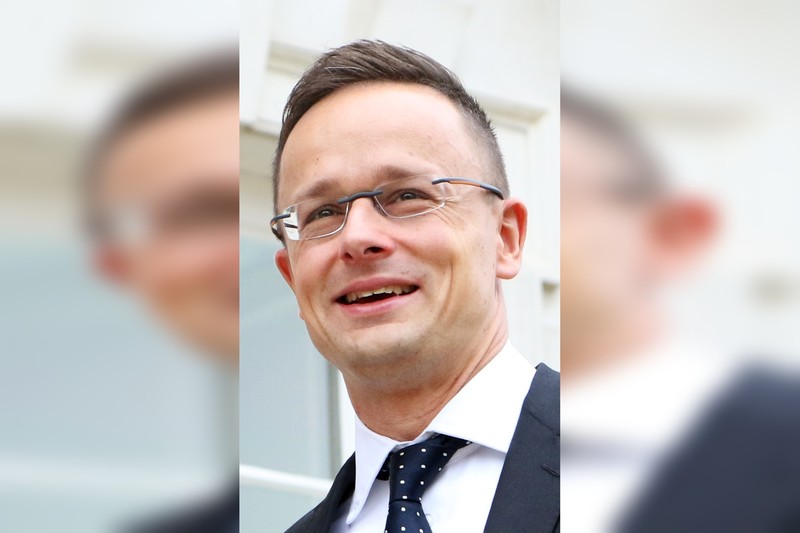
“I will send it to you. It’s not a problem.” With those words, Hungary’s foreign minister Péter Szijjártó offered to funnel a confidential EU document on Ukraine’s accession negotiations directly to Russia’s Sergey Lavrov.
Leaked recordings published April 8 by a consortium of investigative outlets — VSquare, Frontstory, Delfi Estonia, The Insider, and the Investigative Centre of Ján Kuciak — expose a backchannel between Budapest and the Kremlin that goes well beyond friendly diplomacy. The transcripts capture Szijjártó briefing Lavrov on confidential EU summit deliberations, offering to share internal documents, and coordinating efforts to shield sanctioned Russians from European penalties.
A Play-by-Play From Inside the Room
The most revealing recording dates to December 14, 2023, when EU leaders gathered in Brussels to decide on opening accession talks with Ukraine. Orbán had threatened to veto. During a break in negotiations, Szijjártó stepped out of the meeting room to call Lavrov and explain how talks were progressing and what Hungary planned to do.
“Sometimes good-willed direct blackmailing is the best option,” Lavrov told him.
Orbán ultimately left the room during the vote — a pre-arranged maneuver allowing the other 26 leaders to proceed unanimously while Hungary technically abstained. But Szijjártó stayed behind, keeping Moscow informed with near-contemporaneous updates on the negotiations he was witnessing firsthand.
When Lavrov asked for the exact text of a compromise on minority language rights in Ukraine — confirmed by Szijjártó as decisive — the Hungarian minister’s response was immediate: “I immediately do it. I send it to my embassy in Moscow, and my ambassador will forward it to your chief of staff, and then it’s at your disposal.”
Reuters could not independently verify the audio’s authenticity. But Szijjártó has not denied the calls took place, instead calling the wiretapping a “huge scandal” and accusing foreign intelligence services of intervening in Hungary’s upcoming election.
The Kremlin’s Man in the Presidency
On July 2, 2024 — the same day Orbán met Ukraine’s Volodymyr Zelensky in Kyiv — Szijjártó called Lavrov to arrange a meeting between Orbán and Putin. Hungary had assumed the EU Council’s rotating presidency one day earlier.
“We cannot divide the two, but I think it increases the significance that he is the Chair of the European Union,” Szijjártó told Lavrov, referring to Orbán’s dual role as Hungarian prime minister and EU Council president.
The visit was kept secret from EU and NATO allies, who only learned about it from media reporting. Putin opened the meeting by describing Orbán as a representative of the EU — precisely the scenario Western capitals had feared. “It is wild how Szijjártó begs for an invitation for Orbán to Moscow […] Quite clearly, the Hungarians were deceiving the European Union,” one senior EU official told the consortium.
Sanctions as Leverage
The recordings also expose how Budapest coordinated with Moscow to dismantle sanctions from within. In an August 2024 call, Lavrov relayed a request from oligarch Alisher Usmanov to have his sister, Gulbahor Ismailova, removed from the EU sanctions list. Szijjártó told Lavrov that Hungary and Slovakia would submit a delisting proposal, adding: “We will do our best in order to get her off.” Seven months later, Ismailova was removed.
The mechanism is structural: EU sanctions require unanimous renewal every six months, giving any member state effective veto power. A European diplomat involved in the negotiations told the consortium that Hungary and Slovakia demand delistings without legal arguments — “they just say they don’t want those people on the sanctions list for political reasons.”
An Asset by Any Other Name
The tone of the conversations has alarmed intelligence professionals. “All the best my friend,” Lavrov says in one recording. “Whenever you need anything I’m at your disposal,” Szijjártó replies.
A senior Western intelligence official described the dynamic as resembling classic recruitment: “It’s almost like a loyalty test to judge an asset’s willingness to follow orders or comply with tasking assignments. This is like recruitment 101.” Lithuania’s former foreign minister Gabrielius Landsbergis put it more bluntly: “Every generation has a Kim Philby — apparently Péter Szijjártó is playing the role with enthusiasm.” Both Philby and Szijjártó received the Order of Friendship — the highest award the Soviet Union or Russia can bestow on a foreigner.
Political Fallout
The revelations land days before Hungary’s April 12 election, where Orbán faces his toughest challenge in 16 years from opposition leader Péter Magyar, whose Tisza Party leads in independent polls. Magyar called Szijjártó’s conduct “an open betrayal of Hungarian and European interests.” Ukraine’s foreign minister Andrii Sybiga described it as “obsequious reporting to Russian patrons” and “a disgrace.”
The European Commission raised concerns in March, calling on Hungary to clarify the allegations. But the structural problem persists: the EU’s consensus-based decision-making gives Hungary — and by extension, Moscow — leverage over sanctions, enlargement, and collective security. The leaks provide the first hard evidence that Budapest has been exploiting that leverage on Russia’s behalf.
Szijjártó called the release of the recordings “an unusually crude and open secret service intervention” and said the calls showed Hungary stands for peace, affordable energy, and the protection of ethnic Hungarians abroad.
Sources
- New leaks reveal Szijjártó briefing Russia’s Lavrov on key EU summit — Euronews
- Hungarian minister offered to send Russia EU document in leaked audio — Reuters
- Kremlin Hotline: How Hungary Coordinates With Russia Blocking Ukraine from the EU — VSquare / Investigative Consortium
- Ukraine war briefing: Ukraine calls Hungary ‘a disgrace’ after leaked calls with Moscow emerge — The Guardian
- Kremlin Hotline: Hungary colluded with Russia to delist sanctioned oligarchs, companies and banks — VSquare / Investigative Consortium
Discussion (10)