 lop News
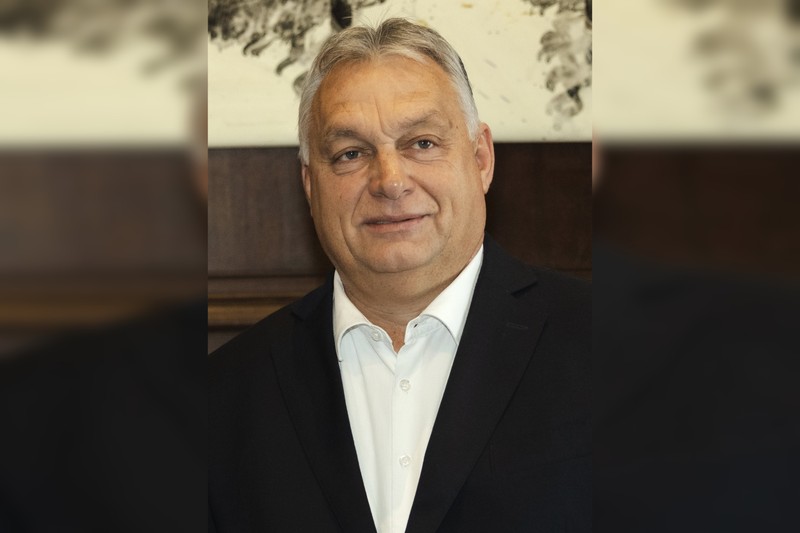
Viktor Orbán spent 16 years building what the European Parliament termed a “hybrid regime of electoral autocracy” — rewiring the judiciary, tilting media ownership, and gerrymandering electoral districts so thoroughly that he admitted the system benefits his Fidesz party. On Sunday, Hungarian voters face their first realistic chance to decide whether any of it can be unwound in a single afternoon.
Most independent polls give Péter Magyar’s Tisza party a double-digit lead. The country’s three most reliable pollsters all point to what election specialist Róbert László of Budapest think tank Political Capital calls a “huge lead.” One final Medián poll, conducted with a sample of 5,000 respondents, projected a Tisza two-thirds supermajority — the very threshold Magyar says he needs to roll back Fidesz’s constitutional changes.
But Hungary’s electoral system rewards incumbency, and the margin in dozens of constituencies may be thin enough that the final result won’t be clear for days.
The Insider Who Walked Away
Magyar’s rise has no recent precedent in Hungarian politics. A 45-year-old lawyer and former diplomat, he spent his career inside Fidesz before breaking with the party two years ago over corruption. He began posting social media videos documenting squalid hospital conditions and crumbling schools. The posts resonated. He built Tisza from scratch — a grassroots movement deploying “Tisza islands” of local activists across the country. His candidates are not career politicians but surgeons, teachers, and local business figures.
Zsuzsanna Szelenyi, a former Fidesz politician and author of “Tainted Democracy: Viktor Orbán and the Subversion of Hungary,” told NPR that Magyar functions as a political whistleblower — an exile from the inner circle who understands the machine from inside.
“He knows how to fight against a fighter, like a street fighter, but he doesn’t do it in the way as Orbán does it because Orbán uses an entire state apparatus, money, people, institution, every possible resources,” Szelenyi said.
A Campaign Drowned in Scandal
Orbán’s campaign has been engulfed by revelations that would have collapsed most governments. Intercepted calls published by Bloomberg, the Washington Post, and Politico showed Foreign Minister Péter Szijjártó offering to hand confidential EU documents to Russian Foreign Minister Sergei Lavrov — including, in one case, promising to deliver “immediately” the negotiating framework for Ukraine’s EU accession talks. Orbán told Putin, “I will help in any way I can,” adding, “In any matter where I can be of assistance, I am at your service.” Szijjártó separately assured Iran’s foreign minister he was “always at your service.”
A former criminal investigator revealed his department — tasked with fighting child exploitation — was repurposed for a secret intelligence operation targeting Tisza. A documentary alleged systematic vote-buying from vulnerable populations. The government covered up dangerous conditions at a Samsung battery factory north of Budapest. Deutsche Welle reported the campaign may be the first modern European election campaign to deploy AI-generated fake videos at scale.
Orbán’s response has been to reframe the election as a choice between war and peace, blaming Brussels and Kyiv. “We don’t give our children, we don’t give our weapons and we don’t give our money,” he told supporters Saturday night.
Stakes Beyond Budapest
The consequences travel well beyond Hungary’s borders. Orbán has single-handedly vetoed €90bn in EU aid to Ukraine and served as the Kremlin’s most reliable advocate inside NATO. A Magyar victory would likely reset Hungary’s relations with Brussels and remove the EU’s most glaring example of democratic backsliding.
An Orbán win would send the opposite signal. Valérie Hayer, president of the Renew Europe group in the EU Parliament, warned in Euronews that it “would embolden extremist forces across the continent and mark a triumph of illiberalism across Europe.”
Donald Trump urged Hungarians to vote for his “true friend, fighter, and WINNER.” Vice President JD Vance visited Budapest in the campaign’s final stretch, holding his phone to a rally microphone so Trump could address the crowd. But Zsuzsanna Végh of the German Marshall Fund told Deutsche Welle the endorsements won’t move undecided voters who “care about the cost of living, and Vance’s visit doesn’t help with that.”
What Comes After
The question that remains — whether a single election can reverse 16 years of institutional capture — may not have a clean answer on Sunday night. Most analysts expect a comfortable Tisza majority but not necessarily the two-thirds supermajority needed to fully unwind Fidesz’s constitutional engineering of the judiciary, media ownership, and electoral mechanics.
Polls close at 7pm local time. If key constituencies are tight, the final result may not be known until April 18, when overseas and postal ballots are fully counted.
Either democratic erosion is reversible at the ballot box, or it is not. Europe is about to find out which.
Discussion (10)