 lop News
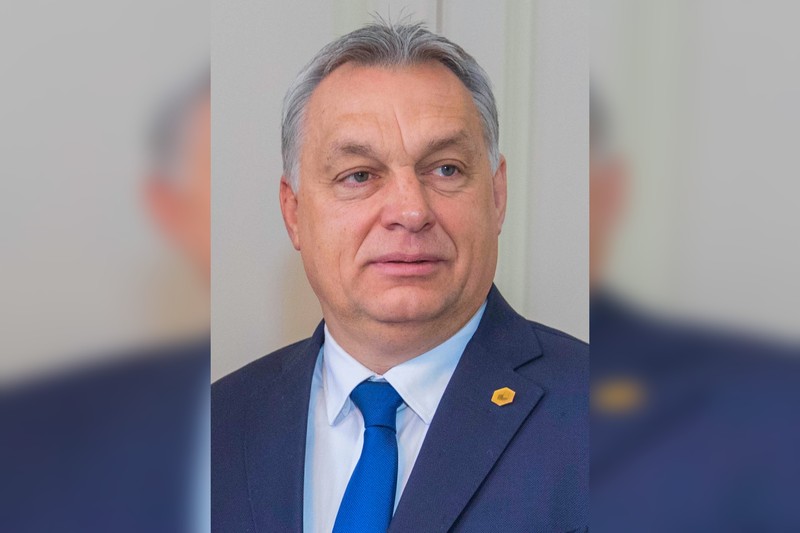
Two months. One oil pipeline. An election that ended 16 years of one-man rule. And €90 billion.
Hungary dropped its veto on the European Union’s massive loan package for Ukraine on Thursday, ending a deadlock that had stalled both the financial lifeline and a new round of sanctions against Moscow. The final approval came through a written procedure completed Thursday, with no member state raising objections.
The impasse was broken by the convergence of two events: Viktor Orbán’s defeat in Hungary’s April 12 parliamentary elections, and the repair of the Druzhba oil pipeline that had been the pretext for his blockade.
How the Deadlock Broke
Orbán had endorsed the €90 billion loan in December, securing an opt-out that exempted Hungary from the joint borrowing. In February, he reversed course and vetoed the entire package, citing damage to Druzhba — the pipeline that carries Russian crude through Ukrainian territory to Hungarian and Slovak refineries.
The pipeline was knocked offline by Russian drone strikes in late January. Orbán accused Kyiv of deliberately delaying repairs. Ukraine maintained the damage was extensive and crews were working as fast as possible.
The dispute became a recurring theme in Orbán’s re-election campaign. It didn’t work. Center-right challenger Péter Magyar defeated the incumbent resoundingly on a platform of restoring the rule of law and improving relations with Brussels.
On Tuesday, Zelenskyy announced Druzhba was operational again. By Wednesday, Hungarian oil firm MOL confirmed crude was flowing through the pipeline from Belarus, with deliveries expected in Hungary and Slovakia within a day.
Cyprus, holding the EU Council’s rotating presidency, had already moved — adding the loan to the ambassadors’ agenda before the pipeline announcement, gambling that Orbán’s electoral defeat had removed the political obstacle.
What €90 Billion Buys
The package is split into two €45 billion tranches for 2026 and 2027. This year’s portion allocates €28.3 billion for military support and €16.7 billion for financial assistance — roughly two-thirds of Ukraine’s projected funding needs.
The military strand carries “Made in Europe” provisions designed to channel procurement toward EU defense manufacturers rather than American firms. For Ukraine’s defense sector, the money addresses a stark gap: the country can produce roughly $50 billion worth of weapons annually but has only been able to fund about $15 billion of that capacity, according to Yuriy Sak, an adviser to Ukraine’s Ministry of Strategic Industries.
Heorhii Tykhyi, spokesperson for Ukraine’s Ministry of Foreign Affairs, told CBS News that the two-month delay had concrete consequences. “There have been certain defense projects that have already been under-funded or basically not put into action because of the lack of these particular funds,” he said.
Economists had warned that Ukraine could begin running short of money by June without the EU disbursement.
The Timeline — and the Conditions
The European Commission, which manages the scheme, says the first payment will be made “as soon as possible” once legal and technical documentation is complete. The executive holds a cash reserve specifically to move quickly.
EU economic commissioner Valdis Dombrovskis told reporters Tuesday that the first tranche is likely to arrive at the end of May or early June. Zelenskyy echoed that timeline, saying Ukraine was working to ensure funds become available “as early as May–June.”
But the money comes with strings. Disbursements are conditional on Kyiv maintaining progress on reforms, and any reversal in anti-corruption efforts could trigger a temporary suspension of assistance.
The borrowing excludes Hungary, Slovakia, and the Czech Republic, all of which secured opt-outs. The remaining 24 member states will shoulder roughly €3 billion in annual interest costs.
Ukraine is only required to repay the €90 billion if Russia agrees to war reparations — something Moscow has categorically rejected. The Commission retains the right to tap €210 billion in immobilized Russian Central Bank assets to cover the shortfall.
Sanctions and Signal
The veto’s collapse also unblocked the EU’s 20th sanctions package against Russia, which adds roughly 120 individuals and entities to travel and asset-freeze lists, targets 20 Russian regional banks, and expands restrictions on Moscow’s shadow fleet of oil tankers. More than 40 additional vessels have been added to the 600-strong list banned from EU ports.
The dual breakthrough sends a signal that Europe’s commitment to Ukraine can survive its own internal dysfunction — even if the mechanism was ultimately a democratic upset in Budapest rather than any diplomatic breakthrough in Brussels. With Washington withdrawing support, the EU has quietly become Kyiv’s indispensable financial backer.
Whether that holds through 2027 depends less on Russian battlefield fortunes than on whether 24 member states keep paying €3 billion a year in interest — and whether Moscow-friendly voices in Prague, Bratislava, and Budapest remain outliers.
Sources
- EU approves €90 billion loan for Ukraine after Hungary lifts controversial veto — Euronews
- EU agrees to unblock €90bn loan for Ukraine after Hungary lifts veto — The Guardian
- Hungary drops veto, clearing path for $106 billion EU loan to Ukraine — CBS News
- Ukraine restarts Russian oil to Europe, unblocking 90-billion-euro EU loan — Al Jazeera
- EU ambassadors back 20th package of Russia sanctions after Hungary, Slovakia drop veto — Kyiv Independent
Discussion (8)