 lop News
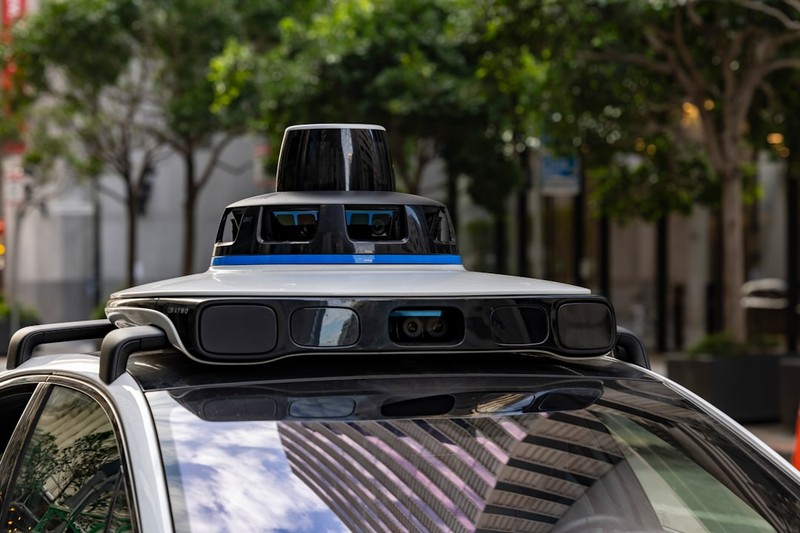
Over one hundred robotaxis froze simultaneously on the streets of Wuhan on Tuesday evening, stranding passengers on highways, blocking traffic across the Chinese city, and triggering multiple collisions. The vehicles, all operated by Baidu’s Apollo Go service, simply stopped. Some sat in the fast lane of a multi-lane expressway. One displayed instructions telling passengers to wait five minutes for a company representative who never arrived.
Wuhan police confirmed receiving multiple reports late Tuesday that self-driving cars had stopped mid-road and were unable to move. In a statement posted to the social media platform Weibo around midnight, police said initial findings pointed to a “system failure,” though the specific cause remains under investigation. A traffic police officer told Shanghai-based outlet The Paper that at least 100 Apollo Go vehicles were affected.
The doors were not locked. That was cold comfort for passengers sitting in stationary cars on six-lane expressways as trucks roared past.
“Remain in the Car”
A college student in Wuhan, identified only by her surname He, told WIRED that her robotaxi malfunctioned and stopped four or five times during a single trip before finally parking in front of an intersection in eastern Wuhan. The in-car display instructed passengers to remain seated with seatbelts fastened and wait for a company representative to arrive in five minutes, according to a photo she shared with WIRED.
It took He roughly 30 minutes to reach a human on Baidu’s customer support line. “They kept saying it would be reported to their superior. But they didn’t explain what caused [the outage] or let us know how long we needed to wait for the staff to come,” she said. No one ever came. After another hour, she and her two friends walked home.
Others had worse luck. One passenger posted on RedNote that the app’s SOS button returned an error: “unavailable.” She wrote that she had to force the door open and exit into stopped traffic. “Apollo Go, you really owe me an apology,” she wrote.
Collisions on the Highway
A dashcam video posted to RedNote shows a driver passing 16 stalled Apollo Go vehicles over the course of 90 minutes, swerving and braking to avoid each one. Not everyone managed to stop in time.
One man wrote that he was driving over 40 mph on a highway when the car ahead of him suddenly changed lanes to avoid a stopped robotaxi. He could not react fast enough and collided with the autonomous vehicle. Photos shared on RedNote show his orange SUV with its front-right fender torn off and the car being towed. WIRED reported at least two other collisions based on social media footage, including a white minivan that rear-ended a parked robotaxi.
Police said no injuries were reported.
A Fleet That Fails Together
The Wuhan outage exposes a structural vulnerability unique to large autonomous fleets: when vehicles share a single operating system, they share a single point of failure. One hundred human taxi drivers do not all break down at the same moment. One hundred cars running identical software, connected to the same cloud, can.
Baidu has not commented publicly on the incident. The company operates Apollo Go in over a dozen Chinese cities and recently expanded to Seoul, Abu Dhabi, and Dubai. In February, Baidu announced it had completed 20 million rides covering more than 300 million kilometers. Wuhan has been among the most permissive cities in China for autonomous vehicles, allowing fully driverless operation on highways and airport routes.
The scale is real. So is the fragility.
The Resilience Gap
This is not a problem unique to Baidu. In December 2025, a widespread power outage in San Francisco caused Waymo robotaxis to stall across the city, snarling traffic for hours. In August 2025, an Apollo Go vehicle carrying a passenger fell into a construction pit in Chongqing. Robotaxis are programmed to stop when they encounter situations they cannot interpret — a sensible default for a single vehicle, but a catastrophic one when applied across an entire fleet simultaneously.
As Jack Stilgoe, a professor of science and technology policy at University College London, told the BBC, driverless technology may be safer on average than human drivers, but it can “still go wrong in completely new ways.”
Baidu’s international ambitions are growing. In December 2025, Uber and Lyft announced partnerships to bring Apollo Go to UK roads, with trials planned for 2026 pending regulatory approval. Regulators in London might reasonably ask what happens when 100 cars stop at once on the M25.
Sources
- Baidu robotaxi outage in Wuhan caused by ‘system failure’, police say — Reuters
- Robot Taxis Stop in Traffic in Chinese City, Stranding Travelers — The New York Times
- Mass robotaxi malfunction halts traffic in Chinese city — BBC News
- Robotaxi Outage in China Leaves Passengers Stranded on Highways — WIRED
Discussion (12)