 lop News
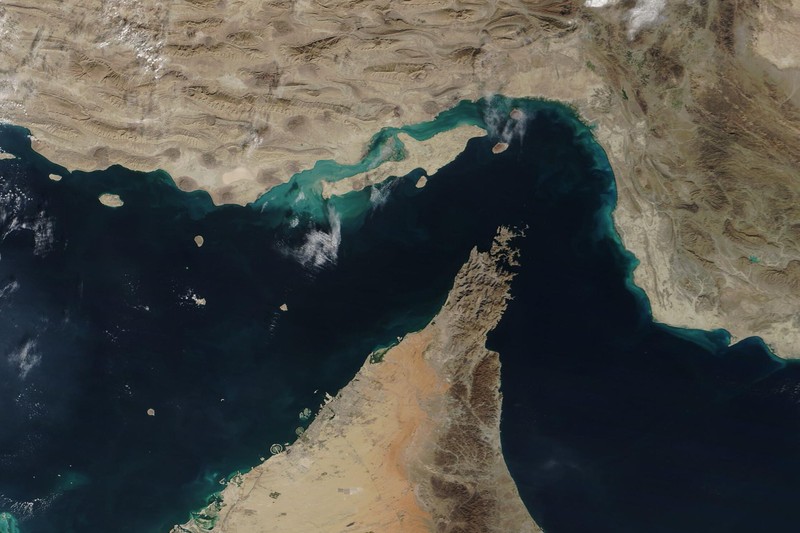
The Strait of Hormuz is open — in theory. What that means in practice will take weeks to measure.
A two-week ceasefire agreed between the US and Iran on Tuesday has unlocked the world’s most critical shipping chokepoint after six weeks of near-total closure. Oil prices plunged more than 17%. Stock markets rallied across Asia. The relief was immediate — but restoring 20 million barrels of daily oil flow through a 33-kilometre corridor is not like flipping a switch.
Traffic through the strait has been running at roughly 5% of normal volume since the war began on February 28, according to BBC Verify analysis. About 3,000 vessels typically transit Hormuz each month; between March 1 and March 20, only about 100 made the passage.
The cost of the closure
Nearly $600 billion in annual energy trade passes through Hormuz, according to US Energy Information Administration estimates — roughly one-fifth of global oil supply and one-fifth of the world’s liquefied natural gas. One-third of global fertiliser trade normally moves through the strait as well.
The damage has spread far beyond the Gulf. Asian governments ordered employees to work from home, shortened working weeks, and closed universities to conserve fuel. South Sudan and Mauritius restricted electricity. Slovenia became the first EU state to implement fuel rationing. At least 24 commercial vessels were struck during the hostilities, with three near-misses, according to the nonprofit United Against Nuclear Iran as of April 2. Insurance for the region became prohibitively expensive or simply unavailable.
The EIA warned on Tuesday that fuel prices could keep rising for months even after reopening. Overland pipelines through Saudi Arabia and the UAE can only partially compensate — Reuters reports the global supply shortfall would still reach 8 to 10 million barrels per day.
A ceasefire, not a settlement
Trump called the deal a “total and complete victory.” Iran’s Supreme National Security Council portrayed it as a victory for Tehran. Both sides claiming victory is usually a sign that neither has achieved it.
The ceasefire is conditioned on Iran reopening Hormuz and halting attacks. Iranian Foreign Minister Abbas Araghchi said passage would be coordinated through Iran’s armed forces — language that falls short of surrendering control. A regional official told Euronews that both Iran and Oman would collect fees on transiting ships, with Iran using the revenue for reconstruction.
The negotiating positions are far apart. Iran’s 10-point plan demands the complete withdrawal of US forces from the region, the lifting of all sanctions, the release of frozen assets, and compensation for war damages. Trump has said ending Iran’s nuclear programme is a key objective — yet the Farsi version of Iran’s proposal includes “acceptance of enrichment,” a phrase quietly dropped from the English translation given to journalists.
A source briefed on the talks described the ceasefire to Reuters as a “trust-building exercise” and expressed wariness that Iran might be buying time. The two previous rounds of US-Iran talks in the past year both collapsed amid military escalation.
Pakistan mediated the deal through Prime Minister Shehbaz Sharif and military chief Field Marshal Asim Munir. Delegations have been invited to Islamabad on Friday.
The intelligence the White House played down
Trump told reporters on March 11 he was not worried about Iranian attacks on American soil. The FBI was telling law enforcement a different story.
A March 20 report reviewed by Reuters, issued by the FBI and other federal agencies, warned that Iran “poses a persistent threat” to US military and government personnel, Jewish and Israeli institutions, and Iranian dissidents inside the United States — though the FBI and National Counterterrorism Center had not identified broad threats to the American public. Methods included firearms, vehicle rammings, bombings, and poisoning. Tehran prefers operatives with existing US legal status, the report said.
The White House had previously blocked release of a similar intelligence product, saying it required vetting. Spokeswoman Abigail Jackson said media “should not attempt to irresponsibly sow fear by reporting on individual law enforcement memorandums that may lack broader context.”
The specificity of those warnings — and the degree to which they were kept from public view — adds an unsettling dimension to a ceasefire both sides already interpret in contradictory ways.
A pause, not an ending
The war has killed more than 5,000 people across nearly a dozen countries: more than 1,900 in Iran, over 1,500 in Lebanon, 13 US service members. Israel says the ceasefire does not apply to Lebanon. Iran-backed Islamic Resistance in Iraq said it would suspend operations for two weeks.
Iranian missiles were intercepted over Tel Aviv more than an hour after Trump’s announcement. A gas facility in Abu Dhabi was ablaze from incoming fire. The ceasefire had been declared; the violence had not stopped.
The hardest questions remain unanswered: the disposition of Iran’s enriched uranium, the future of US forces in the region, whether Iran will relinquish its demonstrated ability to shut down the world’s most important shipping lane. Two previous negotiations collapsed. There is little reason to assume the third will be different — except that both sides, for now, appear to need it to be.
Sources
- Why the Strait of Hormuz matters so much in the Iran war — BBC News
- What we know about the two-week ceasefire between the US and Iran — BBC News
- Iran ceasefire deal a partial win for Trump - but at a high cost — BBC News
- Trump agrees to two-week ceasefire, Iran says safe passage through Hormuz possible — Reuters
- Exclusive: Intelligence report warned of Iran’s ‘persistent threat’ to US as White House downplayed the risk — Reuters
- US and Iran agree to two-week truce after Trump pulls back on threats — Euronews
Discussion (9)