 lop News
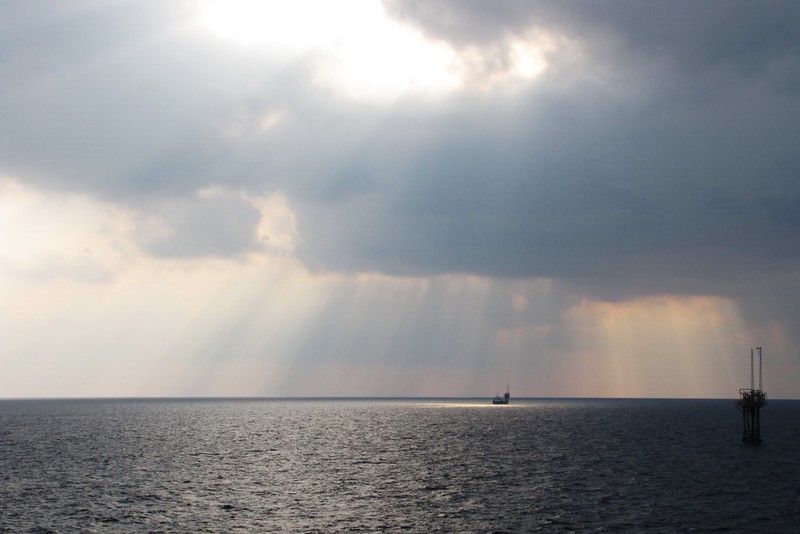
Brent crude fell 13 percent to $86.30 a barrel. The Dow surged 1,032 points. The Nasdaq Composite closed its longest winning streak since 1992. And somewhere in the Strait of Hormuz, sea mines are still being cleared.
Friday’s announcement that Iran would reopen the strait to commercial shipping triggered the kind of rally that usually accompanies the end of a crisis. Oil prices hit their lowest levels since early March. The S&P 500 has gained more than 12 percent since its March 30 nadir. Wall Street is pricing in peace.
The problem is that peace hasn’t arrived.
A Narrow Opening
Iranian Foreign Minister Abbas Araghchi declared the strait “completely open” for all commercial vessels on Friday, linking the move to a 10-day ceasefire between Israel and Hezbollah that took effect at midnight. Within minutes, Trump posted his celebration on Truth Social: “IRAN HAS JUST ANNOUNCED THAT THE STRAIT OF IRAN IS FULLY OPEN AND READY FOR FULL PASSAGE. THANK YOU!”
Then came the fine print. In a follow-up post, Trump said the US naval blockade of Iranian ships and ports would “remain in full force” — “UNTIL SUCH TIME AS OUR TRANSACTION WITH IRAN IS 100% COMPLETE.”
Araghchi’s announcement carried its own conditions. Passage would follow a “coordinated route” set by Iran’s Ports and Maritime Organisation. A senior Iranian military official told state media that only non-military vessels would be permitted, with authorization from the Revolutionary Guard Corps Navy. Iran is not surrendering control of the waterway — it is loosening its grip enough to match the tempo of a ceasefire that expires on April 22.
The shipping industry heard the caveats. Hapag-Lloyd said it was “still refraining from passing through the strait” while its crisis committee assessed the risks. The International Maritime Organisation said it was “verifying” whether the reopening met standards for freedom of navigation. Knut Arild Hareide, CEO of the Norwegian Shipowners’ Association, listed the outstanding questions: “the presence of sea mines, applicable Iranian conditions, and practical implementation.”
Seven Weeks of Damage
The Strait of Hormuz closure was never the whole crisis. It was one front in a war that began with US-Israeli airstrikes on February 28.
In seven weeks, more than 3,000 people have been killed in Iran, over 2,290 in Lebanon, 23 in Israel, and more than a dozen in Gulf Arab states. Thirteen American service members have died. Trump claimed Iran’s navy “is laying at the bottom of the sea, completely obliterated — 158 ships.”
The conflict has roots in the long-running Israel-Hezbollah confrontation, which dates to the opening days of the Gaza war in October 2023. A tenuous ceasefire in November 2024 never fully held; Israel maintained near-daily strikes on Lebanon, saying it was preventing Hezbollah from regrouping. When the US and Israel launched operations against Iran in February, Hezbollah resumed missile fire on Israel, triggering a fresh Israeli invasion of southern Lebanon and fusing two fronts into a single, widening war.
The economic wreckage extends beyond the oil price spike. Before the war, Brent crude traded at $73 a barrel. Even after Friday’s 13 percent crash, it sits at $86.30 — an 18 percent premium over pre-war levels. The International Energy Agency’s chief warned on Thursday that Europe may have as little as six weeks of jet fuel remaining if supply disruptions persisted. Shipping lanes were rerouted around the closure, adding weeks and costs to supply chains already strained by months of conflict. French President Emmanuel Macron said the reopening “goes in the right direction” but warned against any attempt to “privatize” the waterway or impose a toll system.
Those costs do not snap back when a single waterway reopens.
The Ceasefire That Nobody Agreed To
The Hormuz announcement was explicitly tied to a ceasefire that Hezbollah — Israel’s primary adversary in Lebanon — did not negotiate.
Under the agreement shared by the State Department, Israel may act in self-defence against imminent attacks but cannot carry out offensive operations in southern Lebanon. Trump declared Israel “PROHIBITED” from further strikes: “Enough is enough!!!”
On the ground, the truce is already fraying. Defence Minister Israel Katz said Israeli forces would hold a 10km buffer zone inside southern Lebanon, that homes in the area would be destroyed, and that Lebanese residents would not return. Netanyahu said he accepted the ceasefire “at the request of my friend President Trump,” then added that the campaign against Hezbollah “is not complete” and that Israeli forces “have not finished yet.” He claimed Israel had destroyed roughly 90 percent of Hezbollah’s missile and rocket stockpiles.
UN peacekeepers reported no airstrikes since midnight but accused the Israeli military of continued artillery shelling and airspace violations. Hezbollah, which had no seat at the negotiating table, said Lebanese people have “the right to resist” Israeli occupation. Mairav Zonszein of the International Crisis Group told Al Jazeera that while the diplomatic track was an important breakthrough, the prospects of reaching a sustainable agreement “remain remote.”
Three Sticking Points
Mediators are pushing for a compromise on three issues, according to a regional official involved in the talks: Iran’s nuclear program, the Strait of Hormuz, and compensation for wartime damages.
Pakistan’s army chief met with Iran’s parliament speaker on Thursday as part of the diplomatic effort. Regional officials told the Associated Press there was “in-principle agreement” to extend the current ceasefire, which expires on April 22, to allow more time for negotiations. But the underlying disagreements have not moved.
Trump claimed Friday that Iran has agreed to hand over its highly enriched uranium — what he calls “nuclear dust,” referring to material buried under nuclear sites that US B-2 bombers struck during a 12-day Israel-Iran war last year. Iran’s state media outlet Mizan flatly denied the claim. “No negotiation regarding the transfer of Iran’s highly enriched uranium to America had ever taken place, and naturally there is no agreement on this matter either,” Mizan reported, citing sources.
That gap — between Washington’s assertions and Tehran’s public posture — is the distance between Friday’s relief rally and an actual resolution.
Wells Fargo global equity strategist Doug Beath captured the cautious view. “Markets care more about the free flow of oil in the short term,” he wrote in a note to clients. “But we urge some caution. Bottom line: Everything still depends on how the negotiations continue.”
The strait is open, for now, under a ceasefire that expires in days. The US blockade of Iran continues. Israeli troops occupy southern Lebanon. Hezbollah has signed nothing. The enriched uranium at the heart of the conflict is claimed by both sides as leverage.
Wall Street had a very good day. The hard part starts when the markets close.
Sources
- Iran reopens Strait of Hormuz, but Trump says blockade on Iranian ships and ports will stay in force — Associated Press
- Oil drops 11%, Dow soars 900 points after Iran says Strait of Hormuz is open — CNN
- Reactions of industry and leaders to Iran saying Hormuz is open — Channel News Asia
- Trump says ‘thank you’ after Iran announces opening of Strait of Hormuz — Euronews
Discussion (12)