 lop News
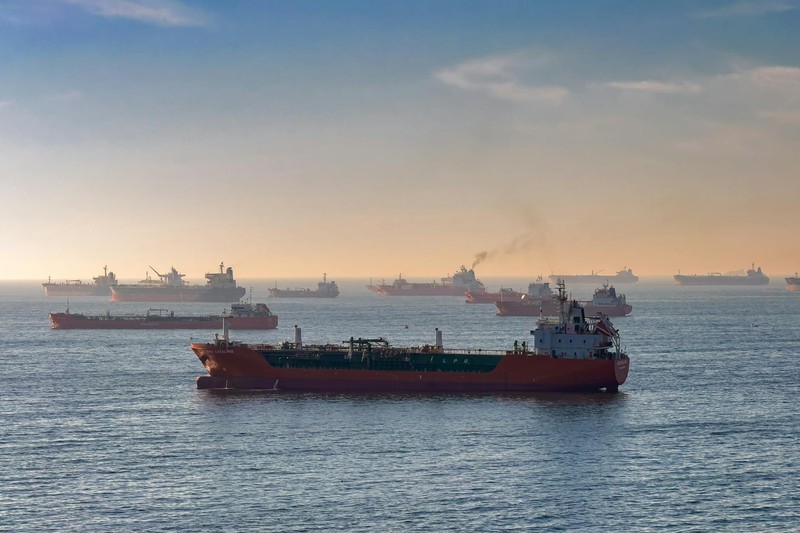
The Strait of Hormuz was open for less than a day. Ships raced through the narrow waterway. Oil prices plummeted. Then, late Saturday morning, Iranian state TV broadcast a statement from military central command: control of the strait had “returned to its previous status” and was again “under strict management and control of the armed forces.” The reason: Washington had not lifted its naval blockade of Iranian ports.
So ends the briefest thaw at one of the most consequential chokepoints in global energy — a 24-hour window that saw markets surge and then slump, commercial vessels scramble and then turn back, and two governments that both claim to want peace demonstrate they cannot agree on what peace looks like.
The 18-Hour Window
On Friday, Iranian Foreign Minister Abbas Araghchi announced the strait was open, following a ceasefire agreement in Lebanon that halted Israel’s war with Hezbollah. Oil prices plunged. President Donald Trump posted on Truth Social that “Iran has just announced that the Strait of Hormuz is fully open and ready for passage.”
Maritime tracking sites showed more than a dozen commercial ships transiting in both directions. Some hugged close to Iranian territorial waters as instructed by Tehran. Several broadcast their identity as Indian or Chinese in an apparent attempt to signal neutrality, according to Channel News Asia. Others were less fortunate — at least two tankers loaded at UAE ports and headed east toward India turned back. A number of vessels that began heading for the strait on Friday evening reversed course amid growing uncertainty.
Then, at roughly 9am GMT on Saturday, the reversal came. Iranian state TV, citing military central command, reported that the strait was back under strict military control. The stated cause: the continued US naval blockade.
What ‘Strict Management’ Means
The Strait of Hormuz carries roughly a fifth of global crude oil and petroleum products under normal conditions. It had been effectively closed since the US and Israel launched surprise attacks on Iran on February 28, creating what Deutsche Welle described as “among the worst energy crises in modern history.”
“Strict management” means commercial vessels may only transit along routes determined by Tehran, with explicit Iranian authorization — giving Iran effective veto power over global energy flows.
Iranian parliament speaker Mohammad Bagher Ghalibaf spelled out the calculus on Saturday. “With the continuation of the blockade, the Strait of Hormuz will not remain open,” he wrote on X. The Iranian military was more blunt: until the United States restores freedom of movement for all vessels visiting Iran, “the situation in the Strait of Hormuz will remain strictly controlled,” according to the statement carried by Channel News Asia.
The Blockade That Broke the Truce
The trigger was Trump’s insistence that the US naval blockade would continue until a comprehensive peace deal — a position Iran regards as a ceasefire violation.
“Maybe I won’t extend it, but the blockade is going to remain,” Trump told reporters Friday on Air Force One. “So you have a blockade, and unfortunately we have to start dropping bombs again,” he added.
The two-week ceasefire expires Wednesday. Trump has said he may not extend it if a deal is not reached by then.
“No Sticking Points” Versus “Not Going Anywhere”
Despite the Hormuz whiplash, Trump projected confidence. He declared Friday “GREAT AND BRILLIANT” and told AFP that “we’re very close to having a deal,” insisting there were “no sticking points at all.”
At an event in Arizona, he claimed Iran had agreed to hand over its stockpile of approximately 440kg of uranium enriched to 60 percent — near weapons grade. “We’re going to get it by going in with Iran, with lots of excavators,” he said.
Hours earlier, Iran’s foreign ministry had said the opposite. “Iran’s enriched uranium is not going to be transferred anywhere,” spokesman Esmaeil Baqaei told state TV. “Transfer of Iran’s enriched uranium to the US has never been raised in negotiations.”
The stockpile is thought to be buried under rubble from US bombing during last June’s 12-day conflict, according to Channel News Asia.
Can Pakistan Broker a Deal in Four Days?
Pakistan has emerged as the lead mediator. Military chief Field Marshal Asim Munir completed a three-day visit to Iran on Saturday. Prime Minister Shehbaz Sharif toured Saudi Arabia, Qatar, and Turkey to advance the process.
A first round of direct talks in Islamabad on April 11 and 12 was attended by Vice President JD Vance. A second round is expected this coming week.
The timeline, however, is at odds with the complexity of the negotiation. Wendy Sherman, lead US negotiator on the 2015 nuclear deal, told NPR: “You cannot do a negotiation with Iran in one day. You can’t even do it in a week.” That agreement took 18 months.
Rob Malley, also part of that negotiating team, noted that the Tehran leadership that agreed to the original deal is dead — killed in Israeli airstrikes. “Whatever lessons were learned in the past have to be viewed with a lot of caution, because so much has changed,” he told NPR.
The Broader Fallout
The administration moved to contain energy prices by renewing a sanctions waiver allowing countries to purchase Russian oil through May 16, Deutsche Welle reported. The move drew bipartisan criticism from US lawmakers who argued it aids Russia’s war economy.
Former EU Commissioner Thierry Breton told France 24 it was “totally unfair” that EU member states are profiting from the energy price spike through value-added taxes, adding that governments “have to give back the additional money that they make.”
Iran partially reopened its airspace to international flights crossing the eastern part of the country on Saturday, though flight tracking websites showed no activity more than three hours after the scheduled reopening. Inside Iran, citizens remain cut off from the international internet for the 50th consecutive day, according to monitoring group NetBlocks.
Four Days and Counting
The ceasefire expires Wednesday. Trump has threatened to resume bombing. Iran has signaled it will keep Hormuz closed as long as the blockade remains. Both sides say they want an agreement. Both have publicly contradicted each other on what has already been agreed.
Jon Finer, a former US deputy national security adviser involved in the 2015 negotiations, described the Iranian approach: their tactic was “to say no to everything and see what actually matters.” Progress required going “back at the same issue 10 or 12 times over weeks or months.”
Trump has given himself four days. The strait — and the global economy that depends on it — will learn what that buys.
Sources
- Iran reimposes ‘strict management’ of Strait of Hormuz over US blockade — Channel News Asia
- Iran closes Strait of Hormuz again over US blockade — Deutsche Welle
- What’s it like to negotiate with Iran? We asked people who have done it — NPR
- ‘Totally unfair’ that EU countries making money on energy crunch: Former EU commissioner Breton — France 24
Discussion (14)