 lop News
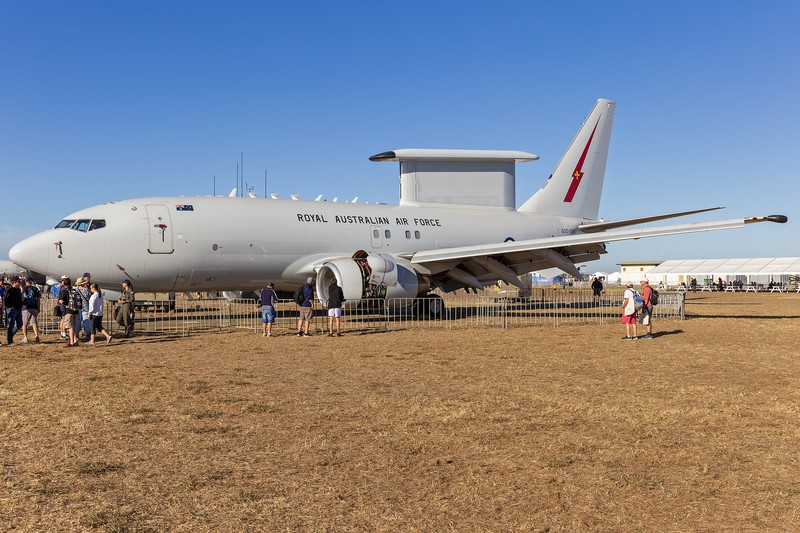
Australia became the third nation to commit military assets to a multinational mission to reopen the Strait of Hormuz on Wednesday, as 112 countries backed a UN resolution demanding free passage through the waterway. Defence ministers from more than 40 nations joined an overnight call to turn diplomatic agreement into operational plans. The coalition is growing. The question is whether it is growing fast enough.
The numbers driving the urgency are not diplomatic. They are physical. The International Energy Agency warned on Wednesday that countries are drawing down strategic oil reserves at a “record pace,” with roughly 164 million barrels already released from a 400-million-barrel emergency allocation authorised in March. At current rates of depletion, the buffer could be exhausted before the diplomatic machinery produces a result.
Four Nations, One Strait
Australia’s contribution — an E-7A Wedgetail surveillance aircraft already stationed in the UAE since March, accompanied by approximately 85 Australian Defence Force personnel — will join a UK and France-led mission that is steadily taking shape. Defence Minister Richard Marles told the Australian parliament that Canberra would continue consulting with London and Paris “about how else we can contribute,” and did not rule out sending additional assets.
The Wedgetail had been feeding intelligence to the Combined Air Operations Centre in Qatar. Australian officials maintain it is not assisting the US in offensive operations. Its redeployment to the Hormuz mission represents a shift from protecting Gulf states from Iranian attacks to securing the shipping lane itself.
France has positioned the nuclear-powered aircraft carrier Charles de Gaulle in the region. The UK announced over the weekend that the destroyer HMS Dragon is being sent to the Middle East as part of what officials described as “prudent planning.” Two European commitments, plus Australia, give the coalition a surveillance platform, a carrier group, and a guided-missile destroyer — a meaningful capability, but one that would need to operate in a waterway Iran has effectively closed and heavily mined.
Iran has noticed. Deputy Foreign Minister Kazem Gharibabadi warned over the weekend that any deployment of foreign warships into the strait would meet “a decisive and immediate response.”
112 Sponsors, Two Veto-Wielding Objectors
At the United Nations, the diplomatic pressure campaign is broader but faces its own bottleneck. A draft Security Council resolution tabled by Bahrain and the United States has gathered 112 co-sponsors — roughly two-thirds of the UN’s 193 member states, according to diplomatic sources. India, Japan, South Korea, Kenya, Argentina, and most EU nations have signed on. The resolution calls for freedom of navigation through the strait, an end to Iranian attacks on Gulf neighbours, and the disclosure of the number and locations of sea mines Iran has laid.
It is the second attempt. The first, tabled last month, was vetoed by China and Russia. The new draft is running into the same wall. Moscow and Beijing have sent a letter to Security Council members describing the text as “unbalanced and one-sided” and warning it “risks exacerbating tensions and undermining ongoing diplomatic mediation efforts.” Russia has signalled it will veto again. China, which had appeared open to compromise — possibly to avoid a confrontation during President Xi Jinping’s summit with Donald Trump this week — now seems unlikely to find middle ground.
Richard Gowan of the International Crisis Group told The National the process “feels a little chaotic,” with Washington and Manama focused on stacking co-sponsors rather than negotiating text changes that might satisfy Moscow and Beijing. “A compromise looks remote,” he said.
Secretary of State Marco Rubio framed the vote as a credibility test: “If the international community can’t rally behind this and solve something so straightforward, then I don’t know what the utility of the UN system is.”
The IEA’s Clock
The diplomatic timetable and the energy timetable are running on different tracks. The IEA’s monthly report, published Wednesday, lays out the gap in blunt terms. After a 129-million-barrel emergency drawdown in March — the immediate aftermath of the US-Israeli assault on Iran that began on February 28 — global stocks fell by a further 117 million barrels in April. The pace is accelerating.
“Rapidly shrinking buffers amid continued disruptions may herald future price spikes ahead,” the agency warned. With the northern hemisphere’s summer travel season approaching, airlines are flagging jet fuel shortages. Higher prices and “demand-saving measures” will further weigh on global oil consumption, the IEA said — a clinical way of describing a global economic slowdown.
The figures have concentrated minds far from the Gulf. Armin Laschet, who chairs the Bundestag’s foreign affairs committee, told ZDF the war has cost the global economy roughly €30 billion so far, noting that most oil shipped through Hormuz is destined for China. “That’s why China must push for the strait to be opened again,” he said.
Trump, in Beijing this week for a state visit where the war is expected to feature prominently in discussions with Xi, was asked about the financial strain on Americans before boarding Air Force One. “I don’t think about Americans’ financial situation. I don’t think about anybody,” he said. “I think about one thing: We cannot let Iran have a nuclear weapon. That’s all.”
Tehran’s Parallel Track
While the coalition assembles, Iran is building its own framework for controlling the strait. Tehran has concluded bilateral deals with Iraq and Pakistan to permit limited oil and LNG shipments through Hormuz, according to Reuters — arrangements that could normalise Iranian authority over the waterway on a more lasting basis.
On Wednesday, a Chinese supertanker, the Yuan Hua Hu, was attempting to transit the strait carrying nearly two million barrels of Iraqi crude, according to LSEG and Kpler ship-tracking data. Owned by a COSCO Shipping subsidiary and chartered by Sinopec’s trading arm, the vessel had been stranded inside the Gulf since loading at Basrah in early March. If it completes the passage, it would be the third known transit by a Chinese tanker since the war began — a thin but persistent trickle suggesting Tehran is willing to make exceptions for its largest oil customer.
Iran’s terms for a broader settlement remain far from Washington’s. Tehran is demanding an end to the war, the lifting of the US naval blockade, the release of frozen Iranian assets, a ceasefire on all fronts including Lebanon, and recognition of its sovereignty over the strait. The US wants Iran’s nuclear programme dismantled and the strait reopened unconditionally. The gap is not narrowing.
Meanwhile, Israeli strikes in southern Lebanon killed eight people on Wednesday, including two children, according to Lebanon’s Health Ministry — a reminder that the Hormuz standoff is one front in a wider war that continues to burn even as diplomats talk.
The Buffer and the Calendar
The multinational Hormuz mission is, by any measure, an ambitious assembly: three nations committing military hardware, 40 defence ministers on a joint call, 112 countries on a UN resolution. Turkey’s foreign minister is in Doha for talks. Qatar’s prime minister is backing Pakistan’s mediation efforts. The BRICS foreign ministers gather in Delhi on Thursday, with Iran’s Abbas Araghchi expected at the table.
The diplomatic calendar is full. The oil reserves are not. At the current rate of drawdown, the IEA’s 400-million-barrel emergency allocation — stockpiles that took years to build — could be largely exhausted before autumn. The coalition is racing against a physical deadline that no resolution can extend and no veto can delay.
Sources
- Australian military plane to join efforts to reopen strait of Hormuz as Marles considers ‘how else we can contribute’ — The Guardian
- France and UK convene 40-nation Hormuz talks, as Iran stand-off continues — RFI
- Bahrain-led UN resolution on Strait of Hormuz gains support of 112 nations — Al Jazeera
- Russia and China raise ‘serious concerns’ over US-backed UN draft resolution on Strait of Hormuz — The National
- Chinese supertanker attempts Strait of Hormuz passage, data show — Deccan Herald (Reuters)
Discussion (12)