 lop News
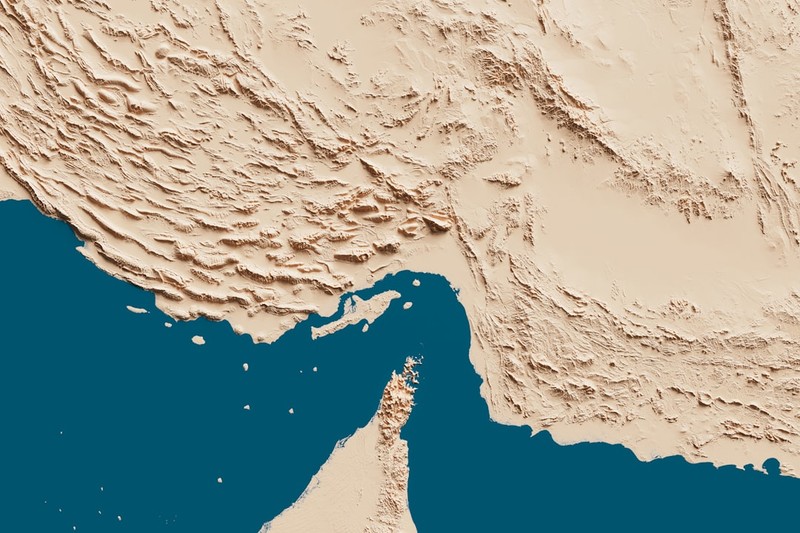
The ceasefire between the United States and Iran is four weeks old. On Monday, the Strait of Hormuz was an active war zone.
Two US Navy destroyers threaded the 34-kilometre waterway under coordinated barrages of cruise missiles, drones, and swarming small boats. The United Arab Emirates scrambled air defenses against Iranian ballistic missiles for the first time since the April 8 truce. A South Korean cargo ship erupted in flames. Oil prices surged past $114 a barrel.
The nominal purpose of all this violence was to reopen one of the world’s most critical waterways. Whether it achieved that goal — or merely buried the ceasefire — is an open question.
Project Freedom
President Donald Trump announced the operation on Sunday, branding it “Project Freedom.” The plan: use Navy warships, more than 100 aircraft, and roughly 15,000 service members to guide hundreds of stranded commercial vessels through the strait that Iran has effectively closed since the war began on February 28.
By Monday, two US-flagged merchant vessels had transited the strait under the escort of guided-missile destroyers USS Truxtun and USS Mason, according to US Central Command. CENTCOM commander Admiral Brad Cooper said the military had reached out to “dozens of ships and shipping companies to encourage traffic flow through the [Strait of Hormuz].”
The reality was messier. Iran launched what Cooper described as “multiple cruise missiles, drones, and small boats” at ships under US protection. US Apache helicopters and Seahawk aircraft sank six Iranian small boats, according to CENTCOM. Trump, speaking to Fox News, put the number at seven. Iran’s state-run IRNA denied any boats were lost.
Iranian state media also claimed its forces struck a US warship with two missiles southeast of the strait. CENTCOM dismissed the assertion outright: “No US Navy ships have been struck.”
Ship-tracking data showed traffic through the strait remained largely suspended. Whatever Project Freedom achieved on Monday, it did not achieve the free flow of commerce.
The UAE Draws Fire
The most alarming escalation came not at sea but on land. The UAE Defence Ministry said Iranian forces launched 12 ballistic missiles, three cruise missiles, and four drones at Emirati territory — the first such attack since the ceasefire took effect.
Air defenses intercepted most of the incoming threats, but a fire broke out at the Fujairah Petroleum Industry Zone, a critical oil storage and shipping hub on the UAE’s eastern coast. Three Indian nationals suffered mild injuries, according to the Fujairah media office.
Iranian officials offered a striking justification. An Iranian official told Islamic Republic of Iran Broadcasting that Tehran had “no pre-planned plan to attack the oil facilities in question,” blaming instead “the American military’s adventurism to create a passage for ships to illegally pass through” the strait.
In other words: the UAE was hit because the US tried to open the waterway. The logic of escalation writes itself.
Iranian state-affiliated media reinforced the warning. The semi-official Tasnim news agency, citing an unnamed military source, warned that if the UAE sides with Israel and takes action against Iran, “they will learn a lesson they will never forget.” The UAE, Iran’s message implied, is “sitting in a very fragile glass house.”
Ships Ablaze
Even by the standards of a waterway that has seen at least two dozen attacks since February, Monday was brutal.
The UAE said two Iranian drones struck the Barakah, an empty oil tanker belonging to the state-owned ADNOC energy company, as it attempted to transit the strait. No injuries were reported. South Korea’s Foreign Ministry confirmed that an HMM-operated bulk carrier suffered an explosion and fire while anchored in the strait, though the cause remains under investigation. Yonhap news agency reported no casualties among the 24 crew members.
The UK Maritime Trade Operations center received reports of at least one additional commercial vessel on fire about 14 nautical miles off the UAE coast, requesting that other ships keep their distance.
Since the war began, at least 17 merchant ships have been damaged and two captured, with 12 seafarers killed or missing, according to data compiled from published reports. Roughly 2,000 ships and 20,000 mariners — many from South and Southeast Asia — remain stranded in the Persian Gulf, with supplies of food and drinking water running low.
The World’s Most Dangerous Chokepoint
The strategic math is straightforward. Before the war, roughly 20 million barrels of oil per day flowed through the Strait of Hormuz — about a fifth of global seaborne oil trade, along with 20 percent of the world’s liquefied natural gas and up to 30 percent of internationally traded fertilizers, according to industry and trade data.
Markets on Monday delivered their verdict on Project Freedom: it wasn’t enough. Brent crude rose roughly $9 over the course of the day — from nearer $105 to just over $114 per barrel — compared with a little more than $65 before the war began, according to Deutsche Welle’s market tracking. West Texas Intermediate climbed above $105. In the US, average gasoline prices have risen from under $3 per gallon to more than $4.45, according to Al Jazeera — a politically toxic figure months before midterm elections.
War and Peace, Simultaneously
The strangest feature of Monday’s violence is that it occurred while negotiations are actively underway. Iran’s Foreign Ministry confirmed it is reviewing a US response to its 14-point peace proposal, relayed through Pakistani mediation. The proposal calls for lifting sanctions, ending the US naval blockade of Iranian ports, withdrawing forces from the region, and ceasing all hostilities, including Israel’s operations in Lebanon, according to the semi-official Nour News and Tasnim agencies.
Iranian Foreign Minister Abbas Araghchi insisted that “talks are making progress” and dismissed Project Freedom as “Project Deadlock.” Trump, for his part, told reporters the Iranian proposal was insufficient because Tehran had “not paid a big enough price.”
The two tracks — military escalation and diplomatic outreach — are running in parallel, not in sequence. Germany is dispatching the minehunter FGS Fulda to the Mediterranean as a forward deployment for a possible European mission to secure the strait after a peace deal. The US is co-drafting a UN Security Council resolution with Gulf allies to demand Iran stop mining the waterway. Saudi Arabia publicly called for de-escalation on Monday.
Meanwhile, the dual blockade continues: Iran chokes the strait, and the US Navy blockades Iranian ports. CENTCOM said Monday that 50 commercial vessels have been redirected to enforce compliance with the naval siege. Treasury Secretary Scott Bessent claimed Iran has collected less than $1.3 million in strait tolls — “a pittance on their previous daily oil revenues” — and warned that Iranian oil storage is filling rapidly, forcing Tehran toward shutting in production within the week.
This is the shape of the conflict now: neither side can fully control the waterway, neither side is willing to back down, and the ships caught in between belong to 87 countries that had the misfortune of being in the wrong stretch of ocean when the shooting started.
Sources
- Hormuz tensions push ceasefire to the brink as Trump threatens Iran — Al Jazeera
- Iran war: UAE reports first Iranian missile and drone attacks in weeks — Deutsche Welle
- Live Updates: U.S. sinks 7 small Iranian boats as Iran launches attacks on UAE and ships in Strait of Hormuz — CBS News
- Trump says the US will ‘guide’ stranded ships from the Strait of Hormuz, starting on Monday — Associated Press
- US’ Bessent urges China to help open Strait of Hormuz — South China Morning Post
- 2026 Strait of Hormuz crisis — Wikipedia
Discussion (15)