 lop News
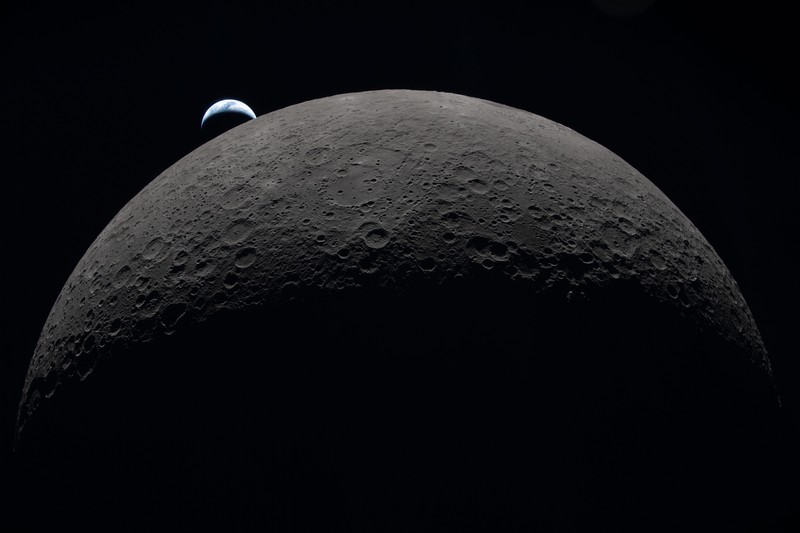
Four drones will hop across the lunar surface, snapping high-resolution photos of terrain no human has ever seen. Two rovers will carry astronauts across the rocky South Pole, one reaching more than 6 mph and the other over 9 mph. A lander called Endurance will touch down with enough precision to deposit scientific instruments on a ridge near Shackleton Crater.
This is not a concept sketch. NASA has signed the contracts, named the companies, and posted the launch windows. At a Washington event on Tuesday, the agency laid out the opening moves of its Moon Base programme — a $20 billion effort, according to the BBC, to establish a permanent human presence at the lunar South Pole by 2032.
Blue Origin, Astrobotic, and Intuitive Machines have all won lander contracts. Astrolab ($219 million) and Lunar Outpost ($220 million) will build lunar terrain vehicles — one a crewed rover capable of more than 6 mph, the other a crewed rover also capable of manual, autonomous, or teleoperated driving at more than 9 mph with a year-long operational lifespan. Firefly Aerospace will carry NASA’s MoonFall drones, four autonomous hoppers that will survey Artemis landing sites, with launch targeted for 2028.
Three missions are already on the calendar. Moon Base I, targeted for no earlier than fall 2026, sends Blue Origin’s Endurance to the Shackleton Connecting Ridge with stereo cameras and a laser retroreflector. Moon Base II and III, both planned for later this year, deliver a rover and scientific payloads including an investigation into light spots on the surface known as lunar swirls. According to the BBC, the robotic phase will see 25 launches delivering 4 metric tonnes of cargo through 2029.
NASA administrator Jared Isaacman said the announcements mean the US will “never give up the Moon again.” But “permanent” is doing heavy lifting in that sentence. Human habitation — described as “semi-permanent” housing — is not expected until 2032, per the BBC, and the entire plan depends on SpaceX’s Starship Human Landing System, which has faced repeated delays.
Lunar scientist Dr Simeon Barber of the Open University told the BBC it “would not surprise me at all if China gets there first,” citing NASA’s difficulties securing a crewed landing craft. China plans to land humans on the Moon by 2030.
The machines are real. The contracts are signed. Whether the schedule survives contact with reality is another matter.
Discussion (5)