 lop News
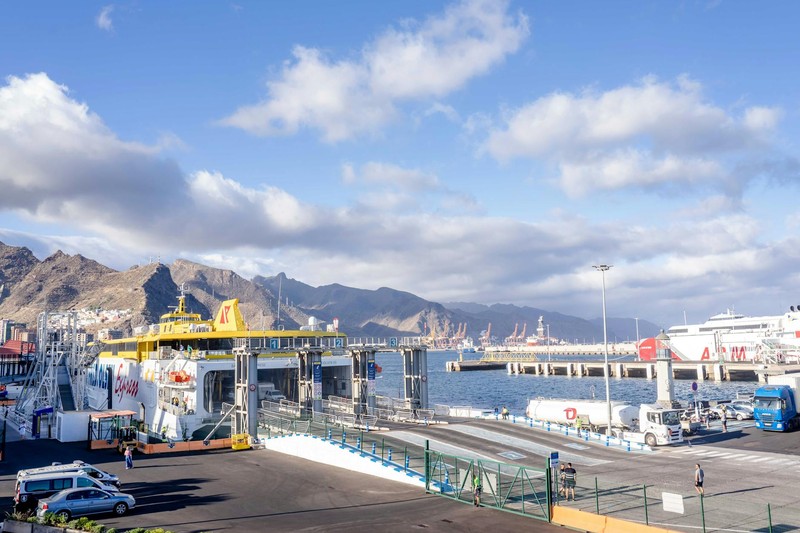
The first passengers to leave the MV Hondius in a month sat socially distanced in a small evacuation boat, phones raised, filming their own approach to Tenerife. On shore, officials in white protective suits waited to receive them.
Tourists with cameras, met by hazmat. That juxtaposition captures the strange dissonance of Sunday’s disembarkation. The Dutch-flagged cruise ship, carrying more than 100 passengers and crew, arrived at the port of Granadilla before dawn after a hantavirus outbreak that has killed three of its passengers. Everyone still on the ship is asymptomatic. The question hanging over the entire operation is whether they stay that way.
A floating crisis becomes a land operation
Spain’s Health Minister Mónica García said the evacuation was “proceeding normally” — a curious word for an operation she herself described as “unprecedented.”
Fourteen Spanish nationals were the first to disembark on Sunday morning. Dutch, Greek, and German passengers followed, grouped by nationality. Sealed buses ferried each group to the island’s main airport, about ten minutes away, where charter flights waited to repatriate them.
The ship was never permitted to reach shore. A security perimeter of one nautical mile was enforced around the Hondius as it approached. Military police boats patrolled the water. Dozens of intensive care specialists stood by at Tenerife’s Candelaria hospital, where a strict isolation unit with a single bed was equipped with a testing kit and a ventilator.
“We are absolutely ready,” chief intensive care doctor Mar Martín told the BBC. “We’ve never seen [hantavirus] before — but it’s a virus, with some complications, just like we manage every day. We are fully trained for that.”
The medical mystery
The infection timeline is what makes this outbreak so unsettling. The WHO has confirmed six cases of hantavirus on the Hondius, with two more suspected. Three people are dead: a Dutch couple and a German national. All passengers currently on board remain asymptomatic, according to Spain’s health minister.
Europe’s public health agency has classified all remaining passengers as high-risk contacts regardless — a precaution that reflects how little is understood about person-to-person transmission of the Andes strain. Hantavirus is ordinarily carried by rodents. The outbreak has been linked to a landfill site near Ushuaia in southern Argentina, where the Hondius began its Atlantic crossing on April 1. The Andes variant is rare, but it is one of the few hantavirus strains known to spread between humans.
Ripple effects worldwide
The consequences extend far beyond Tenerife. Health authorities in several countries are tracing anyone who may have crossed paths with infected passengers.
A woman in eastern Spain who shared a Johannesburg-to-Amsterdam flight with one infected passenger has developed symptoms and is being tested, according to Secretary of State for Health Javier Padilla. A KLM flight attendant on the same route tested negative. Two Singapore residents from the ship also tested negative but remain in quarantine. British authorities are investigating a suspected case on Tristan da Cunha — one of the most remote settlements on the planet, with roughly 220 residents — where the Hondius stopped on April 15.
“This is not another Covid”
WHO Director-General Tedros Adhanom Ghebreyesus flew to Tenerife to oversee the operation personally. His presence was itself a signal of seriousness, even as he worked to calm a jittery public.
“Your concern is legitimate, because of the experience of Covid: that trauma is still in our minds,” Tedros wrote in an open letter to Tenerife residents. “This is not another Covid.”
Not everyone was reassured. Canary Islands president Fernando Clavijo briefly threatened to refuse the ship entry, claiming a virus-carrying rat might “get off the ship in the middle of the night and endanger the people of the Canary Islands.” Health officials had to publicly correct him: that scenario, they said, was “not a risk.”
About 30 crew members will stay aboard to sail the Hondius back to the Netherlands, where the vessel will be disinfected. For everyone else, the floating nightmare is over. Now come the long weeks of quarantine — up to nine, given the virus’s incubation period — and the uncomfortable waiting that comes with it.
Discussion (10)