 lop News
At 3:49 on Friday morning, 1.8 million people in southern Finland received an emergency alert telling them to go inside and stay there. A drone — possibly more than one — had entered Finnish airspace near Helsinki, and nobody could say for certain where it came from or what it was carrying.
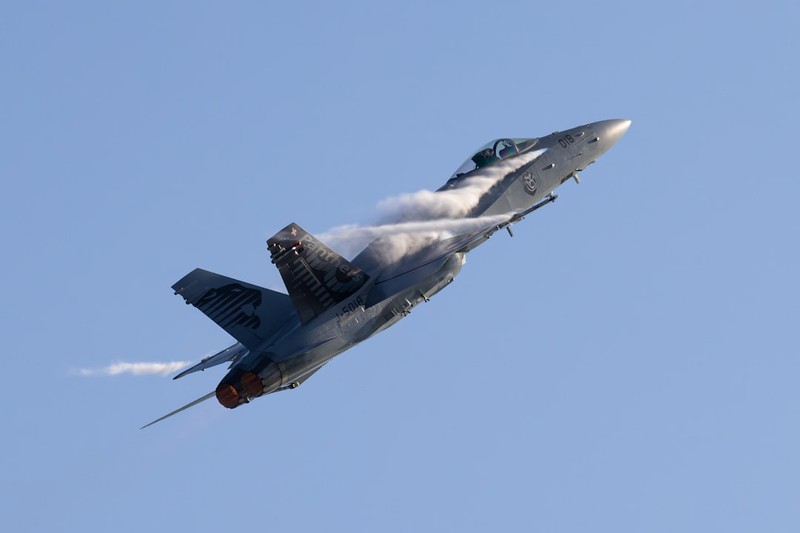
Within minutes, Finnish Air Force F/A-18 Hornets were screaming over the capital and the Gulf of Finland. Helsinki-Vantaa, the country’s largest airport, shut down completely. Nine flights were diverted — long-haul arrivals from Tokyo, Osaka, Hong Kong, and Singapore rerouted to Stockholm and Rovaniemi. A three-hour suspension of all air traffic followed, with operations not resuming until 7:19 a.m.
By dawn, the danger had passed. But the political shockwaves were just beginning — and they extend well beyond Finland.
A pattern, not a coincidence
This is the second major drone incident to rattle a European capital in 48 hours. Overnight, Latvia issued its own airspace warning, in effect from 1:43 a.m. to 6:37 a.m., hours before the Finnish alert. On Thursday, Latvian Prime Minister Evika Siliņa announced her resignation after a drone crisis effectively destroyed her governing coalition.
The connection is not geographic coincidence. It is the geometry of war. Ukraine has intensified long-range drone strikes against Russian oil export infrastructure on the Gulf of Finland, including massive attacks on the ports of Primorsk and Ust-Luga. Russia’s defence ministry reported shooting down 355 Ukrainian drones overnight. Some of those drones, jammed or diverted by Russian electronic warfare, are drifting into the airspace of the countries sitting between Ukraine and its targets.
Kyiv has acknowledged as much. On May 7, Ukrainian drones crashed in Latvia after being electronically diverted by the Russian military, one causing a fire at a disused oil storage site in the country’s east.
Conflicting accounts on the ground
Finnish authorities struggled to present a coherent picture of what happened. Kimmo Kohvakka, Director General for Rescue Services at the Ministry of the Interior, told the Finnish news agency STT that at least one drone had strayed into Finnish territory and there was “possibly more than one drone.” Separately, Henrik Gahmberg, a communications specialist for the Finnish Defence Forces, told tabloid Iltalehti that the armed forces had made no sightings of drones inside Finland. The Defence Command did not explain the discrepancy when pressed by Helsingin Sanomat.
Kari Nisula, chief of operations for the Finnish Defence Forces, said Finland had received advance warning through military intelligence channels about approaching drones, but declined to identify the source.
The suspected corridor ran between Helsinki and Porvoo, a stretch of south-coast terrain that includes Neste Oyj’s oil refinery — a piece of infrastructure that, in wartime context, looks precisely like the kind of target Ukrainian drones have been hitting on the Russian side of the gulf.
A government falls in Riga
The Finnish scare was dramatic. In Latvia, the consequences have been constitutional.
Siliņa sacked her defence minister, Andris Spruds, on Sunday over the drone intrusions, arguing Latvia’s anti-drone systems had not been deployed quickly enough. Spruds’s allies in the left-wing Progressive party quit the coalition in protest, calling him a scapegoat. By Thursday, Siliņa was gone.
“The most important thing for me is the wellbeing of Latvians and the security of our country,” she said at a press conference announcing her resignation. “We are fully aware of the times we’re all living in.”
Ukraine’s President Volodymyr Zelenskyy said Wednesday he would send experts to Latvia and pledged to work with Riga on a “multi-layered air defence system.” Latvia’s President Edgars Rinkēvičs said a long-term air defence accord would be prepared.
NATO’s northern exposure
The twin crises expose a vulnerability that European leaders have acknowledged but not yet remedied. Drone flyovers into NATO airspace reached what Euronews described as “an unprecedented scale” last September, prompting leaders to agree on a “drone wall” along their borders. NATO’s Eastern Sentry programme, announced by Secretary General Mark Rutte after a Polish airspace violation, is meant to deter incursions. A new US anti-drone system was deployed to the alliance’s eastern flank in November.
None of it prevented Friday’s events. Finland — NATO’s newest member, with a 1,340-kilometre border with Russia — found itself scrambling Hornets and shutting down its capital’s airport with no clear picture of what was overhead.
President Alexander Stubb took to X to assure citizens that Finland was “not facing any direct military threat.” Interior Minister Mari Rantanen told people it was safe to go to work and school. Prime Minister Petteri Orpo confirmed the “danger in Uusimaa is over” without providing further detail.
These are reassuring words. They are not reassuring in context. A drone entered the airspace of a NATO capital, fighters were scrambled, a major airport was shuttered, and authorities could not agree on whether they had actually seen the thing. Forty-eight hours earlier, the same class of incident toppled a government 400 kilometres to the south.
The war in Ukraine is not contained. It never was.
Sources
- Officials say danger over after early hours drone alert — Yle News
- Finland says Helsinki drone threat has ended as airport reopens — The Irish Times (Reuters)
- Finland closes Helsinki airport after drone warning — AeroTime
- Finland faces no ‘direct military threat’ despite drone scare, president insists — Politico
- Finland warns of drone scare near Helsinki, fighter jets scrambled, flights diverted — South China Morning Post
- Helsinki Airport resumes flights after drone alert forces suspension, officials say — Euronews
Discussion (10)