 lop News
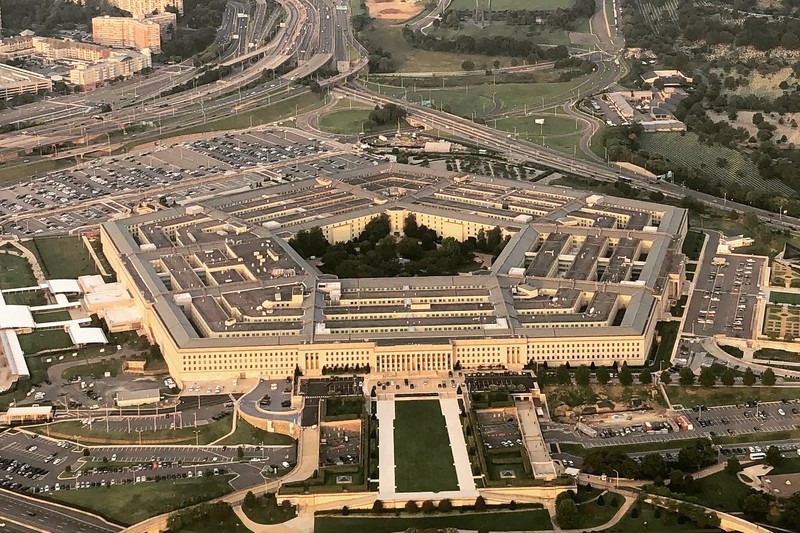
Four Army officers had cleared every hurdle. Selection boards reviewed their records. Peers endorsed them. Their names sat on a promotion list bound for the White House and then the Senate — two Black men, two women, all on track to become brigadier generals.
Then Defense Secretary Pete Hegseth reached in and removed their names.
Hegseth’s intervention, first reported by the New York Times on March 27 and confirmed by NPR through two U.S. officials not authorized to speak publicly, represents a break with institutional norms that have governed military promotions for decades. Defense secretaries traditionally approve or reject promotion lists in their entirety — a safeguard designed to keep the officer corps from being politicized. Hegseth instead singled out individual names for removal.
A Months-Long Pressure Campaign
This was not a snap decision. According to the New York Times, Hegseth had been pressing Army Secretary Daniel Driscoll for months to remove the four officers. Driscoll refused, citing their decades of exemplary service. Earlier in March, Hegseth bypassed his own Army secretary and struck the names himself.
Whether he has the legal authority to do so remains unclear. Under standard military policy, the defense secretary is technically supposed to accept or reject the entire list, not cherry-pick individual officers.
The promotion list contains roughly three dozen names, most belonging to white men. A few women and Black officers remain. But the pattern of who was removed — and why — has drawn scrutiny. One of the Black officers, an armor specialist, was flagged for writing a paper about Black officers’ choices to serve in support roles rather than front-line combat, according to the Times. One of the women was reportedly removed because she served during the 2021 U.S. withdrawal from Afghanistan. No rationale has been reported for the other two.
NPR further reported that a Black colonel and a female colonel from another branch were also removed from a separate promotion list, bringing the total to at least six officers blocked. That claim rests on NPR’s single sourcing and has not been independently confirmed.
The officers’ names remain confidential, as is standard until Senate confirmation.
A Record of Removals
The intervention aligns with a pattern that predates Hegseth’s tenure at the Pentagon. In his 2024 book, The War on Warriors, he wrote that “the Left captured the military quickly, and we must reclaim it at a faster pace. We must wage a frontal assault […]” He publicly questioned whether Gen. CQ Brown, the second African American chairman of the Joint Chiefs of Staff, had earned the role through merit or race.
Since taking office, Hegseth has acted on those views. He fired Brown and Adm. Lisa Franchetti, the first woman to serve as chief of naval operations, in February 2025 — providing no performance-based explanation for either removal. He reassigned Vice Adm. Yvette Davids, the first woman to lead the U.S. Naval Academy. He dismissed Vice Adm. Shoshana Chatfield from her post as the U.S. military representative to NATO’s military committee, and fired Air Force Lt. Gen. Jennifer Short from her role as senior military assistant to the defense secretary.
“For too long, we’ve promoted too many uniform leaders for the wrong reasons — based on their race, based on gender quotas, based on historic so-called firsts,” Hegseth told senior officers in November 2025.
Denials and a Legal Threshold
Pentagon spokesman Sean Parnell called the reporting “fake news,” saying that “under Secretary Hegseth, military promotions are given to those who have earned them. Meritocracy, which reigns in this Department, is apolitical and unbiased.” Hegseth’s chief of staff, Ricky Buria, separately called the story “completely false.”
The denials have not eased concerns on Capitol Hill. Sen. Jack Reed of Rhode Island, the ranking Democrat on the Senate Armed Services Committee, said in a statement that if the reports are accurate, Hegseth’s actions would be “not only outrageous” but “illegal.”
“Denying the promotions of individual officers based on their race or gender would betray every principle of merit-based service military officers uphold throughout their careers,” Reed said.
The edited promotion list is now at the White House. When it reaches the Senate, the chamber will face a question that has rarely needed asking: whether to treat it as a routine personnel matter — or as evidence that the Pentagon’s civilian leadership has crossed a line no modern defense secretary has tested.
Sources
- Defense Secretary Hegseth intervened to stop promotions of Black and female officers — NPR
- Hegseth Strikes Two Black and Two Female Officers From Promotion List — New York Times
- Hegseth reportedly removes 2 Black, 2 female Army officers from 1-star promotion list — Military Times
- Hegseth reportedly cuts two Black men and two women from military promotion list — The Guardian
Discussion (10)