 lop News
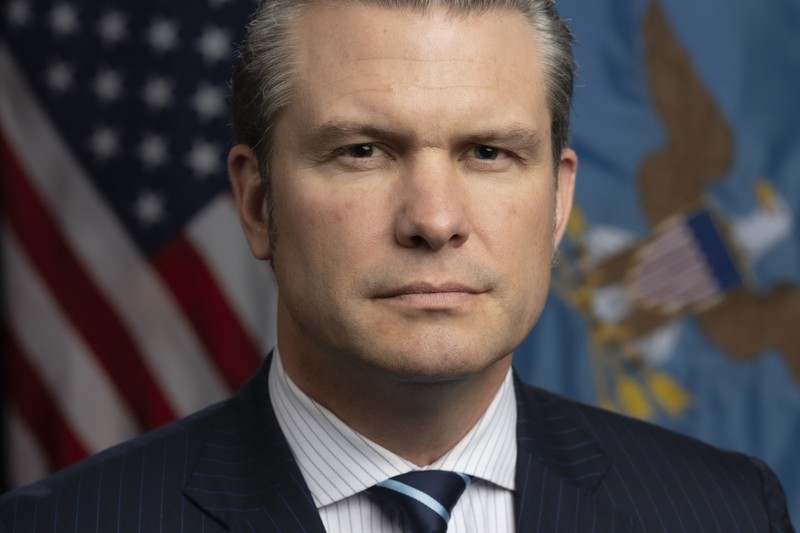
Gen. Randy George learned he was out from a phone call. The Army chief of staff was sitting in a meeting on Thursday when Defense Secretary Pete Hegseth rang to tell him to retire immediately. Senior Army leadership found out at the same time as everyone else — when the Pentagon announced it publicly.
George’s removal is the latest in a year-long campaign by Hegseth to reshape the US military’s senior ranks. More than a dozen generals and admirals have been removed since the former Fox News host took office, including the chairman of the Joint Chiefs of Staff, the chief of naval operations, and the heads of the Defense Intelligence Agency and the National Security Agency.
Two other Army generals were fired alongside him: Gen. David Hodne, who led the Army’s Transformation and Training Command, and Maj. Gen. William Green, who headed the Chaplain Corps, according to three US defense officials who spoke with Reuters and CNN.
No Substantive Disagreement
The decision was not rooted in policy differences over the Army’s direction, military officials told the New York Times. George had led the service through one of its worst recruiting crises and had pushed to accelerate the acquisition of cheap drones and other weapons that have come to dominate the battlefield in Ukraine.
The friction was personal and political. Hegseth had clashed with George and Army Secretary Daniel Driscoll over the secretary’s decision to block the promotion of four Army officers to one-star general. Two of the officers are Black and two are women — on a promotion list of 29 others, most of whom are white men. George and Driscoll refused to remove them, citing their exemplary service records.
George’s earlier role as senior military assistant to former Defense Secretary Lloyd Austin also counted against him. That position is traditionally considered apolitical, but his proximity to the Biden-era Pentagon chief was viewed as a liability by Hegseth and his circle, CNN reported.
A Wartime First
Firing a senior general during active military operations is nearly without precedent, Reuters noted. The dismissal comes as the US conducts strikes against Iran — operations that rely heavily on Army-deployed air defense systems. Thousands of soldiers from the 82nd Airborne Division have also started arriving in the Middle East, potentially for ground operations.
George was confirmed by the Senate in 2023 for a standard four-year term. He is exiting the role nearly a year-and-a-half early. As chief, he had been advising the chairman of the Joint Chiefs and the defense secretary on integrated air and missile defense capabilities directly relevant to the current conflict.
“It doesn’t feel like a very thought-out decision,” one US official told CNN.
The Replacement
Gen. Christopher LaNeve, the Army’s vice chief of staff, will step in as acting chief. LaNeve served as Hegseth’s military aide before being confirmed to his current role with the secretary’s enthusiastic endorsement. “He will help ensure the Army revives the warrior ethos, rebuilds for the modern battlefield, and deters our enemies around the world,” Hegseth wrote at the time.
LaNeve caught President Trump’s attention during the Commander in Chief’s Ball on inauguration night, calling in from South Korea with troops under his command. “Is this man central casting or what?” Trump remarked. Pentagon spokesman Sean Parnell described LaNeve as “completely trusted by Secretary Hegseth to carry out the vision of this administration without fault.”
Institutional Alarm
The pattern of dismissals has drawn warnings from across the political spectrum. Five former secretaries of defense — Lloyd Austin, William Perry, Chuck Hagel, Leon Panetta, and Jim Mattis, who served during Trump’s first term — issued an open letter last year urging Congress to intervene.
They wrote that they were “alarmed” by the dismissals. “Mr. Trump’s dismissals raise troubling questions about the administration’s desire to politicize the military and to remove legal constraints on the President’s power,” the former defense secretaries added. Left unchecked, they warned, potential recruits may avoid military service and those already in uniform may refrain from “speaking truth to power” for fear of retribution.
The Pentagon offered no specific reason for George’s departure beyond a perfunctory statement of gratitude. In an institution built on continuity and chain of command, a four-star general learned his career was over from a phone call — and his colleagues learned alongside the rest of the public.
Sources
- Hegseth Fires Army Chief Amid Battle With Its Leaders — The New York Times
- Hegseth ousts Army Chief of Staff Gen. Randy George — CBS News
- Hegseth ousts US Army chief of staff and two other generals amid Iran war — CNN
- Hegseth fires Army’s top officer, Gen. Randy George — Breaking Defense
- Army chief of staff fired by Hegseth, sources say — Reuters
Discussion (10)