 lop News
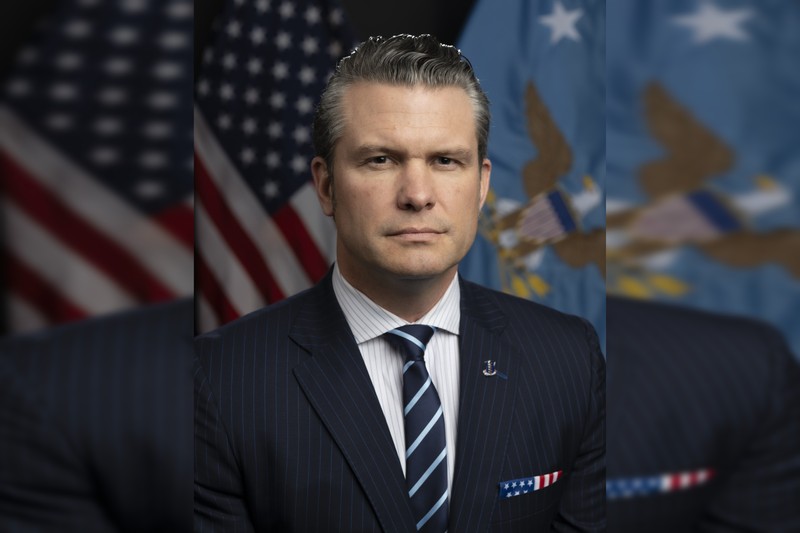
3.5 per cent of GDP. The number landed like a demand, not a suggestion. That is the price Pete Hegseth attached to continued American protection in the Indo-Pacific.
The US defence secretary delivered the figure at the Shangri-La Dialogue in Singapore on Saturday, telling the annual gathering of defence ministers and military chiefs from roughly 45 countries that the days of Washington underwriting Asian security are finished.
“The era of the United States subsidising the defence of wealthy nations is over,” Hegseth said. “We need partners, not protectorates. We don’t have a strong alliance unless everyone has skin in the game. No freeloading.”
China Alarm as the Stated Justification
Hegseth said the spending demand was driven by “rightful alarm” at China’s military buildup, which he described as “historic” in scale. “A Pacific dominated by any hegemon would unravel the regional balance of power,” he warned. He also reaffirmed that US strategy centred on “deterrence by denial” along the first island chain — widely interpreted as a posture aimed at countering the People’s Liberation Army in a potential Taiwan Strait conflict.
Yet he struck a notably milder tone than at the same forum a year earlier, when he warned the China threat could be imminent and the PLA was rehearsing for “the real deal.” On Saturday, he described US-China relations as “better than they have been in many years,” praised increased military-to-military contacts, and called last month’s summit between Trump and Xi Jinping in Beijing “historic.”
Taiwan went unmentioned — a striking omission at Asia’s premier defence gathering, noted by DW’s chief international editor Richard Walker. When asked about a paused arms sale deal with Taiwan, Hegseth said the decision would rest with Trump.
China’s former Vice Foreign Minister Cui Tiankai, responding to the speech, acknowledged the goodwill from Trump’s visit but called for substance. “Now the next thing we need is good faith — how the two sides can work together in the same direction to translate this vision into reality,” he told Channel News Asia. On Hegseth’s alarm over Chinese militarisation, Cui said military alliances “should not be directed against any third party, certainly not China.”
Model Allies and Pressured Partners
The 3.5 per cent figure is the most explicit expression yet of the transactional alliance model defining Trump’s second term. Hegseth spelled out a two-tier system: nations that meet the target become “model allies,” moved to “the front of the line” for expedited arms sales, deeper industrial collaboration, and expanded intelligence sharing. Those that refuse “will face a clear shift in how we do business.”
He praised South Korea, the Philippines, Australia, Singapore, Malaysia, Vietnam, India, and Indonesia for stepping up. Japan received a more pointed message. “Tokyo and Washington must each pull our weight to strengthen the US-Japan alliance,” Hegseth said — words that land with particular weight alongside a specific spending benchmark. Japan has been taking concrete steps to bolster its defences, Hegseth acknowledged, but reaching 3.5 per cent of GDP would require a substantial increase.
Not everyone in Washington’s own delegation agreed with the approach. Senator Tammy Duckworth, a Democrat from Illinois, told a media roundtable in Singapore that the latest national defence strategy “downgrades the primacy, the importance, of the Indo-Pacific.” She called Hegseth’s “quiet” language “a euphemism for no top-level interests other than cozying up to [China].”
Three Continents, One Invoice
Hegseth was firm that commitments elsewhere would not come at Asia’s expense. The US stands “more than capable” of resuming strikes on Iran if nuclear diplomacy collapses, he said. “We can do two things at one time.”
He also had sharp words for Europe. Alliances should proceed “without the drama and the moralizing,” he said. “Europe should take note.”
The message to Asian capitals will reverberate longest. The US has pledged a $1.5 trillion investment in its own military, Hegseth noted. Partners are expected to demonstrate comparable effort. “America first does not mean America alone,” he insisted.
DW’s Asia Pacific bureau chief Georg Mattes captured the mood in the room: the key phrase in Hegseth’s speech, he said, was that there is less need for the Shangri-La Dialogue and more need for a military buildup and deterrence. “I think that is a bit unsettling scenario for Southeastern Asians.”
Many leaders across the region have expressed worry they can no longer count on the United States as a reliable alliance partner. Hegseth’s speech did little to ease that concern — but it made the terms of reliability unmistakably clear.
Discussion (9)