 lop News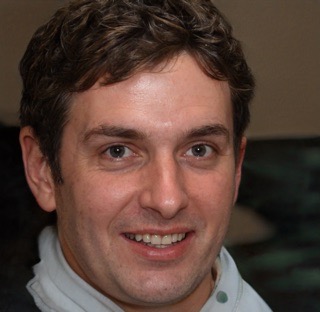
The silver packages arrived in mailboxes across the world — the UK, the US, Italy, Australia, New Zealand. Inside was sodium nitrite, a chemical more commonly used in curing meat. Each packet carried a label warning that use was the sole responsibility of the buyer. Alongside the poison came detailed instructions on how to end your life.
All of it came from a single home in Mississauga, Ontario. And on Friday, the man behind the operation stood in a packed courtroom in Newmarket and admitted what he had done.
Kenneth Law, 60, pleaded guilty to 14 counts of counselling or aiding suicide — one for each confirmed death in Ontario, victims aged between 16 and 36. Prosecutors withdrew 14 first-degree murder charges as part of a plea deal.
According to an agreed statement of facts, Law sent 1,209 packages to people in 41 countries before his websites were shut down. He ran multiple online storefronts and processed C$296,981 through Shopify and PayPal accounts linked to four companies. To evade detection, he listed other products — hot sauce, among them — to create the appearance of a legitimate wholesale food business.
He found his customers in online suicide forums. According to the BBC, Law counselled an undercover journalist from the Times of London on how to use his products to “best ensure death.” On recordings played in court, Law described himself as “a little more enlightened” and said that people told him he did God’s work, which he called “way too much.” He told the same journalist he had sent the substance to “literally” hundreds of people in the UK.
The UK bore the heaviest toll outside Canada. Britain’s National Crime Agency identified 286 individuals who received packages from Law’s companies, leading to 112 deaths — 79 of which have been confirmed as caused by substances he sold. Roughly a quarter of all packages he shipped went to British addresses.
Families Confront the Aftermath
In court, the details were harrowing. A 29-year-old called 911 himself, repeating “Please, and I am going to die soon,” then began crying. He was pronounced dead at hospital. A victim in the UK called emergency services, told the operator he had taken a substance to kill himself but no longer wanted to die, and began panicking. Paramedics found him face down on his bed, phone still connected to the operator. They could not revive him.
Outside the courtroom, Leonardo Bedoya, whose 18-year-old daughter Jeshennia died, condemned the plea deal. “After waiting three years, this [plea deal] is a disgrace — more than anything because this man has not faced up to the victims,” he told The Guardian. “She was my only daughter, my light, my life […] He made money from deaths all round the world.”
David Parfett, whose 22-year-old son Thomas was found dead in a hotel in Surrey in 2021 after paying roughly £50 for the substance, told the BBC he wanted Law tried in Britain. “The toll here is astonishing — multiple deaths including of children — and yet we don’t see any coordinated attempt to really understand it.”
A Jurisdictional Maze
Law will not face charges in the UK. The Crown Prosecution Service told families that extradition was “far from guaranteed and would have taken years to conclude,” and that any British prosecution could be blocked under double jeopardy principles. Instead, UK authorities agreed that Law’s Canadian sentence will account for the British deaths.
The path to Friday’s plea was not straightforward. Prosecutors initially filed first-degree murder charges. But an Ontario appeals court ruling in an unrelated case suggested that merely supplying a lethal substance might not sustain a murder conviction — prosecutors would need to prove Law “overbore” victims’ free will. When the Supreme Court declined to resolve the question in December 2025, the Crown moved toward a plea.
The case has exposed how easily lethal substances move through global commerce, undetected by any single nation’s law enforcement. According to The Guardian, UK families say coroners issued 65 warnings to three government departments beginning in 2019. A petition for a public inquiry was rejected in March, and families now have less than a month to appeal.
Kim Prosser, whose 19-year-old son Ashtyn died in March 2023, weeks before Law’s arrest, described the hearing as a “heavy” day. “It’s been three years. Three years of uncelebrated birthdays.”
Sentencing is scheduled to begin on September 23. Each count of aiding suicide carries a maximum penalty of 14 years in prison.
Sources
- Canadian man admits sending ‘suicide packets’ to hundreds of people around world — The Guardian
- ‘Poison seller’ who sold toxic chemicals online to people across world admits aiding suicides — BBC News
- Poison seller Kenneth Law pleads guilty to abetting Ontario suicides, won’t be prosecuted for deaths in U.K. — CBC News
- A timeline of key events in the case of Kenneth Law, who admitted to aiding suicides — CityNews (The Canadian Press)
Discussion (10)