 lop News
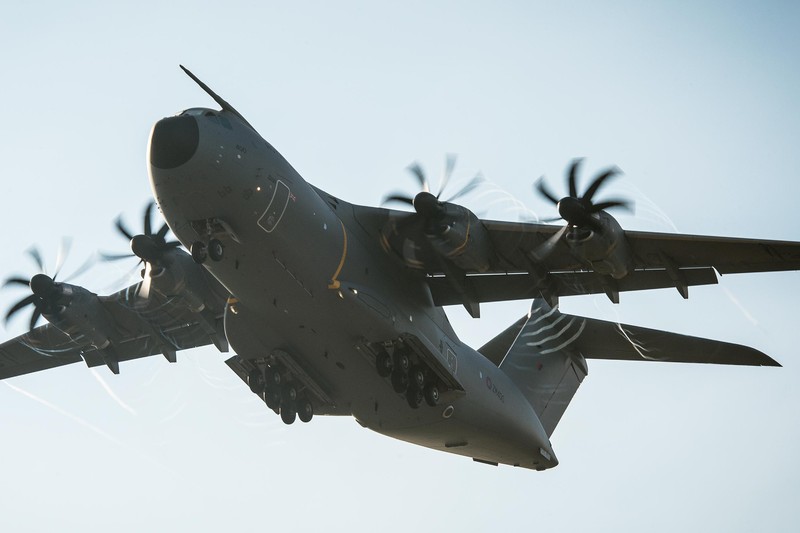
Six paratroopers and two intensive care clinicians stepped out of an RAF transport aircraft five kilometres above the South Atlantic on Saturday, turned into the wind, and descended through cloud onto a golf course covered in rocks. Below them waited 221 residents, a two-person medical team, and a man whose oxygen supply was almost gone.
This is medicine on Tristan da Cunha — the most remote inhabited island on Earth, roughly 2,400 kilometres from the nearest neighbour, no airstrip, only a small hospital called Camogli with a two-person medical team, and a boat journey of over a week to the closest fully equipped facility.
The patient, a British national who lives on the island, had disembarked from the cruise ship MV Hondius on 14 April, according to the World Health Organization. He developed diarrhoea two weeks later, then fever. The UK Health Security Agency confirmed on Friday that he was a suspected hantavirus case — one of two suspected and six confirmed cases linked to the Hondius outbreak, which has now killed three people.
His isolation was already underway. The problem was oxygen. Supplies on Tristan had reached what the Ministry of Defence described as a “critical level.” A boat was too slow. The only option was to fall out of the sky.
56 Hours From Call to Touchdown
Brigadier Ed Cartwright, commander of 16 Air Assault Brigade, said there was “7,000 miles and about 56 hours” between the request for help and having personnel and 3.3 tonnes of medical stores on the ground.
The RAF A400M Atlas flew from Brize Norton in Oxfordshire to Ascension Island — 6,788 kilometres — refuelled mid-air by an RAF Voyager tanker, then continued another 3,000 kilometres south to Tristan da Cunha. The paratroopers jumped from altitude, with two carrying clinicians in tandem harnesses, and steered toward a landing zone hemmed in by 1,500-foot volcanic cliffs on one side and open ocean on the other.
“The consequence of getting that wrong is that you end up in the Atlantic,” Cartwright told the BBC.
The team delivered 3.3 tonnes of medical supplies — including vital oxygen and PCR testing equipment — in three separate airdrops at a site called the Patches, according to the Tristan da Cunha government. It was the first time the UK military has parachuted medical personnel in for a humanitarian mission.
The island’s official announcement thanked residents who “pulled out all the stops at short notice” to accommodate the visitors, including, presumably, whoever maintains the golf course that served as an impromptu landing strip.
A Virus That Travelled With the Ship
Hantavirus is normally a disease caught from rodents — specifically from their urine, faeces, or saliva. Most strains do not pass from person to person. The Andes strain, identified in patients from the Hondius, is a rare and troubling exception.
The WHO’s situation report, published 4 May, describes a cruise that departed Ushuaia, Argentina, on 1 April and wound through Antarctica, South Georgia, and the South Atlantic islands. Of 147 passengers and crew from 23 countries, seven fell ill. Three died. The first case — a man who developed fever and headache on 6 April — died onboard five days later with no microbiological tests performed.
The Hondius has since arrived in Tenerife, where more than 100 people are disembarking for repatriation. British passengers face 72 hours of isolation at Arrowe Park Hospital in Wirral, followed by up to 42 days of self-isolation at home — a precaution that underscores how seriously UK authorities are treating the possibility of person-to-person transmission.
WHO assesses the global risk as low.
Medicine at the Edge of the Map
For all the drama of Saturday’s parachute drop, the deeper story is structural. Tristan da Cunha has 221 residents and two medical professionals. The nearest intensive care unit is in South Africa — a medical evacuation away, by aircraft that cannot land because there is no runway.
When Cartwright said the paratroopers would be extracted by ship, “carefully planned in light of the medical situation,” he was describing the fundamental constraint of remote medicine: everything comes and goes by sea, on a timetable set by weather and logistics.
The hantavirus cluster on the Hondius was a cruise ship problem that became a South Atlantic problem that became, improbably, a parachute problem. A virus that normally lives in rodents found its way onto a vessel carrying 23 nationalities through some of the most isolated waters on Earth. One suspected carrier disembarked onto an island where distance to the nearest hospital is measured in weeks, not miles.
On Tristan da Cunha, the calculus is straightforward. Oxygen was running out. The boat was too slow. So eight people jumped from the sky.
Sources
- Military conducts daring parachute drop to deliver critical medical support to Tristan da Cunha — UK Government
- Army parachutes onto remote island to help Briton with suspected hantavirus — BBC News
- Hantavirus cluster linked to cruise ship travel, Multi-country — World Health Organization
- Paratroopers landed on ‘golf course covered in rocks’ to supply Britain’s most remote overseas territory — The Guardian
- First Ever Emergency Airdrop onto Tristan — Tristan da Cunha Official Website
Discussion (11)