 lop News
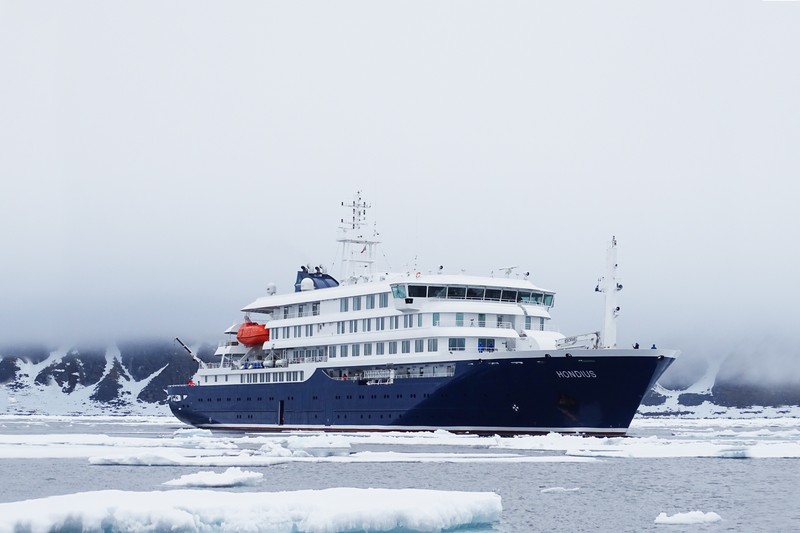
A French woman isolated in a Paris hospital. An American man in a biocontainment unit aboard a repatriation flight. A Dutch passenger removed from a connecting flight in Johannesburg before takeoff, who later died. The hantavirus outbreak that began on a cruise ship in the mid-Atlantic is no longer on a cruise ship in the mid-Atlantic.
The MV Hondius, a Dutch-flagged luxury vessel, departed Ushuaia, Argentina on April 1 carrying nearly 150 passengers and crew across the Atlantic. It never completed its itinerary. Three passengers — a Dutch couple and a German woman — have died. The ship has been anchored off Tenerife in the Canary Islands for weeks, at the centre of one of the strangest hantavirus events on record.
On Sunday, Spain coordinated the evacuation of 94 people of 19 nationalities from the vessel. By Monday, the virus had travelled with them.
Cases on Two Continents
French Health Minister Stephanie Rist confirmed that one of five French evacuees placed in isolation in Paris had tested positive after falling ill during her repatriation flight. “Tests came back positive,” Rist said on Monday. Her condition was deteriorating, according to Reuters.
Rist said authorities had identified 22 close contacts among French nationals — including eight people who travelled on an April 25 flight between Saint Helena and Johannesburg, and 14 more on a subsequent Johannesburg-to-Amsterdam flight. A Dutch woman who later died of hantavirus was on that Saint Helena flight and briefly boarded the Amsterdam connection before being removed prior to take-off, according to Channel News Asia.
In the US, the Department of Health and Human Services reported that one evacuee had tested “mildly positive” for the Andes virus and another had developed mild symptoms. Both were travelling in the aircraft’s biocontainment units. All 17 Hondius passengers on the flight will undergo clinical assessment.
The confirmed case count now stands at 10, with two additional probable cases and citizens of at least six countries affected.
A Virus Out of Its Element
What makes this outbreak unusual is not just the death toll — though with a fatality rate that can reach 40 to 50 percent for the Andes strain, it is serious. It is the setting.
Hantaviruses typically spread through rodent excrement. Humans contract the disease by inhaling aerosolised particles from dried urine, droppings, or nesting material. Outbreaks are almost always rural and linked to specific environmental exposures — clearing a barn, sweeping a cabin, agricultural work. A luxury cruise ship is none of those things.
The WHO believes the first infection occurred before the voyage began, likely in Argentina, where hantavirus is endemic, and then spread through human-to-human transmission on board. The Andes strain is the only known hantavirus variant that passes between people — an outlier within an already rare family of pathogens. The Hondius, with its recirculated air, shared dining spaces, and weeks at sea, provided conditions the virus almost never encounters.
Repatriation Under Pressure
Spain has defended its evacuation protocols after the French passenger fell ill during transit. Spain’s health ministry said the woman “started to feel unwell during the flight and not while she was on the ship,” and noted that the American who tested positive had shown no symptoms when the Hondius stopped in Cape Verde. US authorities requested a separate evacuation, which was carried out by boat.
Two final repatriation flights — to Australia with six passengers and to the Netherlands with 18 — were expected Monday to complete the operation. The Hondius itself is scheduled to depart Tenerife for the Netherlands on Monday evening with a skeleton crew.
Argentine health officials have reportedly questioned whether the outbreak even originated in Ushuaia, citing the virus’s weeks-long incubation period. The WHO has recommended a 42-day quarantine for all cruise passengers. Authorities in several countries are still tracking people who disembarked before the outbreak was identified.
UK Health Security Agency chief scientific officer Robin May described the public risk as “extremely low,” and experts have stressed that hantavirus is far less contagious than COVID-19. There is no cure. But for a pathogen that rarely surfaces outside rural Latin America to have killed three people on a cruise ship and then reached France and the United States, something worth watching is happening. The Hondius outbreak may prove to be a grim one-off. It may also be a signal that hantavirus is finding new routes into human populations. It is, at minimum, a reason to pay attention.
Sources
- US, French nationals from hantavirus ship test positive — Channel News Asia
Discussion (8)