 lop News
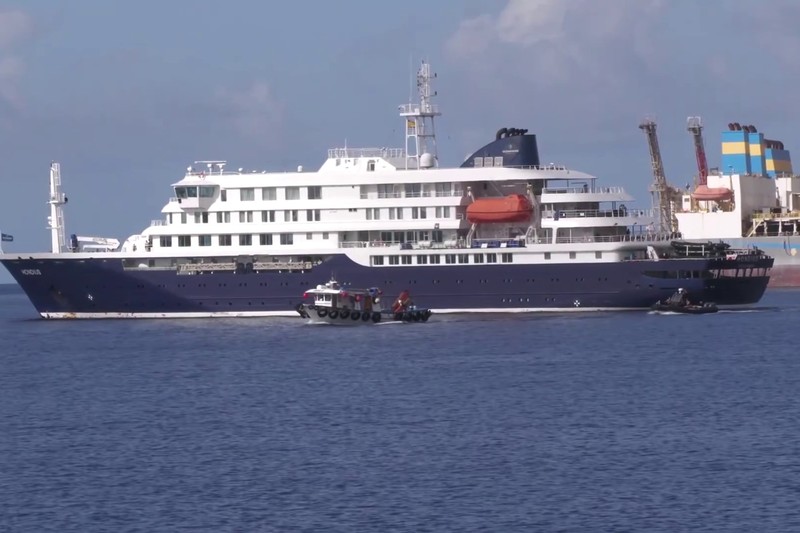
Three dead. Eight infected. One ship that departed Argentina on April 1 has become a multi-nation health emergency stretching from the Canary Islands to Perth, from Nebraska to Paris.
The MV Hondius, a Dutch-flagged expedition vessel operated by Oceanwide Expeditions, carried 147 passengers and crew from 23 countries when it left Ushuaia, Argentina, on a South Atlantic voyage. By early May, the World Health Organization had confirmed a cluster of Andes virus infections — a hantavirus strain unique in its ability to spread between humans. The WHO’s case fatality ratio for this outbreak sits at 38 percent.
What began as a contained shipboard outbreak has spiraled into a logistically chaotic repatriation operation spanning five continents.
A Virus That Jumps Between People
Andes virus, confirmed through PCR testing and sequencing as the cause, is the only known hantavirus that transmits from person to person — typically through close, prolonged contact with a symptomatic individual. Most hantaviruses spread only from rodents to humans.
The working hypothesis, according to WHO, is that the first case — an adult male who boarded after more than three months traveling in Argentina, Chile, and Uruguay — acquired the infection through environmental exposure before boarding. Subsequent cases, including the ship’s doctor and a guide, likely resulted from human-to-human transmission onboard.
WHO’s recommended 42-day isolation period has turned repatriation into a planning nightmare.
The Netherlands Detour
Australia’s health minister, Mark Butler, called it a “difficult” mission, and the details bear that out. Six people — four Australians, one permanent resident, and one New Zealander — were supposed to fly directly from Tenerife to Australia. Instead, they were diverted to the Netherlands at the last minute, landing there on Tuesday.
The detour was logistical, not medical. Butler told ABC News the operation required a charter flight crew willing to quarantine afterward, refueling arrangements between the Netherlands and Australia, and quarantine facilities ready to receive them. The passengers will spend up to 48 hours in a Dutch quarantine hotel before continuing to Perth.
Once in Australia, they face 21 days at the Centre for National Resilience in Bullsbrook, outside Perth — the first half of a full 42-day isolation period. The flight crew must quarantine too, either in Australia or at their home base.
Butler said Australia’s measures were “probably the strongest quarantine response of any country” taking back passengers from the Hondius. Most countries, he noted, require only two or three days of centralized quarantine.
Diverging Playbooks
The WHO recommended 42 days of isolation for all passengers leaving the ship. Not every country agreed.
Seventeen US citizens on a repatriation flight were taken to a Nebraska medical facility for clinical assessment rather than full quarantine. Seven others who had already returned home are being monitored in their home states. Two passengers on the repatriation flight traveled in biocontainment units, according to the US Department of Health and Human Services, one of whom showed mild symptoms. Separately, an American who had previously returned home from the ship has tested positive.
CDC acting head Dr. Jay Bhattacharya said he did not want to cause public panic, arguing that human-to-human transmission was rare and the outbreak should not be treated like COVID.
WHO Director-General Tedros Adhanom Ghebreyesus publicly cautioned that the US decision to deviate from WHO guidelines “may have risks.”
The divergence is stark. The UK sent 20 returning nationals to Arrowe Park Hospital in Merseyside for 72 hours of observation. Spain quarantined 14 citizens at a military hospital in Madrid — one has provisionally tested positive. French Health Minister Stéphanie Rist reported a woman isolating in Paris whose health was deteriorating, with 22 contacts traced. Canada required four passengers to self-isolate for at least three weeks.
The Ship Sails On
The Hondius itself departed Tenerife on Monday, heading for the Netherlands with 25 remaining crew and two medical staff. The body of a German passenger who died on May 2 is still on board.
Captain Jan Dobrogowski said in a video message that the crew’s thoughts were “with the ones that are no longer with us.” A Spanish police officer involved in the repatriation operation died of cardiac arrest.
Misinformation Outpaces the Science
Conspiracy theories have raced ahead of the facts, as they did with COVID. France 24 documented claims that hantavirus is a planned pandemic, a bioweapon, or a side effect of the Pfizer COVID-19 vaccine. Representative Marjorie Taylor Greene promoted ivermectin as a cure — baseless, since hantavirus replicates in the cytoplasm, not the nucleus, making ivermectin’s mechanism irrelevant.
WHO’s Maria Van Kerkhove addressed the comparisons directly: “This is not COVID, this is not the start of a COVID pandemic.”
Pandemic Lessons, Partially Learned
The Hondius outbreak tests the post-2020 pandemic infrastructure and exposes fractures alongside genuine coordination. WHO manages contact tracing across borders. Patients have been evacuated to hospitals in South Africa, the Netherlands, Switzerland, and Germany.
But when the same WHO recommendation — 42 days of isolation — produces responses ranging from military quarantine to home monitoring, the global consensus on handling novel outbreaks looks thinner than anyone would like. WHO assesses the global risk as low. The next pathogen may not be so cooperative.
Sources
- Hantavirus cluster linked to cruise ship travel, Multi-country (Update 1) — World Health Organization
- Last passengers leave virus-hit cruise ship as three more test positive — BBC News
- ‘Difficult’ mission to repatriate Australian hantavirus cruise passengers en route to long Perth quarantine — The Guardian
- 2026 Multi-country Hantavirus Cluster Linked to Cruise Ship — CDC Health Alert Network Advisory — US Centers for Disease Control and Prevention
- ‘Plandemic, Covid 2.0’: Fact-checking viral conspiracy theories about Hantavirus — France 24
Discussion (8)