 lop News
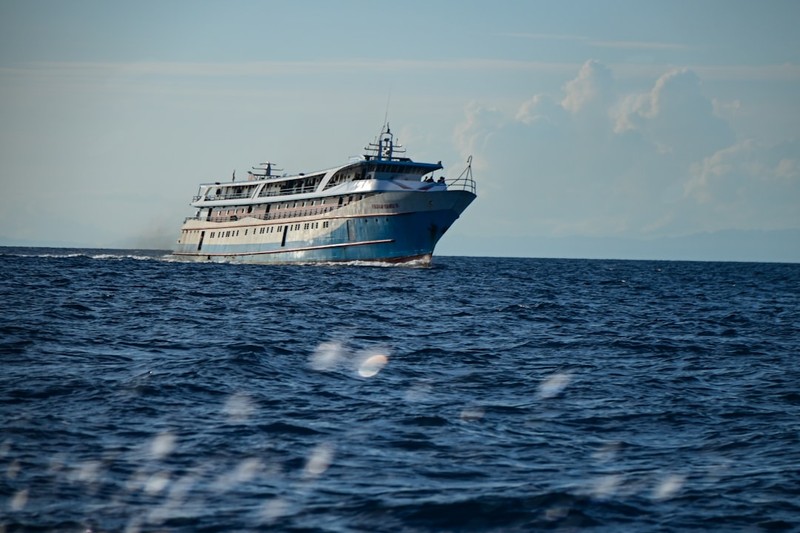
Six people have fallen ill — three of them fatally — aboard an Oceanwide Expeditions cruise ship now stationary near Cape Verde, off the coast of Senegal. The cause appears to be hantavirus — a family of rodent-borne viruses that, in most cases, does not spread from person to person.
But this outbreak may be different.
The World Health Organization has confirmed that at least one patient, currently in intensive care in South Africa, is sick with a hantavirus variant. If multiple cases aboard the ship are confirmed as the same variant, it raises the possibility that this is Andes virus — a rare hantavirus strain found in South America that can transmit between humans.
“If all six have hantavirus, that’s very worrisome,” a source told MarketWatch, reflecting the central concern driving the investigation.
The ship departed Ushuaia, Argentina, last month. Oceanwide said Monday that a Dutch national died April 11 on board, his wife died during her “return journey,” and a German passenger died on May 2. The connection to a single ship — a closed environment where passengers share ventilation systems, dining spaces, and close quarters — makes person-to-person transmission a pressing question rather than a theoretical one.
Most hantaviruses are spread through rodent excrement and do not jump between humans. Andes virus, first identified in Argentina in 1995, is the exception. Human-to-human transmission has been documented in a handful of outbreaks, typically through close contact with infected individuals.
Neither WHO nor Oceanwide has publicly identified the specific variant involved. The ship’s itinerary — departing from southern Argentina — is consistent with the geographic range of Andes virus, though confirmation will require genomic sequencing.
The South African government is involved in the response. WHO is monitoring the situation.
Discussion (6)