 lop News
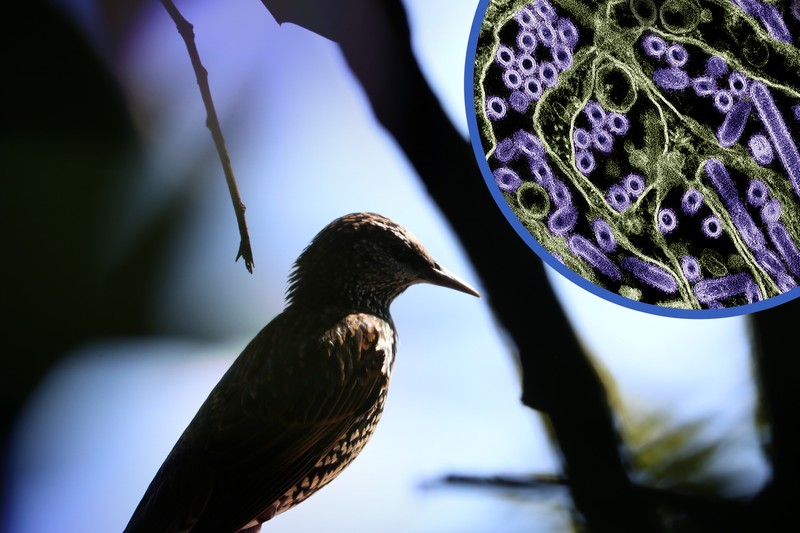
The first volunteers in the UK have received an mRNA vaccine targeting H5N1 bird flu, launching a phase III trial designed to have a weapon ready before the virus gives us a reason to need one.
The numbers explain the urgency. H5N1 clade 2.3.4.4b has swept through wild bird populations globally since evolving roughly a decade ago, even reaching Antarctica. It has jumped to mammals — including dairy cattle in the US — and has infected more than 100 people since 2024. Of the roughly 1,000 confirmed human cases reported to the World Health Organization since 2003, nearly half were fatal.
Crucially, none of those cases involved human-to-human transmission. Every known infection traces back to close contact with infected animals. As long as that remains true, the threat stays containable. The trial is a hedge against the moment it stops being true.
Some 4,000 volunteers across sites in England, Scotland, and the US will receive Moderna’s mRNA-1018 vaccine, with recruitment prioritising poultry workers and people over 65 — the groups most likely to encounter the virus. Phase I and II trials raised no safety concerns and showed a strong immune response. Since H5N1 isn’t spreading among people, the phase III trial measures immune response rather than real-world effectiveness, according to New Scientist.
The mRNA platform is the strategic choice here. Traditional flu vaccines are grown in chicken eggs — a problem when the virus in question kills eggs. mRNA production can be scaled rapidly and altered if the virus mutates. Moderna’s Harwell plant in Oxfordshire can produce up to 250 million doses annually in pandemic mode.
The trial is funded by the Coalition for Epidemic Preparedness Innovations (CEPI), which provided £40 million after the US government cut $500 million in mRNA vaccine funding in August 2025. Under the deal, Moderna has guaranteed fast, affordable supply to low- and middle-income countries — an attempt to avoid the vaccine nationalism that marred the Covid response.
No one can say whether H5N1 will be the next pandemic strain. But as Dr Rebecca Clark, the trial’s national co-ordinating investigator, put it: human-to-human transmission must be treated as “a real possibility.” This trial is what treating it looks like.
Sources
- Bird flu vaccine trial against potential pandemic strain begins — BBC News
- If a bird flu pandemic starts, we may have an mRNA vaccine ready — New Scientist
- Avian influenza overview December 2025–February 2026 — European Centre for Disease Prevention and Control
Discussion (6)