 lop News
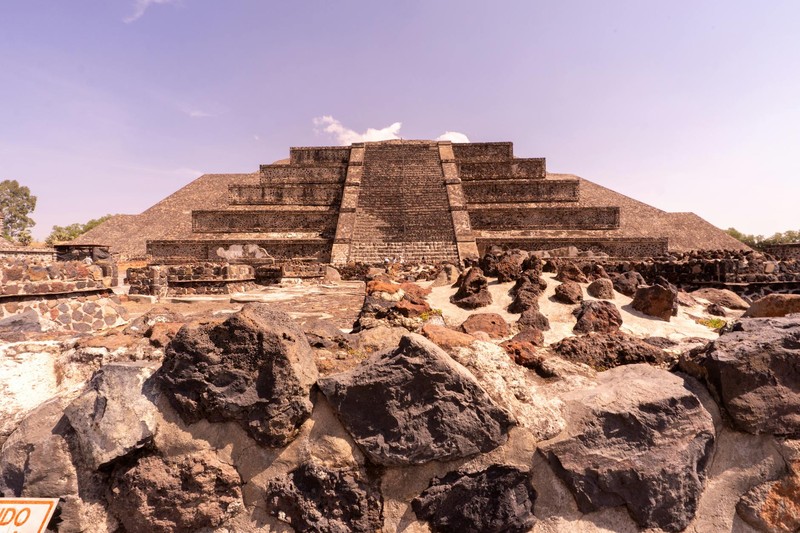
The body, wrapped in a white sheet, was carried down the steep volcanic steps of the Pyramid of the Moon — a tableau captured on the phones of tourists who, minutes earlier, had been photographing sun-baked ruins. Now they were recording gunfire.
A gunman opened fire at Teotihuacán on Monday lunchtime — the first reported armed violence at any of Mexico’s nearly 200 archaeological sites in decades. A 32-year-old Canadian woman was killed. The gunman then turned the weapon on himself.
Shots on Sacred Ground
The shooting unfolded on the Pyramid of the Moon, the second-largest structure in a complex whose monuments were built between the first and seventh centuries, long before the Aztecs rose to power. According to witness Laura Torres, who spoke to the Mexican newspaper La Jornada, more than 20 shots rang out from the pyramid’s midway point. “First it was sporadic, then one shot after another, then sporadic again,” Torres said, adding that she believed the weapon was a handgun.
Social media footage showed a figure firing periodically from about halfway up the 45-metre pyramid while visitors below took cover behind stairs or ran. “A person is opening fire on us, take care friends, send security,” a voice in one video can be heard saying, according to AFP. The agency has not independently verified the footage.
Authorities recovered a firearm, a bladed weapon, and live ammunition at the scene. The gunman’s identity, nationality, and motive have not been released.
The casualty count, still being clarified, reflects the scale of the chaos. According to France 24, citing Mexico state security secretary Cristóbal Castañeda, six people were treated for gunshot wounds at local hospitals — citizens of Canada, Colombia, the US, and Brazil, including a Colombian child. Seven more were injured in the scramble to escape. The Guardian and BBC reported lower figures of four to five gunshot victims, reflecting the still-emerging picture. Mexico’s foreign ministry said it was in contact with the Canadian embassy and “other embassies of affected individuals.”
A Symbol, Violated
Teotihuacán is not merely a tourist attraction. UNESCO designates it a World Heritage Site of “outstanding universal value” — a sprawling city of pyramids and plazas that was among the largest urban centres in the ancient Americas. It drew more than 1.8 million visitors in 2025, making it one of the most visited archaeological sites in the Western Hemisphere.
That a place so central to Mexico’s cultural identity became a crime scene made front pages across the country. President Claudia Sheinbaum voiced “deep pain” on social media and instructed her security cabinet to investigate. “What happened today in Teotihuacán deeply pains us,” she wrote. “I express my most sincere solidarity with the affected individuals and their families.”
Canadian foreign minister Anita Anand confirmed that a Canadian was killed and another wounded, calling it “a horrific act of gun violence” in a post on X. The British embassy in Mexico City issued an advisory urging UK citizens in the area to follow local authority instructions.
The World Cup Shadow
The shooting lands at a delicate moment. In less than two months, Mexico will co-host the 2026 FIFA World Cup with the US and Canada, staging 13 matches — including the opener. Officials expect roughly 5.5 million international visitors. Teotihuacán itself was slated to host an immersive nighttime spectacle for tourists during the tournament, part of a broader effort to showcase Mexico’s pre-Hispanic heritage to a global audience.
Mexico plans to deploy nearly 100,000 security personnel for the event. But Monday’s violence exposes a harder problem: the threat came not from a cartel or a coordinated plot, but from a lone individual whose motives remain unknown. No amount of perimeter security at a stadium addresses a gunman on an ancient pyramid.
The country’s broader security challenges are real. The killing of the cartel leader known as “El Mencho” near Guadalajara in February triggered a wave of coordinated attacks, though that violence was quickly contained. Mass shootings of this kind — seemingly random, in a public place, without a clear ideological or criminal target — remain relatively rare in Mexico, a distinction the country has historically held over the United States.
The Calm After
Federal police and the National Guard secured the site, cordoning the complex with crime-scene tape and evacuating visitors. The investigation is in its earliest stages, and the gunman’s motive remains a void at the centre of the story.
Anna Durmont, a 37-year-old American art historian, told AFP she had been walking toward the pyramid when she noticed emergency vehicles. “It actually felt extremely calm,” Durmont said. “It was very measured. The park is full of souvenir sellers and they hadn’t left. It wasn’t clear to us until we got closer that there was a serious emergency.”
That dissonance — souvenir vendors working their stalls while blood dried on two-thousand-year-old stone — may be the most unsettling detail of all. The Pyramids of Teotihuacán have witnessed human drama since the dawn of Mesoamerican civilization. On Monday, they witnessed something grimly modern.
Discussion (10)