 lop News
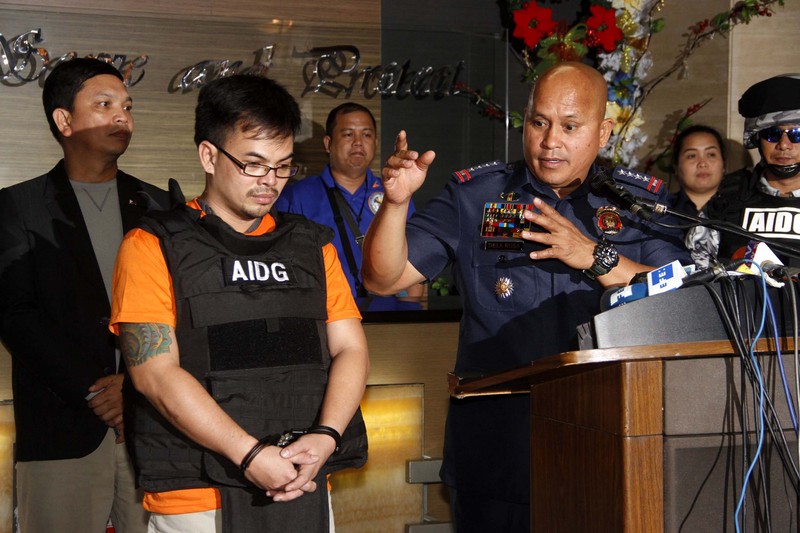
At least five gunshots sent Philippine senators scrambling into locked offices late Wednesday inside their own legislative building — a space supposed to be among the most secure in the country.
No one was hurt. Who fired the shots, and why, remains unknown. But the scene — gunfire inside a democratic legislature, armed soldiers in the corridors, a senator barricaded against international justice — captures a volatile collision between national sovereignty and accountability now gripping the Philippines.
At the center is Senator Ronald “Bato” dela Rosa, 64, the former national police chief who oversaw the earliest and bloodiest phase of Duterte’s “war on drugs.” The International Criminal Court unsealed an arrest warrant against him on Monday, accusing him of the crime against humanity of murder in the killings of at least 32 people between July 2016 and April 2018. He is among the most prominent sitting officials the ICC has pursued in Southeast Asia.
A Chase Through the Senate Hallways
The standoff began Monday, when National Bureau of Investigation agents attempted to serve the warrant. Dela Rosa ran. CCTV footage captured the former police chief scrambling through the building’s back hallways and stairwells, trailed by aides, falling at least once, before reaching the plenary chamber. There, Senate President Alan Peter Cayetano — a staunch Duterte ally installed in a leadership vote that same day — placed him under “protective custody.”
By Wednesday, dela Rosa had spent two nights inside the building. He appealed to supporters to gather outside. “Let us not allow another Filipino to be taken to The Hague,” he said in a Facebook message. He urged former military colleagues to resist any effort to hand him over to “foreigners.”
Then the shots rang out. AFP journalists reported hearing at least five. A television journalist was seen crying on air. Cayetano posted on Facebook: “We don’t know what’s happening, everyone is locked in their rooms now, we cannot go out.” He added: “This is the senate of the Philippines. What is happening? Why are we under attack here?”
President Ferdinand Marcos Jr. said in televised remarks that no government forces had fired weapons and promised an investigation, questioning whether the gunfire was an attempt to destabilize the government. Interior Secretary Juanito Victor Remulla Jr. told reporters: “I will not arrest Senator Bato. I am here to secure everyone.”
The Toll Behind the Warrant
The moral weight of the ICC’s pursuit stems from the scale of Duterte’s drug war. More than 6,000 people were killed in anti-drug operations after Duterte took office in 2016, according to Philippine police data. Independent monitors believe the true number is far higher. Many of the dead were drug users and low-level dealers from the country’s poorest neighborhoods.
The ICC warrant alleges that dela Rosa participated in “authorising, condoning and promoting” the killings, providing weapons, promising impunity, and rewarding perpetrators. He has denied wrongdoing. “My role was to lead the war on drugs, and that war on drugs was not meant to annihilate people,” he told reporters. “When the lives of police officers came under threat, of course they needed to defend themselves.”
In a 2016 CNN interview, dela Rosa described his reaction to seeing the bodies of slain suspects: “Mixed emotions. I pity the guy for losing his life. At the same time I see it as one less pusher, one less pusher. Minus one.”
Duterte himself was arrested at Manila’s international airport in March 2025 and flown the same day to The Hague, where he remains in ICC custody — the first former Asian leader to face the court.
Sovereignty vs. Accountability
The Philippines withdrew from the ICC in 2019 under Duterte, but the court retains jurisdiction over crimes committed during the country’s membership period, from 2016 to 2019. Dela Rosa has filed an emergency petition with the Philippine Supreme Court to block any transfer to The Hague. The court has given all parties 72 hours to respond.
The standoff is entangled with the country’s broader political crisis. On Monday, the House of Representatives voted to impeach Vice President Sara Duterte — Rodrigo Duterte’s daughter — on charges including misuse of public funds and threats to assassinate Marcos. The Senate was preparing to convene as a tribunal for her trial.
Ritz Lee Santos III, executive director of Amnesty International Philippines, said the government should “immediately arrest” dela Rosa. “Dela Rosa’s current position as Senator should not shield him from facing charges at the ICC,” he said.
Five senators have called on dela Rosa to surrender. His allies blocked the move. Dela Rosa remains in the building, and the Supreme Court’s ruling — expected within days — will determine whether the Philippine government hands over one of its own to a court it no longer recognizes.
Sources
- Gunshots fired in Philippines senate in standoff with senator Ronald dela Rosa — The Guardian
- Dela Rosa: Former Philippine ‘drug war’ police chief runs away from ICC arrest — CNN
- Gunfire breaks out in Philippine Senate as police try to arrest senator — NPR
- Gunshots at Philippine Senate as lawmaker wanted by ICC holds out — France 24
- Full Text: ICC warrant of arrest for Ronald ‘Bato’ dela Rosa — Philippine Star
Discussion (10)