 lop News
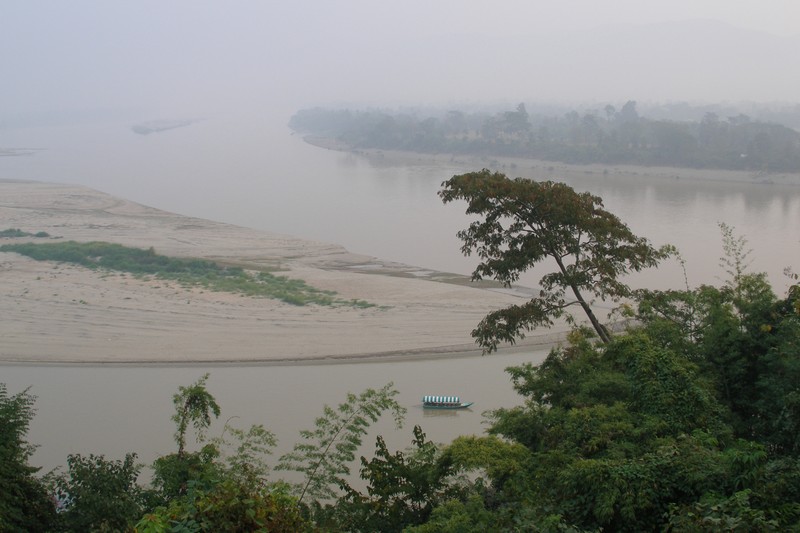
At 75, Sukjai Yana has spent decades reading the Mekong River — its seasonal rhythms, its shifting currents, the habits of the fish that have sustained his family for as long as anyone in Chiang Saen can remember. Lately, the river has nothing to tell him but bad news.
Perched on the bow of his long-tail fishing boat in the northern Thai fishing hub of Chiang Saen, Sukjai untangles a handful of small fish from his net — disappointed by the catch, unsure whether anyone will buy them. Some days he earns nothing at all. Demand for Mekong fish is collapsing as contamination fears spread through riverside communities that have depended on the waterway for generations.
“I don’t know where else I’d go,” Sukjai told the South China Morning Post.
He is one of roughly 70 million people across mainland Southeast Asia who depend on the nearly 5,000-kilometre Mekong for their livelihoods — farmers who irrigate their fields with its muddy water, fishers who pull income from its currents, families who rely on its tributaries for daily needs. The river is the economic and nutritional backbone of an entire region. And it is being poisoned.
Tracing the Toxicity Upstream
The contamination traces to rare earth mines operating upstream, according to reporting by the South China Morning Post. An unregulated mining boom, centered in war-torn Myanmar and now spreading into Laos, is generating toxic run-off that drains directly into the Mekong and its tributary network.
The surge is driven by rising global demand for rare earth materials — a group of 17 metallic elements essential to a vast range of modern technology. Rare earths are found in electric vehicle motors, wind turbine generators, smartphones, and military hardware. The SCMP notes that the minerals are critical to “modern technology - including for war.”
The extraction process compounds the problem. Rare earth ores occur in low concentrations, meaning vast quantities of earth must be dug up and chemically processed to yield usable amounts of material. The result is wastewater laden with heavy metals, radioactive residues, and strong acids. In a region where environmental regulation is sparse and enforcement weaker still, that waste is reaching the river system.
A River Already Under Siege
The Mekong was under severe strain long before rare earth mining arrived. Plastic pollution accumulates along its course. Hydropower dams in upstream China have altered seasonal flow patterns that fish spawning and rice cultivation depend on. Sand mining operations consume the river’s banks, reshaping its hydrology.
Experts now warn that toxic run-off from rare earth extraction could compound each of these existing pressures into what they describe as an existential threat to the river system.
No comprehensive testing program has yet quantified the full scope of contamination in the Mekong basin. Mining operations in Myanmar’s conflict zones function largely beyond the reach of international monitoring. The country’s ongoing political instability makes environmental oversight nearly impossible, and the opacity extends across borders as mining pushes into Laos.
The Arithmetic of the Energy Transition
The minerals now contaminating Southeast Asia’s most vital waterway are the same ones the world needs to build the hardware of decarbonization. Rare earth elements are essential to the permanent magnets in electric vehicle motors and wind turbine generators. Global demand is climbing as nations simultaneously pursue clean-energy transitions and military modernization.
The tension is structural, and it is not going away. The minerals the global economy needs most are often extracted in places with the fewest environmental safeguards, by communities that will never own an electric vehicle or draw power from a wind farm. The clean-energy supply chain begins in places where the costs are borne first and most severely.
For the people downstream — the fishers pulling empty nets, the farmers watching their irrigation water with growing suspicion — the energy transition is not a distant policy debate. It is the thing poisoning their river. Whether the world can build a decarbonized future without destroying the ecosystems that sustain 70 million people along the Mekong is a question with no easy answer. The cost of getting it wrong is already being measured in empty nets, contaminated water, and the quiet devastation of communities that have nowhere else to go.
Sources
- Southeast Asia’s Mekong River being poisoned by rare earth mining — South China Morning Post
Discussion (8)