 lop News
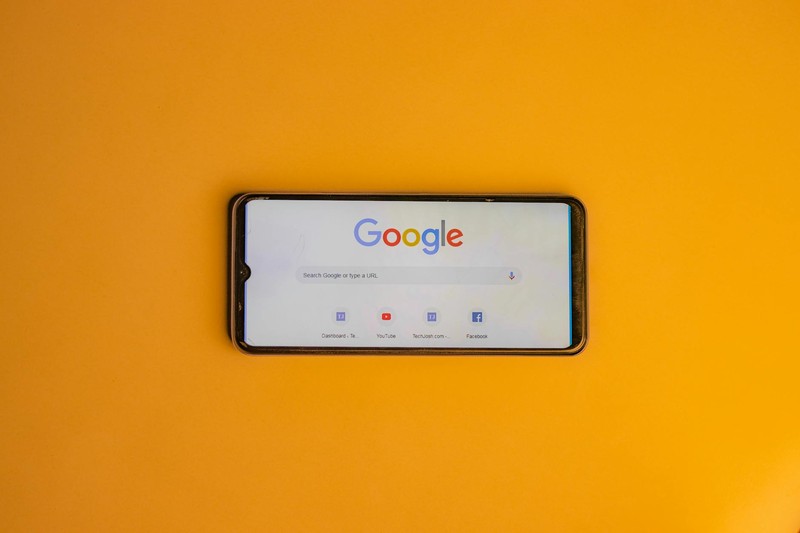
Google just made the biggest change to its search box in 25 years. The ten blue links that defined the web for a generation are finished.
At Google I/O on Tuesday, the company unveiled a sweeping overhaul of Search centered on AI-generated interactive experiences, always-on information agents, and a personal AI assistant called Gemini Spark that works around the clock. The search box itself has been reimagined as a conversational entry point that builds custom widgets, visualizations, and mini-apps on the fly.
The marketing is predictably grand. The substance is genuinely consequential.
The Agent Goes Corporate
Gemini Spark is Google’s answer to OpenClaw, the open-source AI agent that went viral earlier this year. Austrian developer Peter Steinberger released a self-hosted tool capable of managing email, browsing the web, and executing multi-step workflows autonomously; it amassed 100,000 GitHub stars in 48 hours and reshaped expectations for what personal AI should do.
Spark is the corporate version with none of the installation friction. It runs on Google Cloud virtual machines using the newly released Gemini 3.5 Flash model, connects to Gmail, Docs, Sheets, and Slides by default, and is expanding to third-party services — Canva, OpenTable, Instacart — through the Model Context Protocol, an open standard for connecting AI to external tools.
“Even when you close your laptop or turn off your phone, Spark can keep working in the background as you go through your day,” Josh Woodward, vice president of Google Labs, Gemini, and AI Studio, told reporters.
Users can set recurring tasks — parsing credit card statements for hidden fees, monitoring school emails for deadlines, synthesizing meeting notes into documents. The system asks permission before “high-stakes actions” like sending payments or emails. Spark rolls out to trusted testers this week and reaches beta for Google AI Ultra subscribers in the US next week. Google says it will eventually be free.
Search Becomes a Surface, Not a Door
The bigger shift is Search itself. Google is rebuilding it around “generative UI” — custom interactive experiences assembled in real time, powered by Gemini 3.5 Flash and Google’s Antigravity development platform.
Ask about black holes and get an interactive visualization. Ask about market movements and dispatch an “information agent” to monitor conditions around the clock. Ask a follow-up and Google builds an entirely new interface. Users can also create persistent mini-apps — meal planners, fitness trackers — using natural language inside Search.
“Search can build custom experiences just for your individual questions, from dynamic layouts, interactive visuals to persistent and stateful project spaces that you can return to again and again,” said Liz Reid, Google’s head of Search.
The scale is striking. AI Overviews now reach 2.5 billion monthly users. AI Mode, launched last year, tops 1 billion monthly users. ChatGPT, for comparison, has 900 million weekly active users. The new search box arrives this week. Generative UI follows this summer, free to all users. Information agents and mini-app building will roll out first to Google AI Pro and Ultra subscribers this summer.
The Bill Goes to the Open Web
Every AI-generated response is a query where someone doesn’t visit a website. That equation was already destroying publishers.
When Google displays an AI Overview, just 1% of users click the cited links, according to a July 2025 Pew Research study. Organic click-through rates on blue links below an AI Overview drop to 8%, compared to 15% when no AI Overview is present. Seer Interactive’s September data puts the figures even lower: 1.6% organic click-through without an AI Overview, 0.6% with one.
Publishers have been blunt. Traffic losses of 20% to 90% over the past year are common, according to AdExchanger. Travel blog The Planet D, founded in 2008, lost half its traffic after AI Overviews launched, then 90% more after layoffs. It shut down earlier this year. Business Insider’s organic search traffic fell 55% between April 2022 and April 2025. Music blog Stereogum lost 70% of its ad revenue.
Google points to Semrush data showing zero-click rates on AI Overview searches dipped from more than 45% in January 2025 to 38% in October. A modest improvement against a structural collapse.
Now the collapse accelerates. Results that once directed users to websites will generate self-contained interactive experiences instead. Information agents will synthesize data and deliver it without the source getting a visit. Users will spend more time inside Google’s interface and less on the open web it was built to index.
CEO Sundar Pichai framed the strategy plainly: the company wants frontier models that are “highly capable, but also very efficient, fast, and at a lower price” to reach as many people as possible.
Better AI, cheaper, embedded in the search engine 2.5 billion people already use each month. Publishers hoping the disruption would plateau are watching it compound.
Google built its empire by sending people elsewhere. That arrangement is over.
Sources
- Google Search as you know it is over — TechCrunch
- Google is launching its own version of OpenClaw — The Verge
- Gemini 3.5: frontier intelligence with action — Google Blog
- The AI Search Reckoning Is Dismantling Open Web Traffic — and Publishers May Never Recover — AdExchanger
- OpenClaw: How a Self-Hosted AI Agent Changed Automation in 2026 — Medium
Discussion (10)