 lop News
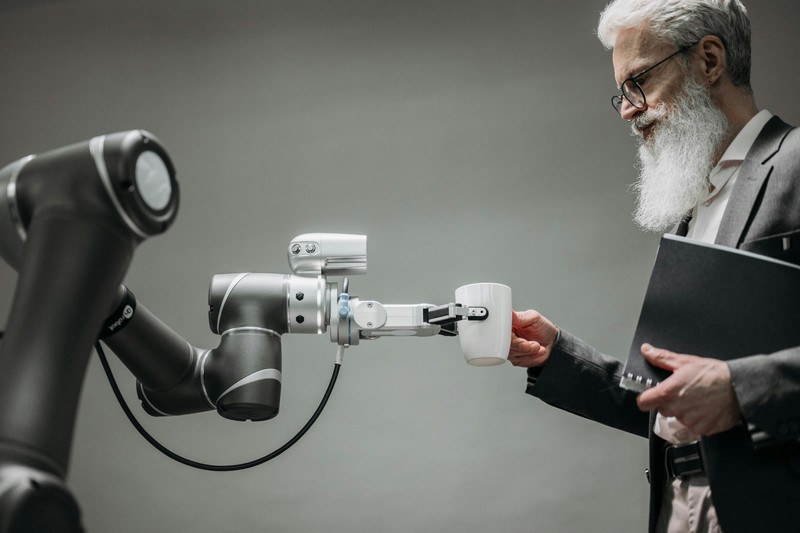
AI is already eliminating roughly 16,000 US jobs every month. The harder number to absorb is what happens next: workers displaced by technology spend the better part of a decade earning less, saving less, and falling behind peers who were spared the same fate.
That finding comes from Goldman Sachs economists Pierfrancesco Mei and Jessica Rindels, who analyzed 40 years of individual-level data from the Bureau of Labor Statistics’ National Longitudinal Surveys. Their research, published Monday, tracked more than 20,000 workers across two cohorts — one born in the 1950s and 1960s, another in the 1980s — to map the full career fallout from automation. It represents one of the most detailed looks yet at what economists call “scarring,” the persistent damage that follows a technology-driven job loss.
A Decade of Diminished Earnings
The Goldman team’s verdict is sobering. “Over the 10 years following a job loss, real earnings for technology-displaced workers grow nearly 10 percentage points less than for never-displaced workers,” the report found, “and 5 percentage points less than for other displaced workers.”
The mechanism is occupational downgrading. Displaced workers tend to slide into more routine roles requiring fewer analytical and interpersonal skills — because the same forces that eliminated their old jobs also eroded the market value of their existing skills. They take roughly one month longer to find new work and suffer earnings losses more than 3% larger upon reemployment compared with workers displaced from more stable fields.
The scars extend beyond paychecks. Workers displaced early in their careers, between ages 25 and 35, accumulate less wealth over time, largely because they delay buying homes. They are also less likely to be married at any given age than never-displaced peers, suggesting the economic shock ripples well into personal life.
Not Who You’d Expect
A separate Goldman analysis by economist Elsie Peng confirms that young workers are absorbing the most immediate pain. AI substitution eliminated roughly 25,000 US jobs per month over the past year, while augmentation added back only about 9,000. Entry-level workers under 30 face widening unemployment and wage gaps in the occupations most exposed to automation — data entry, customer service, legal support, billing.
But Mei and Rindels’ long-term data tells a different story about who recovers. Younger, college-educated, and urban workers experience cumulative earnings losses roughly half as large as other displaced workers over the decade following a job loss. Their advantage is flexibility: they switch occupations more readily and migrate into roles with higher analytical content that complement, rather than compete with, new technology.
“Contrary to current concerns that the costs of AI will fall especially hard on new graduates,” the report states, “younger workers have actually been able to adjust more flexibly through occupational mobility and skill upgrading in the past.”
The workers who should worry most are older ones with deeply occupation-specific skills and less latitude to retrain — particularly those displaced during a recession, when firms disproportionately shed routine jobs and the gap widens further.
The Global Picture
Goldman Sachs Research estimates that 300 million jobs worldwide are exposed to AI automation. In the US, AI could automate tasks accounting for 25% of all work hours. Joseph Briggs, who co-leads Goldman’s global economics team, projects that 6 to 7% of US workers will be displaced over the next decade — pushing the unemployment rate up 0.6 percentage points if the transition is gradual, and considerably more if adoption accelerates. The Goldman research is US-focused, but the pattern is broadly applicable: any economy with a large services and knowledge-worker base faces similar exposure.
Boston Consulting Group, which analyzed 1,500 occupations using government labor data, puts the exposure even higher: between 50% and 55% of US jobs will be “reshaped” by AI within three years, with 10% to 15% potentially replaced over the next five years.
Who Profits, Who Pays
The economics are not symmetrical. Construction jobs tied to data center buildout have risen by 216,000 since 2022, Goldman’s Briggs notes. GS SUSTAIN analyst Evan Tylenda estimates that roughly 500,000 net new positions will be needed for power infrastructure by 2030 — electricians, engineers, lineworkers, roles far removed from the knowledge-economy jobs most vulnerable to automation. Workers displaced from administrative and clerical positions are not naturally positioned to fill them.
Retraining helps. Goldman found that workers who completed vocational or technical programs within three years of displacement saw roughly two percentage points more cumulative wage growth over the following decade, and a 10-percentage-point lower probability of returning to unemployment.
But retraining is a cost borne by the displaced — in time, lost income, and delayed milestones — while the productivity gains accrue to the firms deploying the technology. The scarring data makes this much clear: AI-driven displacement is not a brief adjustment. It is a years-long erosion of earning power that compounds across an entire career. And the people who bear that cost are rarely the ones who profited from the disruption.
Sources
- Goldman looked at 40 years of the ‘scarring’ effects of tech and finds Gen Z isn’t the most at risk — Fortune
- AI is cutting 16,000 U.S. jobs a month—and Gen Z is taking the brunt, Goldman Sachs says — Fortune
- How Will AI Affect the US Labor Market? — Goldman Sachs
- AI will affect more than half of all U.S. jobs, analysis finds — CBS News via MSN
Discussion (9)