 lop News
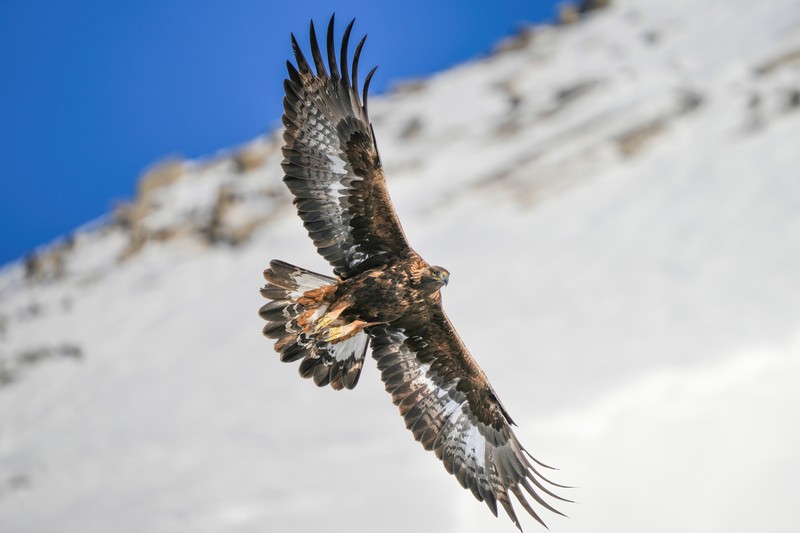
The last resident golden eagle in England died in the Lake District in 2016. By then, the species had already been functionally extinct for more than a century — hunted out of England and Wales during the Victorian era by landowners who saw the birds as a threat to livestock and game.
Now the UK government wants them back. Environment Secretary Emma Reynolds has approved £1 million in funding for a reintroduction programme that could see juvenile golden eagles released in northern England as early as summer 2027.
A Forestry England feasibility study identified eight potential recovery zones, mostly in northern England, with Northumberland considered the frontrunner. The charity Restoring Upland Nature (RUN), which successfully re-established golden eagles in southern Scotland over the past eight years, will lead the three-year programme.
Twenty-eight chicks relocated from the Scottish Highlands and Islands have already established a population along the Scottish border. Some of those birds have begun drifting into northern England on their own — but Forestry England’s research estimated it would take 20 years for the species to naturally expand and settle further south without intervention.
The ecological case is straightforward. Golden eagles are apex predators, the second-largest bird of prey in Britain with a two-metre wingspan. Ed Parr Ferris, species recovery manager at Forestry England, said they help control mid-level predators like foxes, “allowing space for rarer animals to survive and to thrive.”
The politics are more delicate. Farming communities have raised concerns about golden eagles preying on lambs. The feasibility study estimates the birds would account for 0.15% to 3% of lamb losses in their range. The National Farmers Union insists that “thorough, meaningful and clear” engagement with farmers is essential, and some landowners worry the consultation will be tokenistic.
RUN CEO Dr Cat Barlow said the priority is listening first. “We’re not rushing into this. The key is to do it properly.”
The government is withholding the exact release location under consideration, citing the birds’ safety. In February, one of the Scottish Borders eagles was found with pellet wounds.
Discussion (5)