 lop News
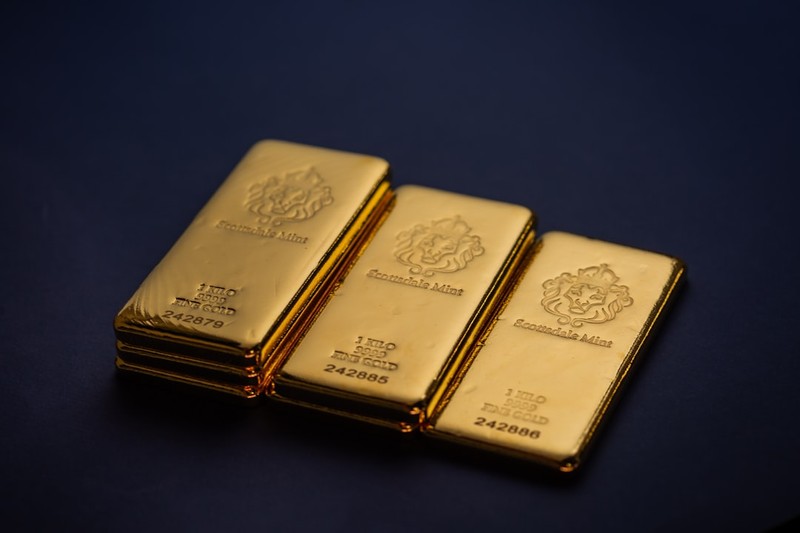
$4 trillion in gold. $3.9 trillion in US Treasuries. For the first time since the mid-1990s, the metal that central banks hoard in vaults is worth more than the debt the US government issues to fund itself.
Gold now accounts for 24% of global central bank reserves, compared with 21% for US government debt, according to data cited by Bloomberg and reported by bne IntelliNews. The reversal is stark: in the final quarter of 2015, Treasuries made up 33% of reserves and gold sat at just 9%.
That near-tripling of gold’s share didn’t happen overnight. But the forces behind it have accelerated dramatically in the past four years — and they point to a structural reshaping of the global financial order, not a trading blip.
The Buying Spree That Broke a Three-Decade Pattern
Central banks purchased over 1,100 tonnes of gold in 2025 alone, more than double the annual average of roughly 473 tonnes recorded through much of the 2010s, according to the Economic Times. Total holdings now sit between 36,000 and 37,000 tonnes.
China’s People’s Bank has been buying for 16 consecutive months, bringing its reserves to 2,308 tonnes — roughly 10% of its total foreign reserves, World Gold Council data shows. Poland’s National Bank bought 20 tonnes in February alone and has set a public target of 700 tonnes, up from 550. The Czech Republic has reported net purchases for 36 straight months. Brazil divested $61 billion in Treasuries throughout 2025 while doubling its gold holdings, pushing gold to the second-largest component of its reserves, according to the Chronicle Journal.
The buyers are not concentrated in any single region. The World Gold Council reports that a growing number of African central banks are turning to gold for diversification. Uganda has an active domestic gold purchase programme, and Kenya’s central bank has signalled similar intentions. Malaysia resumed buying in early 2026. Uzbekistan has tallied five consecutive months of net purchases.
This is not speculative positioning. These are reserve managers allocating sovereign wealth.
Why the Dollar’s Armor Is Thinning
The pivot away from Treasuries has three distinct accelerants.
First: the weaponization of the dollar. When the US and its allies froze the Central Bank of Russia’s foreign reserves in 2022, the message to every non-aligned central banker was unmistakable. If Washington can freeze your reserves, they are not truly yours. Gold cannot be sanctioned, frozen, or defaulted on. It carries no counterparty risk.
Second: US fiscal deterioration. The national debt crossed $38 trillion in late 2025. Debt ceiling standoffs have become routine political theater. Reserve managers who once treated Treasuries as the definition of risk-free are recalibrating.
Third: geopolitical fragmentation. The US-Iran war that began in late February pushed Brent crude past $112 per barrel. The capture of Venezuelan President Nicolás Maduro by US special forces added another layer of instability. These aren’t temporary disruptions — they’re a baseline of elevated risk that central banks are pricing into reserve allocations.
What the Numbers Don’t Mean
Gold’s ascent should not be confused with the dollar’s demise. The US currency still accounts for an estimated 45–58% of total foreign exchange reserves, depending on the valuation method, per the Economic Times. Gold has overtaken Treasuries — a specific asset class — not the dollar itself. Treasuries still offer unmatched liquidity and deep secondary markets.
But the direction of travel is clear. According to surveys cited by the Chronicle Journal, 95% of central bank reserve managers expect global gold reserves to continue rising through the end of 2026. Zero percent indicated plans to reduce their holdings. That zero-seller environment is historically unprecedented.
The Price Paradox
Gold’s reserve dominance has coincided with extraordinary price volatility. The metal hit a record $5,602 per ounce on January 29 before shedding more than $1,100 — a 17% plunge — over sixty days, according to Benzinga. The catalyst was monetary tightening: the Federal Reserve, facing sticky inflation from surging oil prices, slashed its projected 2026 rate cuts from three to one at its March meeting.
UBS Global Wealth Management described the decline as “relatively short-lived,” projecting a return to $6,200 per ounce on the back of two expected rate cuts by September, continued central bank buying of approximately 950 tonnes in 2026, and record ETF holdings. The bank’s bull case sits at $7,200. Its bear case — $4,600 — is roughly where gold trades today.
The Structural Story
The immediate implication is softening demand for US debt among the foreign central banks that have traditionally been its most reliable buyers. If that trend persists, the US Treasury Department may face higher borrowing costs to attract replacement demand — at a moment when fiscal deficits show no sign of shrinking.
For the rest of the world, the message is simpler. The post-Cold War assumption that US sovereign debt is the ultimate safe haven is no longer a given. Gold is not replacing the dollar tomorrow. But the architecture that allowed the US to finance its deficits cheaply for three decades is bending.
Sources
- Gold overtakes U.S. Treasuries as the world’s largest foreign reserve asset in 2026 — Economic Times
- Gold overtakes US Treasuries in central bank reserves — bne IntelliNews
- Central Bank Gold Statistics: Central banks stay the course on gold in February — World Gold Council
- Gold Overtakes Treasuries: The New Global Reserve Reality — Chronicle Journal / Market Minute
- Gold’s 17% slide could be the best buying opportunity of 2026 — UBS says $6,200 is next — Benzinga via MSN
Discussion (9)