 lop News
“Your hands are full of blood.”
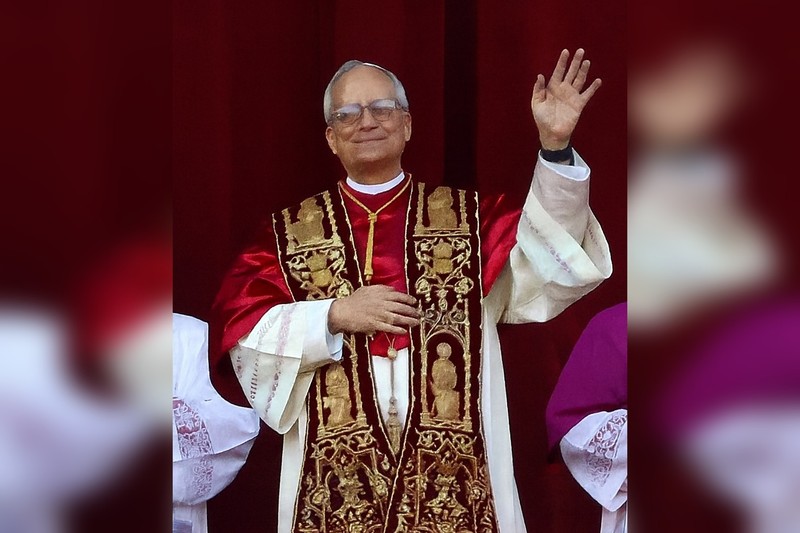
The words of the Prophet Isaiah, delivered from St. Peter’s Square on one of the holiest days in the Christian calendar, were not aimed at worshipers. Pope Leo XIV, addressing tens of thousands at Palm Sunday Mass, left no ambiguity about who they were for.
“Brothers and sisters, this is our God: Jesus, King of Peace, who rejects war, whom no one can use to justify war,” Leo said. “He does not listen to the prayers of those who wage war, but rejects them.”
The homily landed during a week in which multiple active conflicts are being waged with explicit religious framing. The Iran war, launched by joint US-Israeli strikes on February 28, entered its second month. Russia’s invasion of Ukraine grinds through its fourth year with the endorsement of the Russian Orthodox Church. And on Wednesday, US Defense Secretary Pete Hegseth stood at a Pentagon prayer service and asked God for “overwhelming violence of action against those who deserve no mercy,” according to Deutsche Welle.
Leo did not name any leader or nation. His target was the idea itself — that divine authority can be claimed by any belligerent in armed conflict.
Christians Caught in the Crossfire
In a blessing after Mass, Leo turned to Christians in the Middle East, who he said are “suffering the consequences of an atrocious conflict. In many cases, they cannot fully observe the rites of these holy days.”
The concern was immediate and concrete. Earlier on Sunday, the Latin Patriarchate reported that Jerusalem police had prevented the Catholic Church’s senior leadership from entering the Church of the Holy Sepulchre — the site where Christians believe Jesus was crucified and resurrected. It was, according to the Patriarchate, the first time in centuries that church leaders were barred from celebrating Palm Sunday there.
Christian communities across Lebanon, Iraq, and Syria — already diminished by decades of upheaval — face disruption and displacement as the Iran conflict broadens across the region.
Scripture Turned Against War-Makers
What distinguished Leo’s address from standard papal peace appeals was its theological directness. The pontiff did not call vaguely for dialogue or mutual understanding. He cited scripture to strip war-making leaders of religious legitimacy.
“Even though you make many prayers, I will not listen: your hands are full of blood,” Leo said, quoting Isaiah.
The frame was broad by design. According to NPR, Russia’s Orthodox Church has characterized the Ukraine invasion as a “holy war” against a Western world it considers morally corrupted. In Washington, Hegseth and other US officials have invoked Christian faith to frame the Iran campaign as a righteous cause.
Leo has repeatedly called for an immediate ceasefire in the Iran war. On Monday, he denounced military airstrikes without specifically naming the conflict. “Airplanes should always be carriers of peace, never of war,” he said. “No one should be afraid that threats of death and destruction might come from the sky.”
A New Pope’s First Holy Week
This is Leo’s first Holy Week as pontiff. His predecessor, Pope Francis, died on Easter Monday last year after a stroke — one day after his final popemobile circuit through St. Peter’s Square, a last public farewell that his nurse later described to Vatican Media. Francis had told his nurse: “Thank you for bringing me back to the square.”
Leo, history’s first US-born pope, is restoring several traditional elements of Holy Week observance, including the Holy Thursday foot-washing ceremony at the Basilica of St. John Lateran, where popes performed the rite for decades. Francis had moved the ritual to prisons and refugee centers, washing the feet of Muslims and people of other faiths — a gesture praised as embodying service to the marginalized but criticized by some Catholic traditionalists.
Leo will preside over the Good Friday procession at Rome’s Colosseum, the Easter Vigil on Saturday, and Easter Sunday Mass in St. Peter’s Square.
On Sunday, he asked the faithful not to forget those suffering worldwide. “Their trials appeal to the conscience of all,” Leo said. “Let us raise our prayers to the Prince of Peace so that he may support people wounded by war and open concrete paths of reconciliation and peace.”
Whether those prayers reach the leaders doing the waging was the question Leo had already, firmly, answered.
Discussion (9)