 lop News
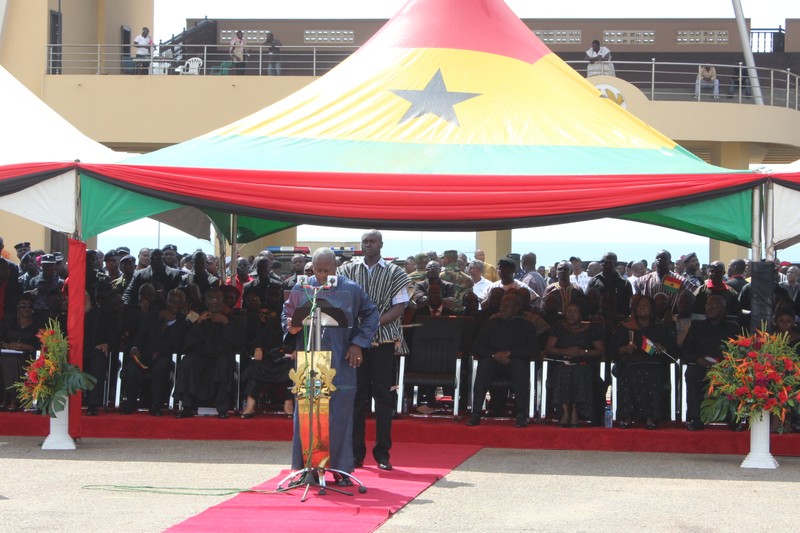
Leila Lariba’s phone hasn’t stopped ringing. Since Ghana’s parliament passed the Human Sexual Rights and Family Values Bill last Friday, the director of One Love Sisters Ghana — an organization supporting lesbian and bisexual women — has been fielding calls from people who don’t know whether they’ll still have a home next week.
“People are panicking and scared,” she told The Guardian. “The new bill affects where you are staying; it can get you evicted; it can lead you to lose your job.”
The legislation, passed on May 29 with as few as 32 of Ghana’s 276 MPs present, criminalizes identifying as LGBTQ+ with up to three years in prison. Anyone convicted of “promotion of, propagation of, advocacy for, support or funding of” LGBTQ-related activities faces up to ten years. It also requires citizens to report suspected LGBTQ+ individuals to the authorities.
Same-sex relations were already illegal under a British colonial-era statute, but that prohibition was rarely enforced. This bill criminalizes identity itself — along with the work of allies, landlords, and civil society organizations.
Deleting their traces
Across Ghana, LGBTQ+ people are scrubbing their digital lives. Community organizations have advised members to remove any social media content that could reveal who they are.
“No matter how safe you think you are,” Lariba said, “you do not know who’s ready to talk.”
Ebenezer Peegah, director of Rightify Ghana, said his organization has documented 80 cases this year alone of members being exposed, abused, or evicted — before the bill even passed. Now colleagues are asking how to get out of the country. “We also do not know how to help them because the international community no longer cares, especially the Trump government,” he told The Guardian.
That sense of abandonment has concrete consequences. When Senegal passed comparable legislation in March, HIV treatment consultations dropped by more than 25% within a single month, according to the Ukumbini alliance of over 100 African civil society organizations. Patients returned their antiretroviral medication rather than risk collecting it. A country that had reduced HIV prevalence to 0.3% watched that progress unravel — not because doctors started reporting patients, but because patients stopped coming.
The Ghanaian bill includes exemptions for healthcare professionals and lawyers, but activists point out that stigma doesn’t respect legal carve-outs. The fear the law creates will deter people from seeking testing, care, or legal help long before anyone is actually prosecuted.
A coordinated campaign
The bill’s timing was deliberate. Ghana’s parliament will close on Wednesday so MPs can attend the fourth African Inter-parliamentary Conference on Family Values and Sovereignty in Accra, running June 3–6. The previous three conferences were held in Uganda, where President Yoweri Museveni signed one of the world’s harshest anti-LGBTQ+ laws — including the death penalty for “aggravated homosexuality” — shortly after the inaugural 2023 gathering.
Kenyan human rights lawyer Tabitha Saoyo noted that anti-LGBTQ+ bills in Uganda, Kenya, Liberia, and Ghana share near-identical language: terms like “aggravated homosexuality,” “child grooming,” and penalties for landlords who rent to LGBTQ+ people appear across all of them. “This is not a strange coincidence,” she told Health Policy Watch. “It is a confirmation that one template was shared from one source by one manipulator.”
Rights activists have repeatedly identified the US-based group Family Watch International as the coordinating force behind this legislation across Africa.
The conference aims to propose an African Charter on Family, Sovereignty and Values — a treaty defining the family exclusively as a heterosexual married couple and rejecting “harmful gender ideologies” as foreign imports. Legal analysts from the Initiative for Strategic Litigation in Africa and the think tank Afya na Haki note that this conflicts with multiple existing continental treaties.
A presidential decision — and a waiting game
President John Dramani Mahama, speaking at Chatham House in London on Monday — the first day of Pride month — said the bill faces further scrutiny before he would sign it. He cited the lack of a quorum during the vote and procedural lapses, adding that his legal advisers and the Attorney General would review the legislation.
“If there are issues, substantial issues that are raised, the president would return the bill to Parliament indicating exactly what the issues are,” Mahama said.
Speaker of Parliament Alban Bagbin has called a leadership meeting to clarify what happened during the vote, which he described as a surprise — he believed the bill was only supposed to be laid for consideration. A coalition led by Rightify Ghana is preparing a court challenge.
Bill sponsor Reverend John Ntim Fordjour told parliament the law would protect Ghanaian family and cultural values, making existing prohibitions “more robust, more encompassing and more stringent.”
Whether Mahama signs or sends it back, the damage is already unfolding — in the apartments quietly vacated, the hospital appointments cancelled, the messages deleted. Laws like this do their deepest work in the space between passage and enforcement.
Sources
- People ‘panicking’ as Ghana passes sweeping law criminalising LGBTQ+ activity — The Guardian
- Ghana’s parliament passes anti-LGBTQ+ bill — BBC News
- Ghana’s Parliament Passes Extreme Anti-LGBTQ Bill To Coincide With Conservative African MPs Conference — Health Policy Watch
- Anti-LGBTQ law still faces scrutiny before my assent – Mahama — MyJoyOnline
Discussion (8)