 lop News
The cables were cut with explosives. The pylons, anchored to ice for half a century, toppled into the snow and were dragged away by heavy machinery.
On Friday, workers began dismantling a ski lift on Germany’s highest mountain — not because it had aged beyond repair, but because the ground it was built on had disappeared. The Schneeferner glacier, which once supported the lift’s foundation, has melted to the point where the slope beneath it has become dangerously steep.
“The ice is receding, the terrain and the lift have changed drastically,” said Laura Schaper, spokeswoman for the lift operator Bayerische Zugspitzbahn Bergbahn AG. “The slope has become significantly steeper, and for that reason it’s no longer technically feasible to keep operating the lift.”
The lift had served skiers for more than 50 years.
A Quarter of the Ice, Gone in Two Years
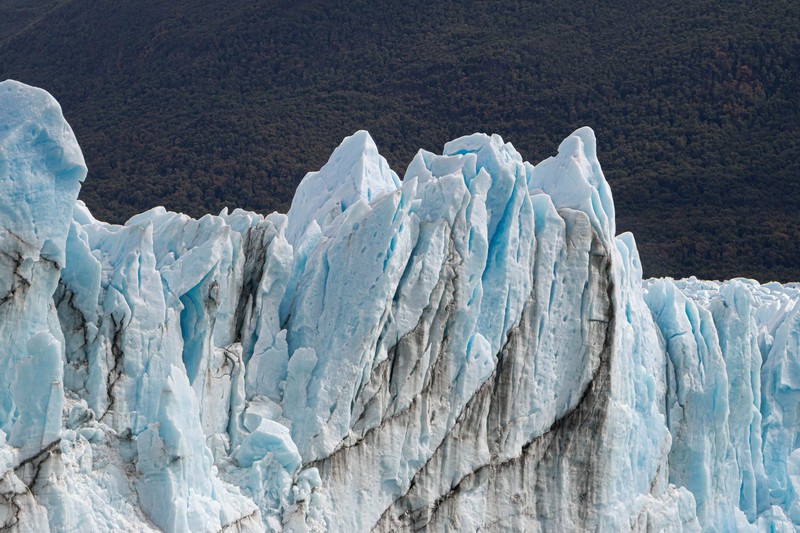
The demolition is a visible marker of an invisible crisis. New data released Thursday by researchers from the Bavarian Academy of Sciences and the Munich University of Applied Sciences shows that Germany’s four remaining glaciers lost more than a quarter of their surface area between 2023 and 2025 — roughly one million cubic metres of ice in two years.
The pace has doubled. Between 2018 and 2023, the glaciers thinned by an average of 0.8 metres per year. In the most recent measurement period, that figure jumped to 1.6 metres annually.
“The speed of glacial retreat has doubled in recent years,” said Christoph Mayer, a glaciologist at the Bavarian Academy of Sciences.
The acceleration coincides with record temperatures in the German Alps. In 2024 and 2025, average temperatures at the Zugspitze were more than two degrees Celsius above the 125-year historical norm, according to the researchers.
‘Absolutely Doomed’
Germany’s glaciers are not dying at the same rate. The Blaueis and Watzmann glaciers in the Berchtesgaden massif have already lost more than 40 percent of their ice coverage and could vanish completely this year or next, said Wilfried Hagg, a geologist at the Munich University of Applied Sciences who co-authored the study.
The northern Schneeferner — where Friday’s demolition took place — may survive a few more years but will likely disappear within the decade. The nearby southern Schneeferner was declared dead in 2022.
That would leave only the Höllentalferner glacier on the Zugspitze, which has proven more stable, losing about nine percent of its coverage. But Hagg said it too is set to disappear in the 2030s.
“Even under the most optimistic climate scenarios, or even if we could stop global warming immediately, they would disappear,” Hagg said. “They’re absolutely doomed.”
The reason is simple physics: summer melt now far outpaces winter snowfall, even at elevations approaching 3,000 metres. The ice that built up over centuries cannot be replenished in a warming climate.
A Broader Alpine Crisis
What’s happening in Bavaria is part of a larger pattern. The Alps are warming at roughly twice the global average, and researchers project that about half of all Alpine glaciers will disappear by mid-century. Dark debris exposed by melting ice absorbs more heat, accelerating the process.
The consequences extend beyond skiing. Hagg noted that melting ice on the Höllentalferner has already triggered rockslides, as ice that once held boulders and cliff walls in place gives way. Climbing routes have become more dangerous.
Globally, glacier loss is accelerating. According to Earth System Science Data, 41 percent of total glacier loss occurred between 2015 and 2024, with the greatest losses in Alaska, western North America, and Central Europe.
The ski lift on the Schneeferner will not be replaced. Other lifts on the Zugspitze will continue operating, but none will remain on the glacier once demolition work is complete. The lift’s removal is expected to finish in the coming days.
Wolfgang Arnoldt, vice president of the German Alpine Club, called the retreat of glaciers “one of the most visible signs of the climate crisis.”
“If we want to preserve the Alps as a valuable natural habitat and living space, we must act much more decisively on climate protection,” he said.
For now, the pylons are coming down. The cables have been cut. And the ice that once supported both is flowing away, one melt season at a time.
Sources
- Vanishing glacier on Germany’s highest peak prompts ski lift demolition — The Local
- Bavaria’s last remaining glaciers are melting at record speed – researchers — Clean Energy Wire
- Germany to lose all glaciers by 2030s as melt accelerates — China Daily (Xinhua)
Discussion (8)