 lop News
Sixty-nine percent of Germans now expect the far-right Alternative for Germany (AfD) to lead a state government after regional elections this autumn — not as a possibility, but as a near-certainty.
An INSA poll conducted for Bild am Sonntag found that just 16% believe the AfD will fail to take power in any of the three states voting in September. Twenty-eight percent expect the party to win in more than one.
If the numbers hold, it would mark the first time a far-right politician has governed a German state since the fall of the Nazi regime. The post-war republic’s most durable political norm — the Brandmauer, or “firewall,” under which mainstream parties refuse to cooperate with the extreme right — is facing its gravest test.
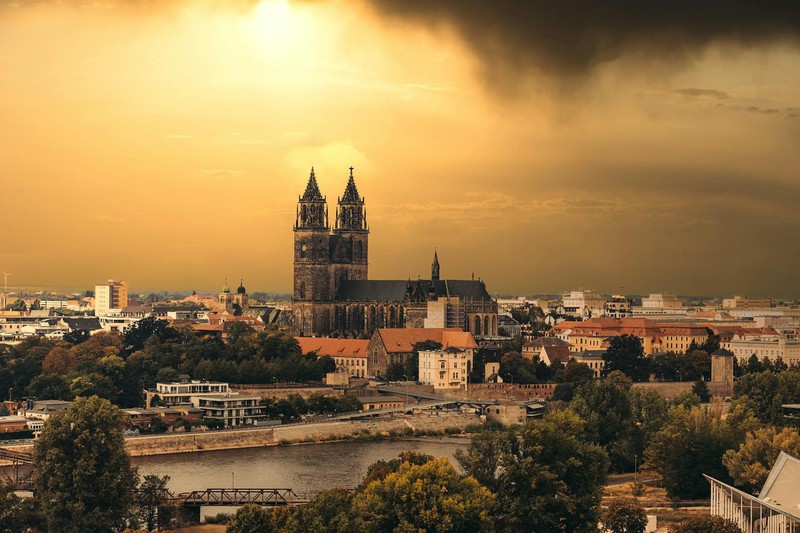
Saxony-Anhalt: Where the Firewall May Break
The eastern state of Saxony-Anhalt votes on September 6, and the AfD leads by 15 points. An Infratest Dimap poll in early May put the party at 41%, with Chancellor Friedrich Merz’s Christian Democrats (CDU) at 26%. The Left Party trails at 12%, the Social Democrats (SPD) at 7%. The Greens and Free Democrats would fail to clear the 5% threshold for parliamentary seats.
Those numbers could deliver an outright majority — a first for the AfD in any German state.
The AfD’s lead candidate, 35-year-old Ulrich Siegmund, has been explicit. “We want nothing more and nothing less than to make history,” he told Deutsche Welle, describing a desired “domino effect” across eastern Germany.
His branch of the party is one of its most radical. The state domestic intelligence service classifies the Saxony-Anhalt AfD as “right-wing extremist,” arguing it promotes a concept of citizenship based on race that contradicts Germany’s Basic Law. Siegmund dismisses the classification as politically motivated.
The roots of AfD support run deep. Saxony-Anhalt has Germany’s highest average age at 46, a shrinking population, and persistent economic stagnation. According to Süddeutsche Zeitung, 82% of respondents in the state express little or no confidence that government can deliver modern infrastructure or effective education — not frustration with incumbents, but what the paper describes as a “perceived certainty that things will not improve.”
What AfD Governance Would Mean in Practice
Siegmund has outlined plans that would test the boundaries of state authority: mandatory detention for all individuals awaiting deportation, a dedicated deportation task force, separate classes for refugee children, and the removal of what he calls ideologically driven content from school curricula. On foreign policy — a federal responsibility — he has called for ending sanctions on Russia and reviving Russian student exchange programs.
Behind the scenes, preparations are underway. Siegmund estimates that up to 200 positions across ministries and state agencies would need filling. He told Deutsche Welle he would not conduct “ideological vetting” of civil service applicants with ties to the white supremacist Identitarian movement.
Security officials in neighboring states are alarmed. Thuringia’s interior minister, Georg Maier, has called for an urgent discussion at the next meeting of state interior ministers, describing the AfD’s strategy as one to “undermine our liberal democracy from within and destroy it piece by piece.”
Two More Tests on Election Day
Mecklenburg-Vorpommern, in the northeast, votes on September 20. The AfD is polling at 30–35% and leads the field, according to ING analysis, though incumbent SPD premier Manuela Schwesig remains personally popular.
Berlin votes the same day, with the CDU at 20% and the AfD at 17%, according to a Civey poll for Tagesspiegel. The SPD, Greens, and Left cluster around 16% each. The AfD is unlikely to govern the capital, but a strong second-place finish would carry its own symbolism.
The Math of Exclusion
The firewall holds only if other parties can assemble governing majorities without the AfD. In Saxony-Anhalt, that arithmetic is precarious — even a three-party alliance of the CDU, SPD, and Left may fall short.
Cracks are showing elsewhere. Newly elected FDP leader Wolfgang Kubicki, who won his party’s leadership on Saturday with 59.3% of the vote, has refused to rule out cooperation with the AfD. The INSA survey found 40% of respondents favor a CDU-Left coalition if the AfD falls short of a majority, while 36% prefer CDU-AfD cooperation. Among conservative voters specifically, 48% would rather work with the Left — a striking figure that underscores how toxic the AfD remains for much of the electorate even as its vote share climbs.
Thirty-eight percent of Germans now support banning the AfD outright, against 47% opposed. That debate would sharpen considerably once the party controls a state government.
There are structural consequences, too. State governments appoint members to the Bundesrat, Germany’s upper chamber, which holds veto power over major federal legislation. An AfD-governed Saxony-Anhalt would alter the chamber’s composition and constrain Merz’s reform agenda in Berlin.
Germany’s post-war political order was built on a simple premise: that the far right must never govern again. For eight decades, it held. In September, it faces its test.
Sources
- Germany news: Most expect AfD state premier after elections — Deutsche Welle
- Germany’s far-right AfD vows to ‘make history’ — Deutsche Welle
- Poll: Far-right AfD takes 15-point lead ahead of key German state vote — dpa via MSN
- Germany’s ‘super election year’ – 5 elections determining the government’s reform efforts — ING Think
- Saxony-Anhalt: AfD polling at over 40 percent — eurotopics.net
Discussion (9)