 lop News
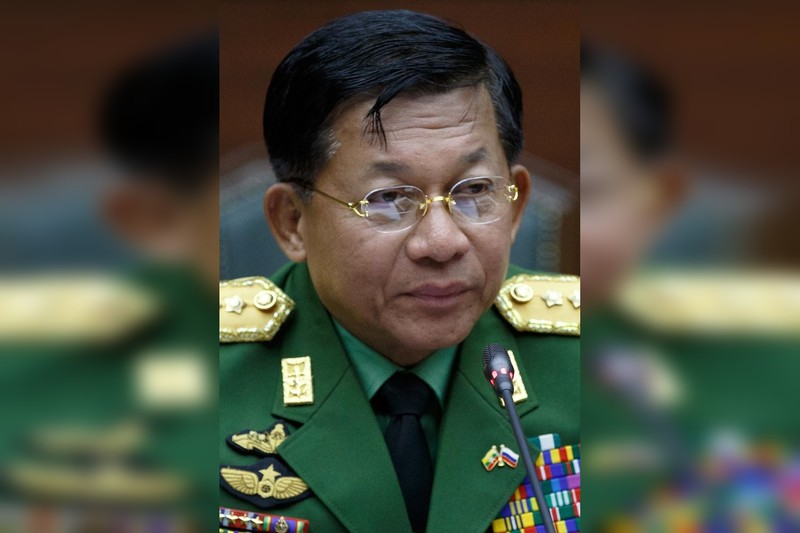
Five years after overthrowing Myanmar’s elected government, General Min Aung Hlaing is finishing what he started. The 69-year-old military chief stepped down as commander-in-chief on Monday and was promptly nominated as a vice-presidential candidate, positioning him to become president within days.
This is not a handover. It is the coup’s final act.
Min Aung Hlaing has commanded Myanmar’s armed forces since 2011, spending his first decade in the role jostling with civilian leaders before ordering the February 2021 takeover that jailed Nobel laureate Aung San Suu Kyi and triggered a civil war still raging across the country. He told a military audience over the weekend that he would “continue to serve the interests of the people, the military, and the national interests of the country,” according to military-owned media.
A Loyalist Takes the Gun
His replacement as military chief is General Ye Win Oo, a veteran intelligence officer promoted twice in the past two months — first to army chief, now to commander-in-chief. Independent analyst Aung Kyaw Soe described the rapid promotions as evidence that Ye Win Oo is “one of Min Aung Hlaing’s most trusted loyalists.” The Institute for Strategy and Policy - Myanmar, a Thailand-based think tank, noted that while Ye Win Oo has held sensitive positions, he “appears to lack the breadth of leadership experience that spans both battlefield command and institutional administration.”
In other words, he is not likely to challenge his patron.
An Election Nobody Recognized
The path to the presidency runs through a parliamentary vote following elections held in December and January — polls that the United Nations, the European Union, the United States, the United Kingdom, and Australia all dismissed as a sham. No major democratic or ethnic party participated. Aung San Suu Kyi’s National League for Democracy was dissolved by the regime’s election commission for failing to re-register after the coup. She and former president Win Myint remain imprisoned, both serving lengthy sentences.
The military-backed Union Solidarity and Development Party won, predictably, in a process that eight countries sent observers to monitor: Russia, China, Belarus, India, Vietnam, Cambodia, Kazakhstan, and Nicaragua — not the roster of a credible democratic exercise.
“This political maneuvering signals that Min Aung Hlaing intends to continue ruling the country with an iron fist,” analyst Naing Min Khant of the Institute for Strategy and Policy Myanmar told AFP. “He fundamentally lacks legitimacy but desperately craves the facade of it.”
A War That Won’t End
The presidential title will not settle the conflict the coup ignited. According to the International Crisis Group, the conscription drive launched two years ago has helped replenish the military’s depleted ranks and shift some battlefield dynamics, but major advances against groups like the Arakan Army and Kachin Independence Army remain unlikely. The parallel National Unity Government — created by lawmakers ousted in 2021 — faces growing criticism for bureaucratic inertia and an unclear strategy, though popular resistance to military rule has not dimmed.
Myanmar is also the world’s largest producer of heroin, the dominant source of synthetic drugs in the Asia Pacific, and hosts online scam centres generating tens of billions of dollars annually, according to the International Crisis Group. None of this will be resolved by a change in nomenclature at the top.
China’s Embrace
The new administration will find its warmest welcome in Beijing. China pressed the regime to hold the elections, has expanded its political, military, and financial backing since mid-2024, and looks set to embrace the incoming government even more firmly — expecting significant concessions on infrastructure and investment in return. India, Thailand, Vietnam, Laos, and Cambodia have all moved toward greater engagement with the regime, leaving ASEAN divided and the military less isolated than a year ago.
The International Criminal Court’s chief prosecutor is still seeking Min Aung Hlaing’s arrest for crimes against humanity, stemming in part from the 2017 military crackdown that drove roughly 750,000 Rohingya into Bangladesh. Over one million remain as refugees with no prospect of safe return.
“This has been Min Aung Hlaing’s goal all along,” independent analyst Htin Kyaw Aye told Channel News Asia. “It’s just a shift from ruling as a military leader to ruling as president.”
The general who broke Myanmar would like the world to see the difference. There isn’t one.
Sources
- Myanmar military chief Min Aung Hlaing steps down, eyes presidency — Channel News Asia
- Deputy Junta Chief Signals Myanmar Military Leadership Shake-Up — The Irrawaddy
- Recalibrating Diplomacy with Myanmar after Election Seals Military Control — International Crisis Group
- International response to start of Myanmar military’s 2025-26 elections — Democratic Voice of Burma
Discussion (9)