 lop News
Buried in the DNA of a six-year-old boy’s brain tumor was a molecular calling card — fragments of the very gene therapy that had saved his life four years earlier.
Researchers at Children’s Hospital of Philadelphia (CHOP) describe it as the first documented human case in which an AAV gene therapy vector has been linked to tumor development. Their findings appeared in the New England Journal of Medicine on May 13.
A cascading series of interventions
The boy, identified by CHOP as Adam, was born in April 2020. Newborn screening revealed severe mucopolysaccharidosis type I — Hurler Syndrome — a lysosomal storage disorder in which toxic materials accumulate in cells throughout the body, causing progressive cognitive decline, organ damage, and a substantially shortened life expectancy.
At six weeks old, Adam began weekly enzyme replacement infusions. By August 2020, his care team recommended a hematopoietic stem cell transplant to preserve his brain function. The transplant failed. A second attempt would have been more toxic. So in May 2021, at 13 months, Adam was enrolled in a gene therapy clinical trial at CHOP.
Researchers delivered an AAV9 viral vector carrying a functional copy of the IDUA gene — the one Adam’s body couldn’t produce — directly into the cisterna magna, a fluid-filled space at the base of the skull. The vector used a promoter designed to drive gene expression across many cell types.
The results were striking. Adam’s mother later described a light switching on in his eyes the day after treatment. He was reading by age three. By five, he scored in the 99th percentile for neurocognitive function — outcomes his doctors said would have been highly unlikely without intervention.
Finding the fingerprint
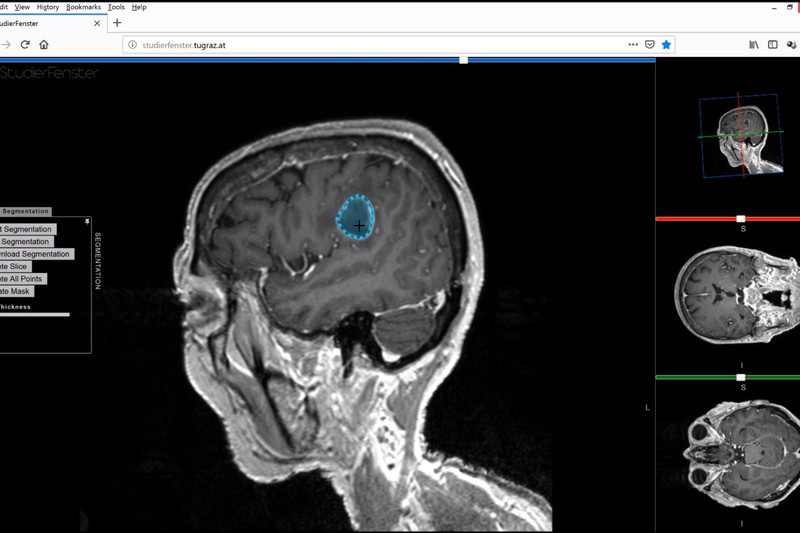
In June 2025, a routine MRI revealed a brain lesion that had not appeared on scans two years earlier. Adam underwent surgery to remove the tumor, followed by a second operation in August to excise the remaining tissue.
The tumor was a PLAG1-driven neuroepithelial tumor — PLAG1 expression was roughly 300 times higher than in other central nervous system tumors studied at CHOP. PLAG1 is normally active only during embryogenesis; reactivated in mature tissue, it can drive uncontrolled cell growth.
A team led by Frederic Bushman at the University of Pennsylvania used long-read DNA sequencing, targeted PCR, and RNA sequencing to map the tumor’s genetics. The vector DNA had undergone rearrangements that could have concealed it from standard methods.
What they found: a fragment of the AAV9 vector had inserted into exon 5 of the PLAG1 gene on chromosome 8. The vector’s promoter had landed in a position that drove massive overexpression of a gene that should have been silent. The integration appeared in roughly 40% of sequencing reads, suggesting it hit one of the boy’s two PLAG1 alleles.
“This case took persistence and several different approaches to investigate,” Bushman said. “It shows why it’s so important to carefully examine unusual medical findings.”
6,000 patients, one documented case
The critical number: approximately 6,000 people have been treated with AAV gene therapies over 25 years, with no previously established long-term safety concerns. Genome integration had been observed in animal studies, but never documented in humans.
Lindsay George, the study’s co-senior author and CHOP’s director of clinical in vivo gene therapy, noted that multiple factors may have contributed — the specific promoter used, the direct delivery into the central nervous system, the state of the treated cells. “Because this report describes just one case […] it would be premature to generalize this single finding to all other AAV gene therapies,” she said.
The FDA placed clinical holds on two RegenxBio gene therapies: RGX-111, the treatment Adam received, and RGX-121, a similar therapy for MPS type II (Hunter syndrome). No tumors have been reported in nine other participants treated with RGX-111 or in 32 treated with RGX-121. RegenxBio CEO Curran Simpson expressed surprise that RGX-121 was included in the hold, calling it a separate therapy with an unchanged safety profile.
What changes, and what doesn’t
George and her colleagues recommended using the lowest feasible vector dose, employing tissue-specific promoters where possible, and conducting routine long-term surveillance of heavily transduced tissues. The fact that standard sequencing might have missed this integration underscores the need for complementary detection methods.
Eight months after surgery, Adam shows no signs of tumor regrowth. He is in kindergarten, continuing to receive enzyme infusions and MRIs every three months.
“Knowing what we know now, we would choose gene therapy again,” his mother, Mary Beth, said. “It gave our son a chance to live, to learn, and to truly thrive. Even facing the hardest moments, watching him laugh, discover, and grow has made the risk worth taking.”
Sources
- Analysis of Brain Tumor Following AAV Gene Therapy Identifies Vector Integration and Reinforces Long-Term Safety Monitoring — Children’s Hospital of Philadelphia
- ASGCT 2026: Rare Instance of AAV Integration into Human Genome Linked to Brain Tumor — Genetic Engineering & Biotechnology News
- FDA Halts Two Gene Therapy Trials After Child Develops Brain Tumor — MedPage Today
Discussion (9)