 lop News
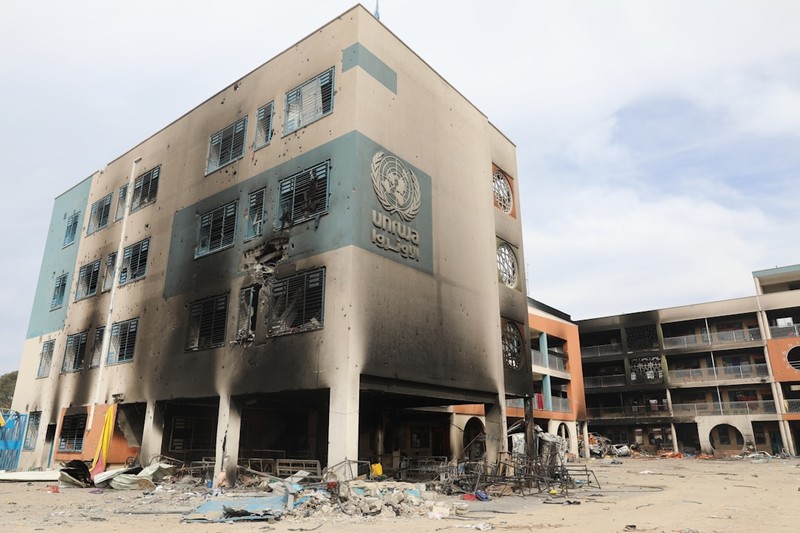
Stillbirths in Gaza have surged by 140 percent. Congenital anomalies have doubled compared to pre-war levels. These are not casualties in the conventional sense — they do not appear in daily death tolls or on lists of the wounded. They are, in the clinical language of public health, adverse pregnancy outcomes. In plainer terms: children who never drew a breath, or who entered the world with bodies already shaped by war.
According to Gaza’s Ministry of Health, cases of congenital anomalies in 2025 were twice what they were in 2022, before the current conflict escalated. The stillbirth rate climbed 140 percent over the same period. Neonatal deaths — infants who died within their first 28 days of life — reached 457 last year alone, marking a 50 percent increase from pre-war figures. All data cited here comes from the ministry’s Health Information Unit as reported by Al Jazeera, and could not be independently confirmed by this publication.
Five Drivers, One Escalating Crisis
Zaher al-Wahidi, director of the Health Information Unit, attributed the surge to five factors: widespread hunger, the collapse of healthcare services, severe overcrowding, exposure to contaminated drinking water, and the ongoing effects of Israeli air attacks.
Each of these factors maps onto a well-documented medical pathway. Maternal malnutrition deprives a developing fetus of the nutrients — folic acid, iron, iodine, protein — essential for organ formation and neurological development. Contaminated water introduces pathogens and potential toxins into the bodies of pregnant women who have no alternative supply. The destruction of prenatal care infrastructure means high-risk pregnancies go undetected and unmanaged. And the environmental residue of munitions — heavy metals, chemical compounds, fine particulate matter — may be teratogenic: capable of disrupting fetal development at the cellular level.
Asaad al-Nawajha, a paediatrician and neonatology specialist at Nasser Hospital in southern Gaza, said he is seeing a pattern of internal anomalies affecting vital organs — the heart, the brain, the kidneys. These conditions typically develop during the first trimester, the critical window for organ formation. That is precisely when many of the current cohort of mothers were displaced, malnourished, and exposed to environmental hazards. The timing is not coincidental.
Inside Nasser Hospital’s Neonatal Ward
The clinical reality behind the statistics is vivid. Two-month-old Osama was born with a hole in his heart and enlarged ventricles in his brain. His mother, Najia Zurub, told Al Jazeera she became pregnant during the war and endured the pregnancy without adequate food, living in tents without access to safe drinking water. The severe strain forced an early delivery. Doctors confirmed that Osama’s condition is not genetic — he is her first child and there is no family history of such health issues.
Osama shares the ward with two-week-old Ahmed, showing signs of hydrocephalus — an accumulation of excess fluid in the brain’s ventricles that causes damaging pressure on brain tissue — and two-month-old Suheir, who was born with multiple deformities affecting her mouth and ears. Earlier on the day of reporting, the unit held five babies with congenital anomalies. By afternoon, one — named Fatama — had been rushed to intensive care. Another infant, Iyal, had died.
With medical resources severely depleted, doctors at Nasser Hospital warn that some of these babies simply cannot be treated. Health officials in Gaza describe the sheer volume of cases as unprecedented — a word that carries weight from practitioners who have worked through previous rounds of conflict. The surgical and specialist care that complex congenital conditions demand is largely unavailable in a territory where the healthcare system has been gutted.
A Ceasefire That Hasn’t Stopped the Damage
A ceasefire took effect in October 2025, though Palestinians report that Israeli attacks on Gaza continue daily. The reduction in large-scale bombardment has not translated into improved outcomes for newborns. The factors driving stillbirths and congenital anomalies are embedded in Gaza’s environment now — in a water supply that remains contaminated, a food system that remains broken, and a healthcare infrastructure that remains in ruins.
At the height of the bombardment, live births in the Strip plummeted by more than 30 percent. The conflict, according to the Health Ministry, physically prevented many Palestinian women from carrying pregnancies to term. While birth numbers have recovered slightly, they remain well below pre-war levels. The conflict has killed at least 20,000 children, per ministry figures.
The infants in Nasser Hospital’s neonatal unit survived the air attacks. They are fighting a quieter battle now — against the residue of a war that shaped their bodies before they were born.
Discussion (8)