 lop News
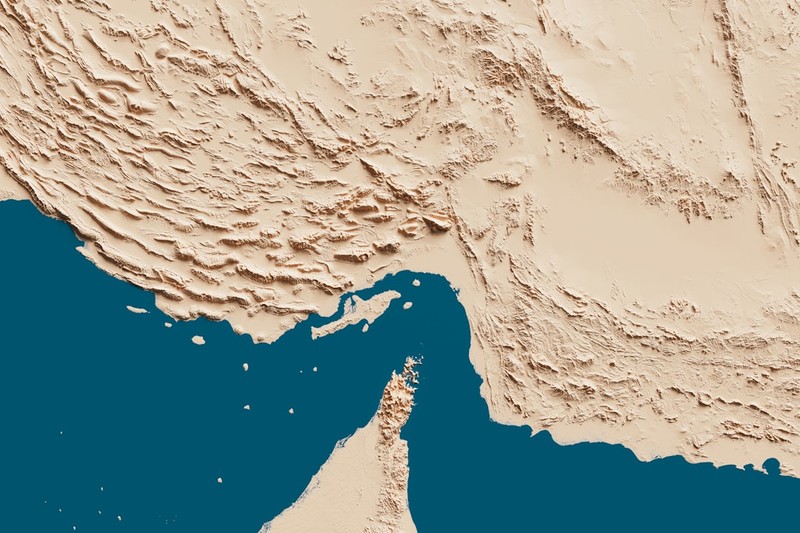
Twenty-four hours ago, two US Navy warships transited the Strait of Hormuz on a mine-clearance mission. On Sunday, President Donald Trump ordered a complete naval blockade of the same waterway — no vessel in, no vessel out, until Iran submits to Washington’s terms.
“Effective immediately, the United States Navy, the Finest in the World, will begin the process of BLOCKADING any and all Ships trying to enter, or leave, the Strait of Hormuz,” Trump posted on Truth Social. “The Blockade will begin shortly.”
The announcement came hours after 21 hours of negotiations in Islamabad collapsed without agreement — the highest-level diplomatic contact between Washington and Tehran since the 1979 Islamic Revolution. Vice President JD Vance led the American delegation alongside White House envoy Steve Witkoff and presidential son-in-law Jared Kushner. Iran’s parliamentary speaker Mohammad Bagher Ghalibaf, accompanied by Foreign Minister Abbas Araghchi, led Tehran’s.
A closure on top of a closure
The strait carries roughly one-fifth of the world’s crude oil. Prices have spiked above $100 per barrel at various points during the six-week conflict. A complete shutdown — the waterway now effectively sealed by both American and Iranian actions — threatens economic consequences that reach every fuel pump and factory floor on the planet.
The move contains a central complication that CNN and other outlets quickly identified: Iran has already been restricting traffic through the strait for weeks, selectively allowing vessels through in exchange for tolls of up to $2 million per ship while permitting its own oil exports to continue. According to data from analytics firm Kpler, Iran exported an average of 1.85 million barrels of crude per day through March — roughly 100,000 more than in the previous three months.
Trump’s stated rationale is to deny Iran that revenue. “Iran will not be allowed to profit off this Illegal Act of EXTORTION,” he wrote. He instructed the Navy to “seek and interdict every vessel in International Waters that has paid a toll to Iran.”
The practical effect is that the United States is now shutting a waterway that the president has spent weeks insisting must remain open. The bet in the White House is that maximum pressure — even at the cost of spiking global energy prices — will force Tehran back to the table on American terms.
What collapsed in Islamabad
The talks were always a long shot. Six weeks of bombing, the killing of Supreme Leader Ali Khamenei, and deep mutual distrust left limited room for agreement.
Vance, departing Pakistan, said Washington had presented its “final and best offer.” The core American demand is a long-term guarantee that Iran will not pursue nuclear weapons. “We need to see an affirmative commitment that they will not seek a nuclear weapon. We haven’t seen that yet,” Vance told reporters.
Iran’s demands, as reported by Iranian state media, include control over the Strait of Hormuz, payment of war reparations, a region-wide ceasefire including Lebanon, and the release of frozen assets abroad. Foreign ministry spokesman Esmail Baghaei acknowledged partial progress but said gaps remained over “two or three important issues.”
Ghalibaf struck a sharper tone. “Now is the time for the U.S. to decide whether it can gain our trust or not,” he posted on X.
The Beijing calculus
The blockade carries particular weight for China, which has been among the countries permitted through the strait under Iran’s selective access arrangement. Beijing is Tehran’s largest oil customer by a wide margin.
Trump, speaking to Fox News, explicitly threatened China with a 50% tariff on exports to the United States if Beijing provides military assistance to Iran. “If we catch them doing that, they get a 50% tariff, which is a staggering, that’s a staggering amount,” he said.
The threat lands weeks before Trump is scheduled to travel to Beijing for a summit with President Xi Jinping — a meeting already delayed by the conflict. Beijing now faces an uncomfortable calculation: absorb the economic blow of a closed strait and maintain its relationship with Tehran, or prioritise the broader trade relationship with Washington and distance itself from Iran at a moment of crisis.
China has not yet publicly responded to either the blockade or the tariff threat.
Brinkmanship on the water
A naval blockade of an international strait raises immediate questions under maritime law. The Strait of Hormuz, at its narrowest just 21 nautical miles wide, is governed by the principle of transit passage — the right of all ships to navigate through straits used for international shipping. Unilaterally sealing it to all traffic tests the boundaries of that framework.
Iran’s Revolutionary Guards responded to Trump’s announcement by warning that they held full control over the waterway and would draw any challenger into a “deadly vortex.” Trump warned on Truth Social that any Iranian who fires on American forces or civilian vessels “will be BLOWN TO HELL.”
The scope for miscalculation is considerable. Two navies, both claiming authority over the same narrow waterway, with explicit threats of lethal force on each side. Two Pakistani-flagged oil tankers heading for the strait had already turned around as of Sunday, according to Iran’s Fars news agency.
Trump separately reiterated his threat to destroy Iran’s energy infrastructure, including civilian power plants. “I could take out Iran in one day,” he told Fox News. “I could have their entire energy everything, every one of their plants, their electric generating plants, which is a big deal.”
The diplomatic perimeter
Pakistan, which hosted the talks, urged both sides to maintain the ceasefire. “It is imperative that the parties continue to uphold their commitment to ceasefire,” said Foreign Minister Ishaq Dar.
British Prime Minister Keir Starmer spoke with Oman’s Sultan Haitham bin Tariq, with both agreeing on the “vital” need to sustain the truce and avoid further escalation. The European Union called diplomacy “essential” and praised Pakistan’s mediation. Russian President Vladimir Putin contacted Iranian President Masoud Pezeshkian, offering to help facilitate a diplomatic settlement, according to the Kremlin.
None of these statements resolves the underlying problem: two governments that cannot agree on the terms of peace, now locked in a confrontation that is shutting down the world’s most important oil shipping lane.
Trump told Fox News that energy prices will eventually fall once the war concludes. “It might not happen initially, but it’s going to go down,” he said. That prediction rests on the assumption that the war ends — and that the global economy can absorb the shock of a sealed Hormuz in the meantime.
Sources
- Trump says U.S. will blockade Strait of Hormuz — CNBC
- Trump says US will begin naval blockade of Strait of Hormuz — Le Monde
- Why Trump is threatening to blockade a strait that Iran is already blockading — CNN
- Trump orders Strait of Hormuz blockade after US-Iran talks fail in Islamabad — Euronews
- Trump threatens China with 50% tariff if Beijing aids Iran — Turkiye Today
Discussion (14)