 lop News
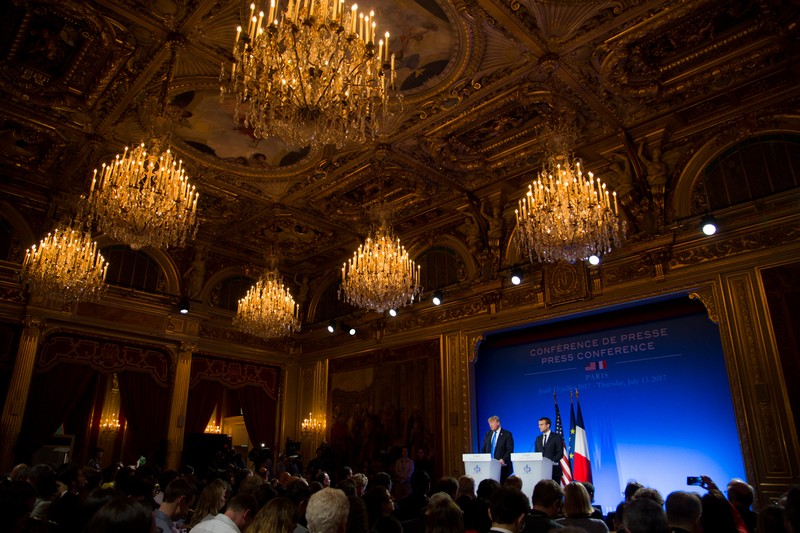
France blocked Israeli military aircraft carrying American weapons from its airspace this weekend, the first such refusal since the Iran war began a month ago — and the clearest signal yet that key NATO allies will not facilitate a conflict they consider illegitimate.
The decision, confirmed to Reuters by a Western diplomat and two sources familiar with the matter, forced Israeli planes transporting US munitions to reroute around French territory. Israel’s Defense Ministry responded on Tuesday by halting all defense procurement from France and cutting military engagement with Paris.
A European Drumbeat
France was not alone. Italy last week denied landing permission for US bombers heading to the Sigonella air base in Sicily, according to a report in Corriere della Sera confirmed by an Italian defence ministry source. An Italian defence ministry source framed it as procedural — Washington requested authorization only after the aircraft were already en route, leaving insufficient time for the parliamentary approval required under Italian law. Defence Minister Guido Crosetto denied any rift, saying U.S. airbases remained active but that Washington needed special permission for uses outside existing agreements.
Spain went further still. Madrid has fully closed its airspace to American planes involved in the Iran strikes. Defence Minister Margarita Robles told Spain’s congress on Tuesday that her country would only allow its NATO bases to be used for collective defense of alliance members. “Two countries went to war and expected us to join them,” she said. “We don’t accept lectures from anyone in regard to our commitment to peace.”
Germany, which hosts Ramstein — the largest US military base in Europe — has placed no formal restrictions on American operations. But President Frank-Walter Steinmeier said publicly that he believes the war is illegal, a striking statement from the head of state of a core NATO ally.
Trump’s Fury
President Donald Trump responded with characteristic force. He had called NATO allies “cowards” earlier this month. On Tuesday, he singled out France on Truth Social as “VERY UNHELPFUL” and told countries affected by oil shortages to “build up some delayed courage, go to the Strait, and just TAKE IT” — a reference to the Strait of Hormuz, which Iran has closed since the conflict began.
The closure was widely predicted as a near-certain consequence of any all-out assault on Tehran. Irish Taoiseach Micheál Martin called the resulting supply shock “probably the worst ever.” Average US gas prices have passed $4 a gallon for the first time in four years, according to The Guardian.
France’s Élysée Palace said it was “surprised” by Trump’s post, noting that Paris “has not changed its position since day one” of the war, which began on February 28.
What Geography Buys
France’s leverage is real, if constrained. French airspace sits directly between American logistics hubs and Israel. Cargo planes carrying munitions from the United States or European stockpiles would ordinarily transit French skies en route to Israeli airbases. Denying that corridor forces longer, costlier routes — and imposes a diplomatic price that Paris has decided is worth paying.
But the airspace denial did not emerge from a vacuum. Paris has spent months signaling its discomfort: restricting Israeli participation in the Paris Air Show, supporting a UN resolution calling for an arms embargo on Israel. Israel’s Defense Ministry Director-General Amir Baram called French actions at the air show “absolutely, bluntly antisemitic,” according to JNS.org. A Paris court struck down similar restrictions on Israeli firms at the Eurosatory 2024 defense show, ruling they violated principles of equality.
A Coalition Under Strain
One month into the Iran war, the western alliance is not divided on tactics. It is divided on whether the war should be happening at all. No NATO member has invoked Article 5. The alliance’s collective defense commitment — the bedrock of its existence — remains uninvolved in a conflict launched by its most powerful member.
Israel’s decision to sever French defense contracts is more symbolic than substantive. French arms sales to Israel are relatively small, according to Reuters, and it remains unclear whether the move will affect French troops serving with UN peacekeepers in Lebanon — where Israel has announced plans to permanently occupy territory up to the Litani River, according to Defence Minister Israel Katz.
The fracture is structural. The United States and Israel launched a war their allies were not consulted on, did not support, and are now actively obstructing. France’s airspace denial is not a diplomatic footnote. It is a sovereign state using its geography to slow a war it opposes. That is not how alliances are supposed to function.