 lop News
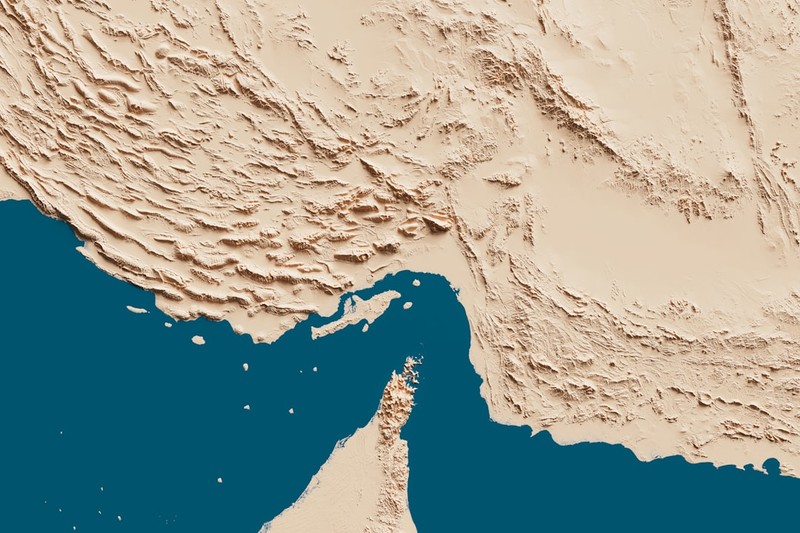
The ceasefire between the United States and Iran will survive past its Wednesday deadline — not because either side found common ground, but because Pakistan asked, and Donald Trump decided a fractured Iranian government needed more time to figure out what it wants.
In a Truth Social post on Tuesday, Trump announced he would extend the ceasefire, describing the Iranian government as “seriously fractured” and saying he agreed to hold off military operations at the request of Pakistan’s army chief Asim Munir and Prime Minister Shehbaz Sharif. The US naval blockade of Iranian ports will continue. American forces will “remain ready and able.” And the war that has killed at least 3,375 people in Iran, 23 in Israel, and more than 2,454 in Lebanon since February 28 will pause in the air while intensifying at sea.
A regime struggling to speak with one voice
Trump’s description of Iran’s government as “seriously fractured” may be the most revealing sentence in his post. Iranian state television broadcast an on-screen alert on Tuesday stating that “no delegation from Iran has visited Islamabad,” explicitly rebutting speculation that Tehran was preparing for a second round of talks. Foreign Ministry spokesman Esmail Baghaei told state TV there had been “no final decision” on attending further talks, citing “unacceptable actions” by the US — an apparent reference to the blockade.
Hardliners and pragmatists in Tehran appear to be pulling in different directions. Parliamentary speaker Mohammad Bagher Ghalibaf said Tehran was “prepared to reveal new cards on the battlefield” if fighting resumes. Revolutionary Guard aerospace chief General Majid Mousavi threatened to destroy the region’s oil industry if neighboring countries allowed the US to use their facilities for attacks. “If southern neighbors allow the enemy to use their facilities to attack Iran, they should say goodbye to oil production in the Middle East region,” he told an Iranian news site.
Meanwhile, Iran’s ambassador to the UN, Amir Saeid Iravani, struck a more diplomatic note, saying Tehran had “received some sign” that Washington might lift the blockade — a condition Iran has set for returning to negotiations.
The fractures run deeper than rhetoric. Iranian authorities have arrested more than 3,600 people on charges related to the war, ranging from sharing videos with overseas media to possessing Starlink internet terminals, according to the Norway-based group Iran Human Rights. At least 767 of those arrests came after the ceasefire began on April 8 — suggesting the domestic crackdown has intensified during the pause in fighting.
Pakistan’s improbable centrality
Pakistan’s role as mediator in the highest-level US-Iran negotiations since the 1979 Islamic Revolution marks an unlikely turn. Islamabad has no particular alliance with either Washington or Tehran, yet its officials — Foreign Minister Ishaq Dar, the army chief, and the prime minister — have spent days shuttling between the parties. Pakistan’s information minister, Attaullah Tarar, said the country was in “constant touch with the Iranians” but still awaited formal confirmation that Tehran would send a delegation.
The diplomatic choreography has been frantic. Security was tightened across Islamabad, with thousands of personnel deployed and patrols increased along airport routes. Dar met Tuesday with both the acting US ambassador and the Chinese ambassador — a telling pair of conversations, given Beijing’s role as Iran’s key trading partner and a co-sponsor of earlier peace initiatives.
Vice President JD Vance’s planned trip to Islamabad for a second round of talks was put on hold after Iran failed to respond to US negotiating positions, according to the New York Times. Trump’s special envoy Steve Witkoff and Jared Kushner were expected in Washington for consultations on how to proceed. A US official cautioned that Trump could change his mind on negotiations “at any time.”
A murky claim about Beijing
Tucked into the day’s developments was a peculiar allegation. In an interview with CNBC, Trump said Tehran had “probably done a little bit of restocking” and implied that Beijing had been helping Iran replenish ammunition. He separately appeared to suggest that American forces had intercepted what he called a “gift from China” destined for Tehran, according to the South China Morning Post.
No evidence was provided for the claim, and Beijing has denied involvement. But the suggestion alone adds another layer of volatility to an already combustible situation. On April 8, Trump threatened to impose a 50 percent tariff on any country supplying military weapons to Iran. The US Treasury Department on Tuesday announced new sanctions targeting 14 individuals and companies — based in Iran, Turkey, and the UAE — for helping Iran obtain weapons, including Shahed-series drones used against the United States and its allies, including regional energy infrastructure.
The blockade that doesn’t quite block
On paper, the US naval blockade is total. In practice, Iranian-linked vessels are still moving through and around it.
US forces boarded the M/T Tifani, a Botswana-flagged tanker, in the Indian Ocean on Tuesday. The Pentagon described it as a “stateless sanctioned” vessel and declared that “international waters are not a refuge for sanctioned vessels.” According to the energy intelligence firm Kpler, the Tifani had loaded approximately two million barrels of crude oil at Iran’s Kharg Island on April 5 and passed through the Strait of Hormuz on April 9 — four days before the US blockade began on April 13.
Ship-tracking data showed at least three vessels transiting the strait in the past 24 hours, including the Lian Star, a cargo ship with no known flag or ownership that sailed from an Iranian port, according to Reuters. That is a fraction of the roughly 140 vessels that passed through Hormuz daily before the war, when the waterway carried about 20 percent of the world’s oil and liquefied natural gas. But it is not zero.
Iran’s own grip on the strait has tightened again after a brief relaxation. On April 17, Foreign Minister Abbas Araghchi declared Hormuz fully open to commercial traffic, sending crude prices falling more than 10 percent, according to CNBC. Within hours, Iran re-imposed tighter controls, with reports of gunfire directed at tankers and vessels turning back. Brent crude was trading near $95 per barrel on Tuesday, up more than 30 percent from the day the war began.
A conflict transforming, not ending
The ceasefire extension does not signal de-escalation. It signals that both sides are repositioning.
Araghchi described the US blockade as “an act of war and thus a violation of the ceasefire.” A senior Iranian official separately accused Washington of “creating new obstacles every day instead of resolving the differences.” The US, for its part, seized an Iranian-flagged container ship, the Touska, on Sunday — an armed boarding that Iran’s military called an act of piracy. The weekend seizure is widely seen as a factor in Tehran’s reluctance to send a delegation to Islamabad.
The Lebanon front continues to complicate any path toward settlement. Hezbollah fired rockets and drones at Israeli forces in southern Lebanon on Tuesday for the first time since a 10-day truce took effect, citing “blatant and documented violations” by Israel. Israel struck back at the group’s rocket launchers. Historic direct talks between Israel and Lebanon are scheduled for Thursday in Washington, aimed at disarming Hezbollah and reaching a peace agreement — though Hezbollah has rejected the discussions entirely.
EU foreign policy chief Kaja Kallas warned that resumed fighting would come at “a very large cost for all” and called freedom of navigation “non-negotiable.” Germany’s foreign minister, Johann Wadephul, urged Iran to take up the offer of talks in Islamabad “for the sake of its own people.”
The bombs are not falling tonight. The war — fought through sanctions, blockades, maritime interceptions, proxy conflicts, and the slow strangulation of global energy supply — never really stopped.
Sources
- Trump says the US will extend its ceasefire with Iran at Pakistan’s request — Associated Press
- Iran war: Trump says US extending ceasefire to give Iran more time to negotiate — Deutsche Welle
- Trump extends Iran ceasefire, claims interception of ‘gift from China’ — South China Morning Post
- A timeline of how the Iran war shook oil prices — and what comes next — CNBC
- Trump says he will extend ceasefire with Iran, which was due to expire within hours — The Irish Times
- 2026 Iran war ceasefire — Wikipedia
Discussion (15)