 lop News
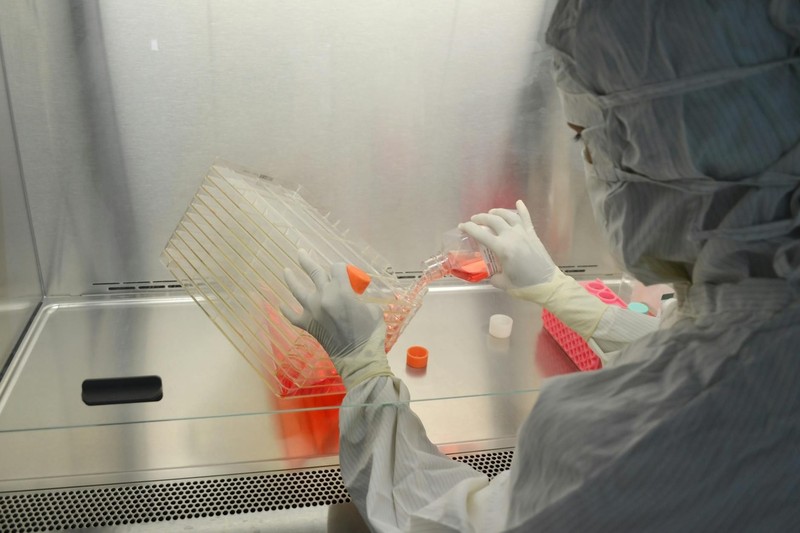
Fourteen months after a single infusion of engineered immune cells, a 47-year-old woman in Germany takes no medication and reports no symptoms of the three autoimmune diseases that once kept her bedridden for weeks.
She had spent more than a decade cycling through nine different treatments. None worked for long. By the time doctors at University Hospital Erlangen saw her, she needed daily blood transfusions to replace the red blood cells her own immune system was destroying. She could no longer work.
Then the team tried CAR-T cell therapy — a treatment originally developed for blood cancers, not autoimmune disease. The results, published April 9 in the journal Med, document what appears to be the first time CAR-T has driven three autoimmune diseases into remission simultaneously.
Rogue B cells, three fronts
The woman’s conditions — autoimmune hemolytic anemia, immune thrombocytopenia, and antiphospholipid syndrome — all traced back to the same source: B cells producing antibodies that attacked her own tissues. One disease destroyed her red blood cells, requiring transfusions of an average of one and as many as three bags a day. Another attacked platelets, raising the risk of uncontrolled bleeding. The third made her blood prone to dangerous clots.
Having all three simultaneously was vanishingly rare. Fabian Müller, a hematologist who led the Erlangen team, said it was the first time he had seen a patient with three such diseases. Carl June, the University of Pennsylvania immunologist who pioneered CAR-T for cancer, put it plainly: the combination “can kill you very rapidly.”
Engineering a search-and-destroy mission
CAR-T — chimeric antigen receptor T-cell therapy — extracts a patient’s T cells and reprograms them to hunt a specific molecular target. In this case, doctors engineered the cells to recognize CD19, a protein on the surface of B cells, then infused them back into the patient.
The response was immediate. Within a week, she no longer needed blood transfusions. By day 25, biomarkers indicated complete remission. “The treatment was extremely efficient in getting rid of all three autoimmune conditions at once,” Müller said.
Notably, the patient experienced none of the severe side effects — cytokine release syndrome and neurotoxicity — that have complicated CAR-T use in cancer.
An immune system that forgot to misbehave
After roughly 322 days, the patient’s B cells began to return. But they came back as “naive” cells, carrying no immune memory of the autoimmune attacks. The therapy appeared to have reset her immune system entirely. She was able to stop blood-thinning medication with no signs of new clots.
Prof. Ben Parker, a consultant rheumatologist at the University of Manchester who is running separate CAR-T trials for lupus, said the prolonged response off medication “suggests there has been an immune reset,” though how durable it will be remains unknown.
The frontier beyond cancer
The case adds momentum to a field moving fast. Multiple CAR-T trials for autoimmune conditions — lupus, multiple sclerosis, systemic sclerosis, vasculitis — are now recruiting or reporting early results. Miltenyi Biomedicine, which manufactured the therapy used in this case (zorpocabtagene-autoleucel, or zorpo-cel), is running phase 1/2 lupus trials. Kyverna Therapeutics plans to submit its own CAR-T candidate for FDA approval for stiff-person syndrome in the first half of this year.
Müller argues that CAR-T cells penetrate tissue more deeply and deplete B cells more thoroughly than competing approaches. “There is nothing that depletes [B cells] as deeply as CARs, period,” he told Fierce Biotech.
A single case study, though, is exactly that. The researchers emphasize that controlled clinical trials are needed to determine whether these results hold across larger populations and how long remission truly lasts. Some of the patient’s biomarkers remain slightly elevated, which the team attributes to years of prior treatments rather than the CAR-T therapy itself.
Still, the question Müller says he is watching is the one the entire field is waiting on: not whether the therapy worked, but whether one of the diseases comes back. Fourteen months in, the answer is not yet.
Sources
- One woman, three autoimmune diseases: CAR-T therapy vanquishes ultra-rare disease trio — Nature
- Woman with three deadly diseases has ‘remarkable’ recovery after cell therapy — The Guardian
- CAR-T drives 3 autoimmune diseases into remission at once — Fierce Biotech
- Woman With 3 Autoimmune Diseases Enters Remission After Immune Reset — ScienceAlert
Discussion (8)