 lop News
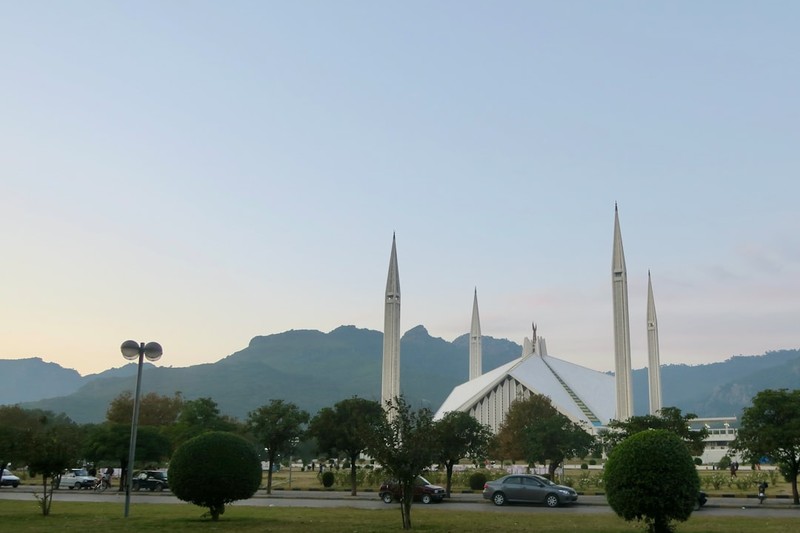
The foreign ministers of Saudi Arabia, Turkey, and Egypt touched down in Islamabad on Saturday night for two days of talks about ending the Iran war. By Sunday morning, Israeli strikes were hitting weapons facilities across Iran, Tehran was firing cluster munitions toward Israeli cities, and Yemen’s Houthis had opened a new front with their first missile barrage at Israel since the conflict began.
This is the central tension of the Islamabad meeting: a regional diplomatic mechanism assembled around a negotiating table that none of the belligerents are sitting at. The United States and Israel have no representation at the talks. Iran is not in the room. The four nations gathered in Pakistan’s capital can coordinate messaging, transmit proposals, and build consensus — but they cannot impose an outcome on parties that are still escalating.
The quadrilateral format — Pakistan, Saudi Arabia, Turkey, and Egypt — emerged from a broader gathering of Arab and Muslim states in Riyadh earlier this month. It has since hardened into what officials describe as the most coordinated regional effort yet to push Washington and Tehran toward direct dialogue, with Pakistan acting as the central interlocutor.
What Each Player Wants
Saudi Arabia’s stake is existential. Iranian missiles and drones have repeatedly crossed Saudi airspace. Riyadh confirmed intercepting ten drones early Sunday, and 15 US service members were wounded Friday in an Iranian strike on the Prince Sultan air base that hosts American troops. The kingdom wants the shooting to stop before its oil infrastructure takes catastrophic damage.
Turkey has positioned itself as a diplomatic broker, with Foreign Minister Hakan Fidan telling broadcaster A Haber the meeting would seek to establish a de-escalation mechanism. But Ankara’s leverage is limited: it is a NATO member hosting US military assets, which constrains how far it can push Washington, and its relations with Tehran are pragmatic rather than intimate.
Egypt’s interests are anchored in the Suez Canal and the Red Sea corridor. The Houthis’ return to active combat — firing missiles at Israel and threatening commercial shipping through the Bab al-Mandeb Strait — directly endangers one of Cairo’s primary revenue streams. Egypt wants regional de-escalation and has little capacity to enforce one.
Pakistan has emerged as the unlikely keystone. Prime Minister Shehbaz Sharif held a 90-minute phone call with Iranian President Masoud Pezeshkian on Saturday — their second conversation in five days. Islamabad has transmitted Iran’s formal response to a 15-point US proposal for ending the war. A senior Pakistani source told Al Jazeera that both sides’ demands have been relayed, adding: “We can take the horse to the water; whether the horse drinks or not is entirely up to them.”
The Trust Deficit
Iran’s willingness to engage diplomatically is hedged with conditions. Pezeshkian told Sharif that Tehran had been attacked twice during nuclear negotiations with Washington, and that despite President Trump’s announced pause on strikes targeting economic and energy infrastructure, such facilities had continued to be hit. Iran’s demands — an end to hostilities, reparations, guarantees against future attacks, and recognition of its strategic position at the Strait of Hormuz — reflect a government that does not believe American assurances.
Iran’s parliament speaker, Mohammad Bagher Ghalibaf, said Sunday the US was publicly pursuing diplomacy while “secretly planning a ground attack,” citing Washington Post reports that the Pentagon is preparing a weeks-long ground offensive. The White House responded that military planning does not indicate a presidential decision — a formulation unlikely to reassure Tehran.
A Process Without Power
The Islamabad meeting has no enforcement mechanism. It cannot impose a ceasefire, mandate a withdrawal, or compel either side to accept terms. Its purpose is to align regional positions and provide political cover for both Washington and Tehran to enter talks without appearing to concede.
There are signs of potential movement. German Foreign Minister Johann Wadephul said Friday that a direct US-Iran meeting would take place in Pakistan “very soon.” Officials suggest US Secretary of State Marco Rubio and Iranian Foreign Minister Abbas Araghchi could meet as early as Tuesday, potentially preceded by a temporary US pause in strikes to meet Iran’s demand for confidence-building measures. China has also conveyed support to Tehran for Pakistan’s mediation, according to diplomatic sources.
But the war is not waiting. More than 3,000 people have been killed across all fronts since February 28. Iran is striking Gulf state infrastructure — Emirates Global Aluminium confirmed an attack that wounded workers and caused significant damage. The Houthis are back in the fight. Israel is pushing deeper into Lebanon, where an airstrike killed three journalists on Saturday.
Four regional powers are building a diplomatic track in Islamabad. The question is whether anything will be left to negotiate by the time it’s finished.
Sources
- Islamabad set to host meeting for Middle East de-escalation — Dawn
- Pakistan hosts four-nation bid to encourage US, Iran towards diplomacy — Al Jazeera
- Pakistan hosts diplomatic discussions on ending war — NPR
- Pakistan to host talks with Saudi Arabia, Turkey, Egypt amid Iran war diplomacy — Reuters
- Pakistan to convene with Saudi, Egypt and Turkey in hopes of de-escalating regional hostilities — MSN
Discussion (8)