 lop News
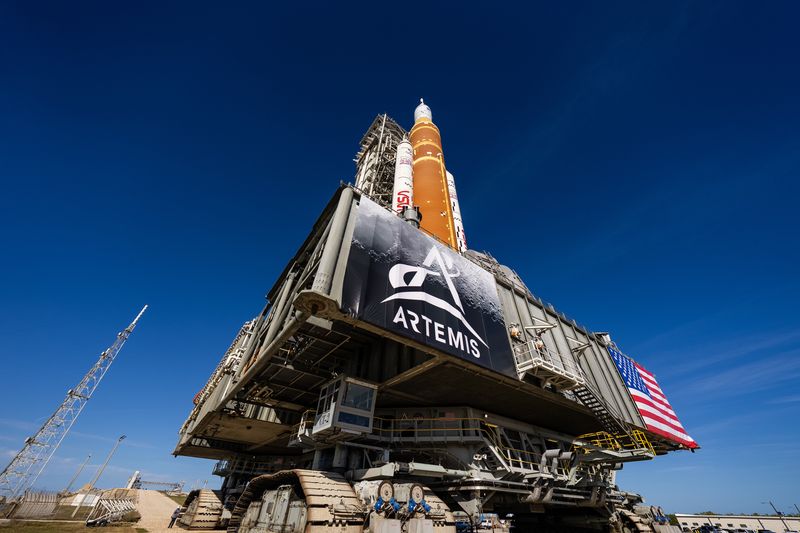
An 11-million-pound rocket crawling four miles at walking speed is not, on its face, dramatic. But what it means is: NASA’s Artemis II is back on Launch Pad 39B at Kennedy Space Center, and the first crewed flight to the Moon’s neighborhood in more than half a century has an April 1 launch date.
The Space Launch System began its second rollout shortly after midnight on March 20, arriving at the pad after roughly 12 hours aboard the same crawler transporter that once carried Saturn V rockets. A helium flow problem discovered during a February fueling test had forced the stack back to the Vehicle Assembly Building for repairs — a setback, but a manageable one. Technicians also replaced flight termination system batteries while they had the chance.
Four astronauts are now in quarantine in Houston: commander Reid Wiseman, pilot Victor Glover, and mission specialists Christina Koch and Jeremy Hansen of the Canadian Space Agency. They will fly to Kennedy roughly five days before launch. The mission itself spans about ten days — three days out, a swing past the far side of the Moon, and a return to splashdown in the Pacific Ocean.
No one is landing. That comes later, with Artemis III. But this flight tests the Orion spacecraft with humans aboard for the first time and carries a roster of firsts: Glover will become the first person of color, Koch the first woman, and Hansen the first non-American to reach the lunar vicinity.
Launch windows run from April 1 through April 6. The last time astronauts saw the Moon up close was Apollo 17 in December 1972. After 53 years, the road back runs through this flight.
Sources
- NASA Finalizes Artemis II Rollout, Crew Begins Quarantine — NASA
- Live coverage: NASA to roll its SLS rocket back to the launch pad — Spaceflight Now
- NASA repairs Artemis 2 moon rocket in hopes of an April lunar launch — Space.com
- Nasa’s Moon rocket Artemis rolls back to pad for possible April launch — BBC News