 lop News
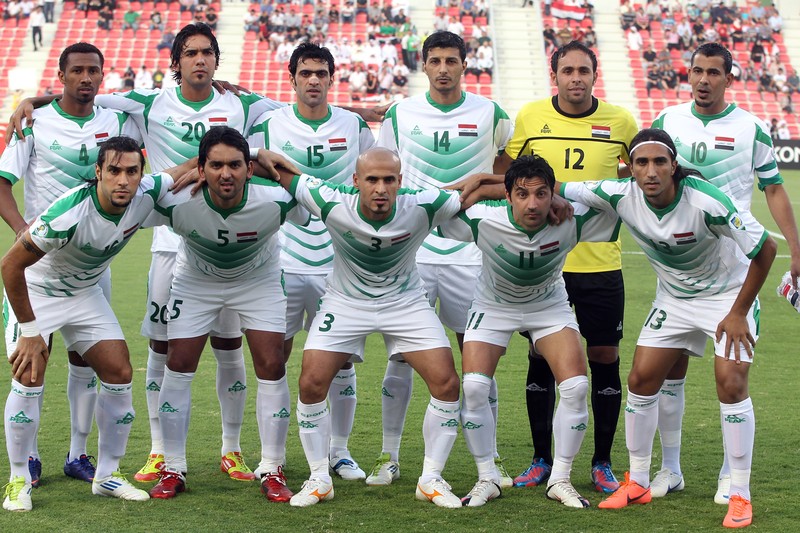
Graham Arnold was carried around the Monterrey Stadium on the shoulders of his players, an Iraqi flag draped over his back. Forty years is a long time to wait.
Iraq’s 2-1 victory over Bolivia on Tuesday sealed the last available place at the 2026 World Cup and ended a four-decade absence from football’s grandest stage — an absence that tracks almost exactly with the most punishing stretch in the nation’s modern history.
Ali Al-Hamadi, who plays his club football for Luton Town in England’s League One, headed Iraq ahead after ten minutes, meeting a pinpoint corner from Amir Al-Ammari. Bolivia, who had beaten Suriname in their semi-final five days earlier, gradually settled and deservedly levelled before the break through Moises Paniagua.
Eight minutes into the second half, substitute Marko Farji’s cross found captain Aymen Hussein, who reacted quickest and steered a first-time finish into the bottom corner. Bolivia pressed frantically through nine minutes of stoppage time. Iraq’s defence held firm.
The full-time whistle set off scenes of genuine abandon. Players and staff poured onto the pitch. Arnold — the Australian coach who guided the Socceroos to the knockout rounds at the 2022 World Cup in Qatar — was lifted onto the shoulders of his squad and chaired around the field, saluting the huge Iraqi contingent who had packed the stands.
“I am so happy that we’ve made 46 million people happy,” Arnold said, “and especially with what’s going on in the Middle East at the moment.”
What came between
Iraq’s only previous World Cup appearance was in 1986, also in Mexico. They lost all three group games. Since then: the Gulf War, more than a decade of international sanctions that devastated the civilian economy, the 2003 US-led invasion and its bloody aftermath, and the brutality of ISIS’s occupation of large parts of the country. A regional conflict — triggered by US-Israeli strikes on Iran in late February — is now raging next door.
Getting to Monterrey was its own ordeal. Arnold had initially sought to have the playoff postponed. Airspace over Iraq was closed. Most of the squad only reached Mexico after a gruelling three-day overland journey from Baghdad into Jordan, according to The Guardian. Arnold had been stuck in Dubai, scouting players, when hostilities broke out on February 28. His medical staff were stranded in Qatar. A training camp in Houston was scrapped, CNN reported.
None of it showed on the night. Iraq started brightly and finished the fresher of the two sides, defending those late corners with the composure of a team that had survived worse.
“I must congratulate the players who played with real Iraqi mentality, fighting and putting their bodies on the line and that’s why we won the game,” Arnold said.
Arnold’s second act
The achievement completes an unlikely arc. Arnold guided his native Australia to the knockout rounds of the last World Cup. Now he has delivered Iraq — the ninth Asian team to qualify — back to the tournament for the first time since before most of his squad was born.
Iraqi Prime Minister Mohammed Shia al-Sudani called qualification a milestone that fulfilled “the dream of our fans,” adding that it marked “an important turning point in the history of Iraqi sports,” according to Channel News Asia.
France, Norway, and Senegal await
Iraq will face France, Norway, and Senegal in Group I when the tournament begins on June 11 across the United States, Canada, and Mexico. It is a punishing draw for a team returning to the stage after four decades away.
Nobody outside the Iraqi camp will fancy their chances of escaping the group. Then again, nobody fancied their chances of reaching Monterrey at all — not with closed airspace, not with a three-day journey just to leave their own country, not with a coaching staff scattered across three nations.
Al-Hamadi was a toddler when his family left Iraq after the 2003 invasion. He grew up in Liverpool. On Tuesday night in Monterrey, he rose highest in the penalty area and headed in the goal that took his country back to the World Cup.
Sources
- Iraq qualify for World Cup with win over Bolivia — Channel News Asia
- Arnold carried in jubilant scenes after Iraq qualifies for World Cup — ABC Australia
- Iraq hold off Bolivia to claim final World Cup place — The Guardian
- ‘A lot of sleepless nights’: Why the war in Iran might cost Iraq a berth at the World Cup — CNN
Discussion (9)