 lop News
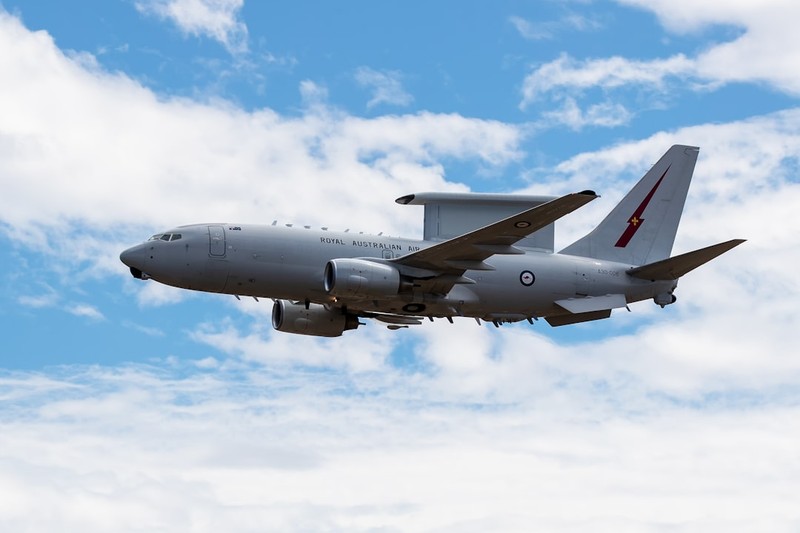
The crew of an Australian E-7 Wedgetail surveillance aircraft, orbiting somewhere over the Middle East, are doing something quietly extraordinary: flying alongside the world’s most powerful military and deciding, radar sweep by radar sweep, what their American allies are not allowed to know.
Admiral David Johnston, Australia’s chief of defence, confirmed on Thursday that personnel aboard the airborne early-warning aircraft are actively filtering intelligence to prevent it from feeding US offensive operations against Iran. Data about drones and other airborne threats is shared. Everything else is held back.
“The capabilities of the aircraft are such that it is the operators of that platform who determine what information leaves the platform,” Johnston told reporters at Russell defence headquarters in Canberra. “And we’re able to apply filters to it, draw judgments on the nature of what the aircraft is detecting through all the means, from radar to electronic systems, and then be very clear on what we are presenting out that is then picked up inside the air operation system.”
An intelligence wall inside the alliance
This is not a diplomatic demarche or a carefully worded policy statement. It is a real-time act of curation happening aboard a military aircraft, inside a shared command structure, by crew who have been told to distinguish between defending the United Arab Emirates and enabling strikes on Iran.
The distinction matters. Australia’s E-7 Wedgetail — which Prime Minister Anthony Albanese confirmed on Thursday would remain in the region beyond its initial four-week deployment — feeds its data into a Combined Air Operations Centre managed by the United States. Defence minister Richard Marles acknowledged as much: “The United States is part of the Combined Air Operations Centre. That’s where the data is going.”
The architecture of allied warfare means Australian intelligence inevitably enters a shared system. The filtering is Australia’s way of insisting, from inside that system, on a boundary.
A widening gap between Washington and its partners
That boundary has not impressed Washington. Donald Trump singled out Australia this week alongside Japan and South Korea as countries that “didn’t help us” in the Iran war. NATO allies received similar treatment. The criticism lands awkwardly for a government that has deployed 85 personnel, a state-of-the-art surveillance aircraft, and missiles to the UAE — but drawn the line at participating in offensive operations.
The gap between what Washington demands and what its partners will provide has become a defining feature of this conflict. Trump launched the war alongside Israel on 28 February without consulting the NATO alliance. Six weeks later, allies are willing to help defend Gulf states from Iranian retaliation but not to contribute to the campaign itself.
Johnston framed the question plainly when asked whether Australia could deploy a warship to help reopen the Strait of Hormuz, through which roughly one-fifth of global oil supplies normally flow.
“I am very confident we could deploy a ship into that environment if the government was to make a decision to do so,” he said. “But perhaps what is an at least as important question is: where do our priorities lie?”
He noted that the United States has shifted “enormous military capacity” into the Gulf, including assets drawn from the Indo-Pacific. For Canberra, that vacuum is the real strategic concern.
The Pine Gap shadow
The Wedgetail filtering also speaks to a deeper anxiety. The Joint Defence Facility at Pine Gap, the US-Australian intelligence base near Alice Springs, is almost certainly feeding into the US targeting chain for the Iran war. Richard Tanter, widely regarded as Australia’s leading academic authority on Pine Gap, has argued that the facility’s intelligence contributions make Australia complicit in offensive operations — a charge the government has not directly addressed, maintaining a long-standing policy of refusing to comment on Pine Gap’s operations.
The Wedgetail’s carefully curated data stream is, in part, an attempt to draw a line that Pine Gap’s architecture makes impossible. One is a deployed Australian asset with Australian crew making minute-by-minute decisions. The other is a joint facility on Australian soil where the distinction between defensive and offensive intelligence has never been meaningfully defined.
What the filtering signals
The E-7 Wedgetail crew are performing a task that has no recent precedent in the Five Eyes alliance. They are not simply withholding intelligence from an adversary. They are withholding it from their closest intelligence partner, in a combat zone, in real time — because the government that sent them there has decided that supporting a defensive mission and enabling an offensive one are different things.
Whether that distinction holds under the pressure of an escalating war is an open question. For now, the aircraft keeps flying. The filters stay on. And a line that once existed only in policy documents is being tested, every hour, by operators at radar consoles.
Sources
- Australian spy plane operators in Middle East not sharing intel with US for offensive operations, defence boss says — The Guardian
- ADF chief says surveillance data not contributing to war effort but warship could if asked — ABC News (Australia)
- Alice Springs residents conflicted over Pine Gap’s role in US strikes in Middle East — ABC News (Australia)
- Australia ‘did not help us’: Trump lashes out at NATO and Pacific allies for non-assistance — SBS News
- Australia to send missiles to UAE, deploy military surveillance aircraft — Reuters
Discussion (8)