 lop News
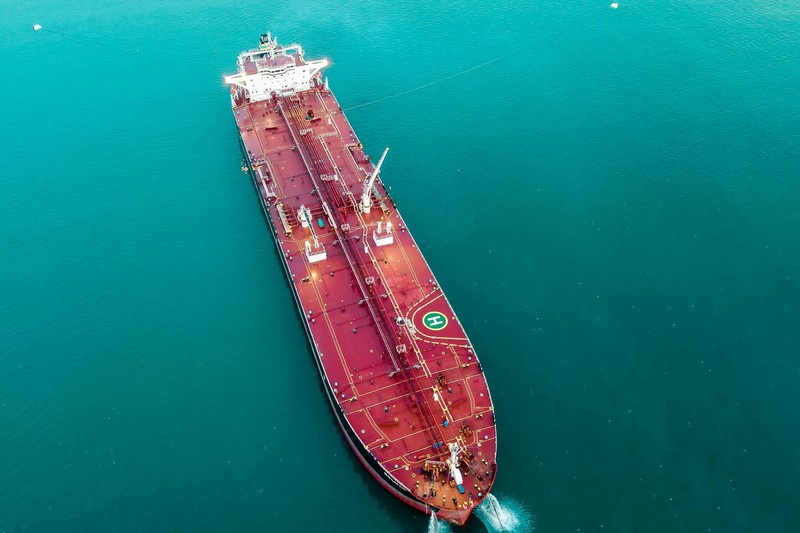
Two oil tankers — one Pakistani, one flying the Hong Kong flag — have passed through the Strait of Hormuz this week, testing a US naval blockade imposed just days ago. Their transits are cracks in a seal that has squeezed global energy markets for nearly seven weeks, since Iran first closed the waterway after American and Israeli airstrikes in late February. Bigger cracks may be coming: more than 40 nations are gathering in Paris on Friday to plan a coalition operation to force the strait back open.
The Pakistan-flagged Shalamar became the first tanker to exit the Persian Gulf through Hormuz since the US blockade began, the South China Morning Post reported. Within days, the Hong Kong-flagged AVA 6, an oil and chemical tanker owned by Standwill Shipping Ltd, followed — departing a United Arab Emirates port and transiting the strait between 4am and 2pm local time on Thursday, according to vessel-tracking data from MarineTraffic and the Chinese maritime information provider Mingkun Technology.
Both passages were exceptional. Since US and Israeli airstrikes against Iran began on 28 February, transits through the narrow waterway have mostly been in single digits. Shipowners must now clear both Iranian and American authorities to move goods out of the Persian Gulf. Roughly 20 percent of the world’s oil normally flows through Hormuz; the effective closure has sent oil and gas prices skyrocketing.
A coalition built for the aftermath
Leaders from more than 40 countries — including most NATO members, South Korea, Australia, and Japan — are meeting in Paris on Friday to finalize plans for a naval mission to restore freedom of navigation through Hormuz. The France- and UK-led coalition expects to announce a framework involving warships, armed escorts, intelligence assets, mine-clearing vessels, and radar capabilities, Euronews reported.
The Netherlands has already dispatched frigates and personnel to the region. Other European navies have repositioned vessels ahead of a potential deployment.
But the mandate comes with a crucial caveat: the mission will not activate until the fighting stops. French President Emmanuel Macron has described it as a “strictly defensive mission” that is “separate from the warring parties.” German Chancellor Friedrich Merz said any German participation would require “at the very least a provisional ceasefire” plus approval from Berlin and the parliament.
“We are still a long way from that,” Merz told reporters on Thursday.
The coalition is, by design, an operation that excludes the United States — not because Washington is unwelcome, but because it is a combatant. The mission is unlikely to be NATO-authorized, since the alliance’s most powerful member is a party to the war. A UN Security Council mandate would face likely veto. An expansion of the EU’s existing Aspides maritime mission is the more probable legal framework.
The war Europe didn’t start
The irony cuts deep. European leaders were blindsided by a conflict they had no hand in launching. NATO countries were initially adamant that the Iran war was not their responsibility — they had not been consulted before the US and Israel struck. Yet the conflict immediately threatened European energy supplies and shipping lanes, and now Europe is being pressed into organizing the maritime cleanup.
The pressure came directly from the White House. President Donald Trump delivered an ultimatum to NATO Secretary General Mark Rutte during his visit to Washington last week, demanding that allies produce a plan for securing Hormuz “within days.”
“It’s safe to say the secretary general had specific conclusions from his conversation with Trump,” a NATO source told Euronews. “There was real frustration from Trump, and it was made clear we needed to get into action.”
Yet Trump himself is absent from Friday’s Paris summit. Australian Prime Minister Anthony Albanese is joining the virtual meeting alongside Macron, UK Prime Minister Keir Starmer, and more than 30 other leaders. The country that launched the strikes and demanded the coalition is leaving the maritime planning to its allies.
A fragile ceasefire and a ticking clock
The current ceasefire is due to expire on 22 April. Indirect talks to extend it are ongoing. The White House feels “good about the prospects of a deal,” Press Secretary Karoline Leavitt told journalists on Wednesday.
An extended ceasefire would give the coalition its opening. But the gap between a ceasefire and a functioning Hormuz corridor is vast. The planned mine-clearing operations alone could require weeks of specialized work before commercial traffic can safely resume. The coalition is prepositioning assets to narrow that timeline.
The damage already done
Whatever emerges from the negotiating table, the global economy has absorbed a punishing blow. India — which sends roughly 15 percent of its exports and receives 20 percent of its imports through the Gulf, according to Commerce Ministry data — has seen freight rates surge from approximately $300 to $8,000 per container, according to Rushabh Shah of STIR Advisors, an Ahmedabad-based investment firm.
Indian spice exporters in Kerala face estimated losses of $90 million to $180 million over three months, according to Gulshan John, managing director of Nedspice. Ceramics kilns in Morbi are going idle. Buyers in the Gulf and Europe are already pivoting to suppliers in Vietnam, Turkey, and Bangladesh — a shift that may prove permanent.
Australia’s Prime Minister Albanese has reportedly sought to reassure the public about domestic fuel supplies, though the full impact on diesel and aviation fuel remains uncertain. Canberra is said to be negotiating with Asian partners to stabilise imports.
The risk of escalation
For all the planning, the coalition faces a strategic dilemma. A defensive, post-conflict escort mission sounds manageable. But Hormuz is a narrow waterway bounded by Iran, and the line between securing navigation and engaging a belligerent can dissolve in the time it takes a missile to cross 30 nautical miles.
Ed Arnold, a senior research fellow at the Royal United Services Institute, was blunt: “There’s always the possibility we’ll be drawn into a broader conflict. If you’re not prepared to join the war, then maybe don’t do the first part, because the Iranians will know that the Europeans are much of a deterrence force.”
The Shalamar and the AVA 6 show that passage is still possible, if narrowly so. Iran has allowed its own oil and that of allies like China and Turkey to continue moving. A handful of non-aligned vessels have slipped through by clearing both Tehran and Washington, or by exploiting gaps in enforcement.
But a few tankers do not constitute an open strait. The roughly 20 percent of global oil that normally transits Hormuz needs a corridor capable of handling dozens of ships daily — not a scattering of exceptional clearances. Building and sustaining that corridor is the job the coalition has accepted. Whether it can deliver without becoming the war’s next participant is the question hanging over every warship now steaming toward the Gulf.
Sources
- Pakistan oil tanker becomes first to exit through Hormuz since US blockade began — South China Morning Post
- Hong Kong-flagged oil tanker passes through Strait of Hormuz in test of US blockade — South China Morning Post
- Europe-led coalition prepares mission to reopen Strait of Hormuz — Euronews
- How the Hormuz Strait crisis is squeezing India’s SMEs — Deutsche Welle
- PM to join summit on reopening strait of Hormuz – as it happened — The Guardian
Discussion (15)