 lop News
610,000 dead in 2024. Three-quarters of them children under five in Africa. And until last week, the very youngest — newborns and infants weighing between two and five kilograms — had no malaria drug designed for them.
Doctors treated the smallest malaria patients with formulations calibrated for older children, adjusting doses by guesswork and hoping for the best. That gap closed on April 24, when the World Health Organization prequalified Coartem Baby, the first antimalarial developed specifically for infants. The decision does more than certify safety and efficacy. It unlocks the procurement pipelines that supply public health systems across malaria-endemic countries.
The numbers behind the gap
According to the WHO’s World Malaria Report 2025, there were an estimated 282 million malaria cases in 2024 — roughly nine million more than the previous year. Some 30 million babies are born annually in malaria-endemic regions of Africa. A large survey across West Africa found infection rates in infants under six months ranging from 3.4% to as high as 18.4%.
Yet data on malaria in the youngest infants remains remarkably thin. They are rarely included in clinical trials. For decades, a prevailing assumption held that babies retained immunity from their mothers during pregnancy and breastfeeding, making infection unlikely. Research has steadily dismantled that belief, but the pharmacological response lagged.
The result was a clinical gap that mattered. Infants weighing under 4.5 kilograms received formulations built for older children, increasing the risk of dosing errors, side effects, and toxicity. As Dr Emmanuel Aidoo, a pediatrician at Methodist Hospital in Ankaase, Ghana, put it: “As doctors we’ve tended to look for malaria in older children, but when newborn babies got sick nobody seemed to know what to do.”
What prequalification unlocks
WHO prequalification is less a scientific verdict than a logistical skeleton key. It certifies that a medicine meets international standards — and, critically, allows UN procurement agencies and national health ministries to purchase the drug in bulk for public-sector distribution.
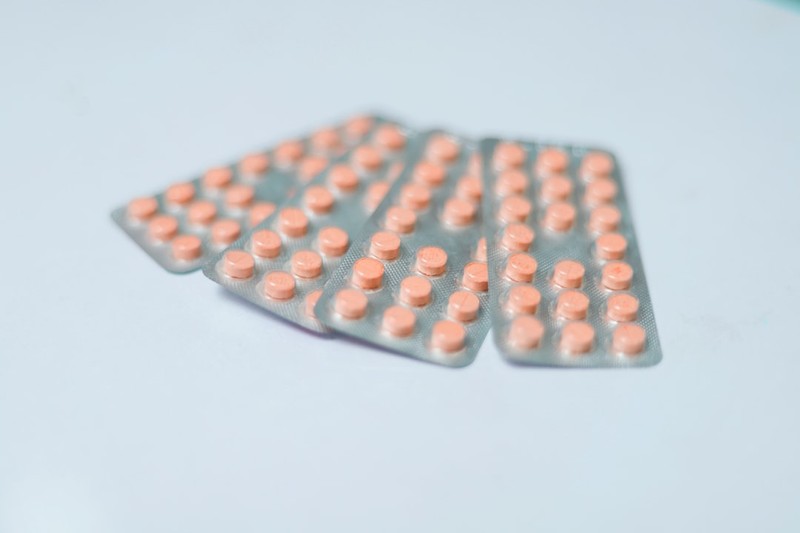
Coartem Baby, developed by Novartis in collaboration with the Medicines for Malaria Venture (MMV), pairs two established antimalarial compounds, artemether and lumefantrine, in a dispersible, cherry-flavored tablet designed to dissolve in liquid, including breast milk. It is calibrated for infants between two and five kilograms.
Novartis says it will make the treatment available on a “largely not-for-profit basis” in malaria-endemic regions. The company has delivered more than 1.1 billion treatment courses of its broader antimalarial Coartem since 1999, largely at no profit.
The trial that got it there
The CALINA trial, conducted between 2020 and 2024 across six African countries — Burkina Faso, the Democratic Republic of Congo, Kenya, Mali, Nigeria, and Zambia — found that Coartem Baby achieved therapeutic drug levels in the bloodstream comparable to those in older children, supporting effective parasite clearance. The trial was part of the PAMAfrica consortium, co-funded by the European & Developing Countries Clinical Trials Partnership and the Swedish International Development Cooperation Agency.
Swissmedic, Switzerland’s regulatory authority, granted market authorization for the formulation in July 2025.
The drug has already been introduced in Ghana. One early patient, an eight-month-old named Wonder, received Coartem Baby at 12 weeks old after arriving at hospital with a high fever and elevated malaria parasite levels. His mother, Naomi, said she was “very scared” because her son was born underweight. Wonder is now healthy.
A milestone in a stalling fight
Coartem Baby arrives at a precarious moment for malaria control. While 47 countries have been certified malaria-free and 25 are rolling out malaria vaccines, global progress has stalled. Drug resistance, insecticide resistance, diagnostic failures, and cuts to international development assistance are eroding gains that have still prevented an estimated 2.3 billion infections and saved 14 million lives since 2000.
Also in April, WHO prequalified three new rapid diagnostic tests addressing a separate problem: in parts of the Horn of Africa, parasite strains have lost the gene that the most common tests detect, causing up to 80% of cases to be missed. The new tests target a different parasite protein.
There is no single breakthrough that ends malaria. There is a long chain of unglamorous, carefully calibrated steps — a cherry-flavored tablet for a two-kilogram infant, a diagnostic test that catches what the old one missed, a procurement channel that opens years after the first clinical trial. Coartem Baby is one of those steps. Thirty million babies a year are the reason it matters.
Sources
- WHO prequalifies first-ever malaria treatment for newborns and infants, adds new diagnostic tests — World Health Organization
- Novartis malaria treatment Coartem Baby receives WHO prequalification, paving way for greater access for newborns and young infants — Novartis
- First malaria drug for babies is approved in ‘major public health milestone’ — The Guardian
- First malaria treatment for newborns and young infants receives WHO prequalification — Global Health EDCTP3
Discussion (10)