 lop News
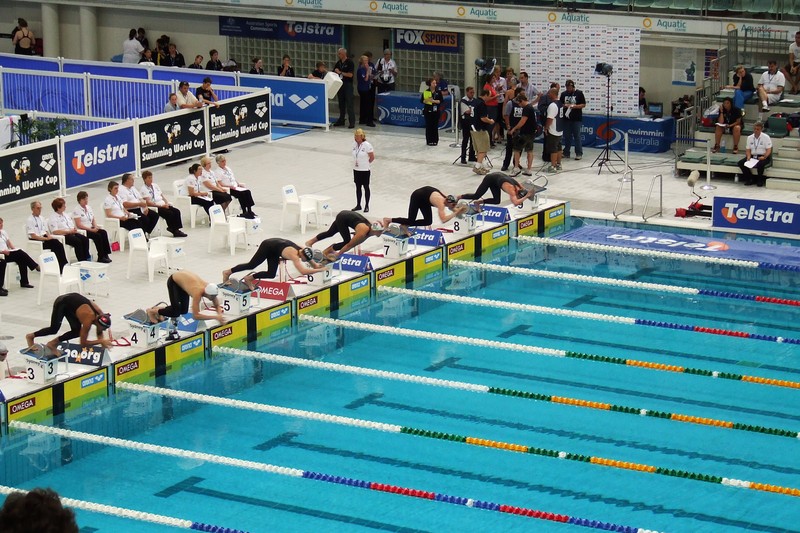
Ukraine’s water polo players were already in Malta when the decision landed. Scheduled to face a Russian team in a World Cup match on Monday, they refused to start. The 5-0 default loss was a protest — and a statement of fact. Ukraine’s athletes are still training under fire, and the governing body of world swimming has decided that Russian flags and anthems belong back in the pool.
World Aquatics announced Monday that Russian and Belarusian athletes will be permitted to compete without restrictions, wearing national uniforms, flying national flags, and hearing national anthems, for the first time since the 2022 invasion of Ukraine. It is the first major Olympic sport to fully lift its ban.
“A Wake-Up Call”
Ukraine’s Minister of Youth and Sports, Matvii Bidnyi, did not mince words. “Sport should unite around fair rules and respect for life,” he said. “Returning the flag to a country that disregards and systematically destroys these rules is a wake-up call for the entire sports community.”
Skeleton athlete Vladyslav Heraskevych, who was disqualified from competition after wearing a “helmet of remembrance” during training at the Winter Olympics, went further. “World Aquatics claims it can keep the conflict away from pools and competition venues,” he told the Guardian. “But of course, this does not apply to Ukrainian sports facilities and pools, which are constantly being struck by Russian missiles.”
Heraskskevych singled out swimmer Evgeny Rylov, who attended a pro-war rally at Moscow’s Luzhniki Stadium in 2022 wearing the militarist “Z” symbol on his chest. “World Aquatics is trying to act as though none of this exists,” he said, calling the decision “unacceptable and disgraceful.”
The Gradual Thaw
The shift wasn’t sudden. World Aquatics excluded Russia and Belarus entirely after the invasion, then permitted limited neutral participation in 2023, then eased rules for junior athletes. Monday’s decision completes the arc. The governing body says athletes will still need to pass four successive anti-doping tests and background checks before competing, though what those checks will examine was not immediately clear.
More than 700 screenings were conducted on Russian and Belarusian athletes under the previous neutral-status regime, according to World Aquatics. Russia and Belarus also resume full membership rights under the organization’s constitution.
First, but Not Alone
World Aquatics isn’t the first sports body to readmit Russia in full — judo did so last November and taekwondo in January. But swimming, diving, and water polo carry far more Olympic weight, and the decision sends an unmistakable signal two years out from the Los Angeles Games.
The IOC has kept its neutral-athlete requirements for senior competitions. At the Winter Olympics in February, Russians competed as “Individual Neutral Athletes.” But in December, the IOC recommended lifting restrictions for youth events and allowing national flags at those competitions. The International Paralympic Committee went further in March, permitting Russians to compete under their own flag and anthem.
The wall is coming down, brick by brick.
Pools as Politics
World Aquatics president Husain Al Musallam framed the decision in idealistic terms. “We are determined to ensure that pools and open water remain places where athletes from all nations can come together in peaceful competition,” he said in a statement.
Russia’s Sports Minister Mikhail Degtyaryov, who also heads the Russian Olympic Committee, thanked Al Musallam personally, revealing the two had discussed the matter in January. Dmitry Mazepin, head of the Russian Aquatics Federation, noted that Russia can now bid to host world and European events. “Competing as a neutral without the Russian anthem playing is an insult,” he said.
That a Kuwaiti sports administrator and a Russian Olympic Committee chief found common ground is not surprising. That they found it while Ukraine’s water polo team was refusing to share a pool with Russians is the part that should make everyone uncomfortable.
The IOC has not commented. But the LA organizing committee is watching, and the question now is not whether other sports will follow swimming’s lead, but how quickly.
Sports governance bodies deciding geopolitical questions was always going to be messy. What’s less convincing is the suggestion that calendar proximity to the 2028 Games had nothing to do with the timing.
Discussion (9)