 lop News
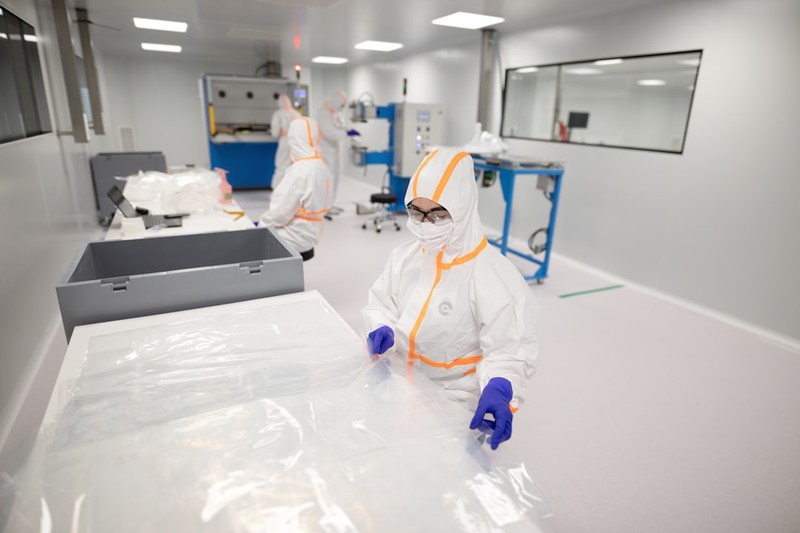
Hua Hong Semiconductor is not a household name. China’s second-largest contract chipmaker has spent years producing mature-node semiconductors—the workhorse chips that go into cars, consumer electronics, and industrial equipment. But Hua Hong recently crossed a line: developing 7-nanometer manufacturing technology, a capability previously held by only one Chinese foundry, SMIC. Now Washington has taken notice.
Last week, the Commerce Department ordered multiple chip equipment companies to halt certain tool shipments to two Hua Hong facilities that US officials believe could produce some of China’s most sophisticated chips, according to two people familiar with the matter. Letters went to at least a handful of companies—including Lam Research, Applied Materials, and KLA—restricting tools and materials destined for Fab 6 in Shanghai, which currently runs 28/22-nanometer technology, and a facility known as 8a, believed to be under construction.
A Systematic Campaign
This is not an isolated action. It is the latest move in a deliberate escalation targeting every tier of China’s chipmaking ambitions.
First came Huawei, placed on a US trade blacklist years ago. Then SMIC, China’s largest contract chipmaker, hit with restrictions after it began producing 7nm chips for Huawei’s Kirin processors. Now Hua Hong—until recently considered a second-tier player focused on mature nodes—has drawn the same treatment after Reuters reported in March that its foundry unit, Huali Microelectronics, was preparing a 7nm process.
The pattern is straightforward: each time a Chinese chipmaker approaches the technological frontier, Washington moves to cut off the foreign equipment needed to get there.
Huawei’s Hand
The restrictions carry added weight because of who else is involved. Huawei, already on the trade blacklist, has been collaborating with Hua Hong and plans to move part of its AI chip production from SMIC to Hua Hong, sources told Reuters. Huali’s 7nm development began last year with support from Huawei-backed SiCarrier. Initial production capacity of a few thousand 7nm wafers per month is targeted by the end of 2026.
The Commerce Department’s “is-informed” letters allow officials to bypass lengthy rule-writing and impose licensing requirements quickly on specific companies. The same mechanism was used in 2022 to restrict Nvidia and AMD from exporting top AI chips to China.
The Billions at Stake
The market reaction was swift. Shares of Lam Research closed down 3.1% on April 28, KLA fell 4.7%, and Applied Materials fell 5.8%.
The financial exposure is substantial. China accounted for 43% of Lam Research’s first-quarter fiscal 2026 revenue—$2.28 billion—though the company expects that share to fall below 30% this year, according to The Next Web. Applied Materials projects $600 million to $710 million in lost China revenue for fiscal 2026. US equipment suppliers could lose billions in aggregate, particularly those serving fabs under construction or being retooled for more advanced production.
ASML, the sole manufacturer of the most advanced lithography systems, faces separate pressure from the MATCH Act advancing through Congress, which would require the Netherlands and Japan to align export rules with the US within 150 days. China accounted for 33% of ASML’s 2025 revenue; the company already expected that to drop to roughly 20% in 2026.
China Pushes Back
Beijing has responded with its own restrictions. China mandated domestic chipmakers procure 50% of equipment from Chinese suppliers—a requirement threatening an estimated $18 billion in annual US equipment sales, according to The Next Web. The State Council published regulations on April 7 creating a supply chain security framework monitored by more than 15 government agencies.
Reported estimates suggest China’s semiconductor self-sufficiency rate has climbed from roughly 33% in 2024 to about 50% in 2025, with a target of 80% by 2030 embedded in the 15th Five-Year Plan. SMIC is working to double 7nm capacity this year and has entered 5nm pilot runs. But yield remains the bottleneck—SMIC’s advanced-node output is relatively low, and Tom’s Hardware has assessed that China remains roughly a decade behind despite hundreds of billions spent.
No Off-Ramp
The escalation comes at a delicate moment: President Trump is scheduled to meet President Xi Jinping in Beijing in May. Neither side appears to be looking for an exit.
Equipment controls are more effective than restricting finished chips because a lithography machine costs $200 million and requires years of manufacturer servicing, while a chip is a commodity that can be rerouted through intermediaries. That logic is sound. It also guarantees retaliation.
When both sides of a supply chain use restriction as a weapon, the chain fragments. And rebuilding separate ones is a cost everyone pays.
Sources
- Exclusive-US Orders Chip Equipment Companies to Halt Some Shipments to Hua Hong, China’s Second-Largest Chipmaker — Reuters
- Report: Hua Hong joins SMIC for 7nm manufacturing — Bits&Chips
- The US wants to cut off China’s chip equipment. China says the supply chain will break for everyone. — The Next Web
- Applied Materials Faces a Fresh China Overhang Just as Its AI Demand Story Strengthens — AlphaStreet
Discussion (8)