 lop News
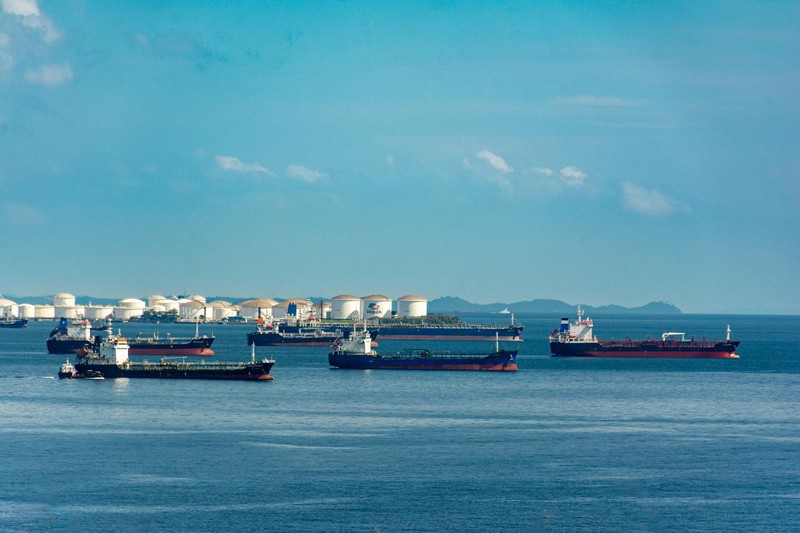
Two ships slipped through the Strait of Hormuz this week, and the way they did it tells you more about the blockade than any official statement.
The CMA CGM Kribi, a Malta-flagged container ship owned by French shipping giant CMA CGM, transited the strait on Thursday. The Sohar LNG, a Panamanian-flagged gas carrier co-owned by Japan’s Mitsui OSK Lines, crossed around the same time. According to ship-tracking data from MarineTraffic and LSEG, they are the first Western European-owned and Japanese-linked vessels to make the passage since the US-Israeli war with Iran began in late February — more than a month ago.
Neither company would explain how it secured safe passage. But the tracking data offers clues. The Kribi changed its Automatic Identification System destination to “Owner France” before entering Iranian waters — a clear signal to Iranian authorities about the vessel’s nationality. The ship then passed through Iranian territorial waters near Larak Island, a route that has become common for transiting vessels. Both the Kribi and the Sohar LNG appear to have switched off their AIS transponders during the crossing, their signals disappearing from tracking screens.
Three Omani-operated tankers also exited the Gulf on Thursday, according to MarineTraffic and LSEG data. A second Mitsui-owned vessel, the India-flagged LPG tanker Green Sanvi, followed on Friday, signalling its destination as “India ship India crew.” The Panama-flagged Danisa, a very large gas carrier heading to China, also made the passage.
A Blockade With Rules
Iran shut the Strait of Hormuz after US and Israeli airstrikes hit the country on February 28. Within weeks, roughly 200 vessels were stranded in surrounding waters, according to Lloyd’s List. The strait, which normally carries about a fifth of global oil and liquefied natural gas supplies, saw traffic drop by roughly 95 percent.
But Tehran never sealed it entirely. Iran later announced it would allow passage for “non-hostile vessels” — ships with no US or Israeli links. According to Lloyd’s List Intelligence, about 150 vessels have transited since March 1, most linked to Iran, China, India, and Pakistan. Beijing publicly expressed “gratitude” after three Chinese ships, including two from state-owned Cosco, passed through earlier this week.
The French and Japanese transits suggest the aperture may be widening — or that some companies are calculating that the risk is manageable if they signal the right nationality and hug Iranian territorial waters.
The Economic Stakes
Even a partial reopening matters enormously. Oil prices have skyrocketed since the blockade began. Fuel costs have surged worldwide, and inflation fears are mounting. Roughly a third of global trade in raw materials for fertiliser normally passes through Hormuz, and the UN is now considering a humanitarian shipping corridor to ensure fertiliser shipments reach poorer countries before food shortages take hold.
About 45 ships owned or operated by Japanese companies remain stranded in the region, according to Japan’s transport ministry. The broader backlog — container ships, tankers, gas carriers — represents billions of dollars in delayed cargo and disrupted supply chains.
International leaders are expected to meet next week to discuss clearing sea mines and rescuing trapped ships.
Diplomacy or Gamble?
The transits come at a moment of competing diplomatic signals. French President Emmanuel Macron said Thursday that a military operation to open the strait would be unrealistic and that only diplomatic efforts could work. He has been building a coalition of European and other allies to guarantee free passage once hostilities cease.
US President Donald Trump offered a characteristically different vision. “With a little more time, we can easily OPEN THE HORMUZ STRAIT, TAKE THE OIL, & MAKE A FORTUNE,” he wrote on Truth Social. “IT WOULD BE A ‘GUSHER’ FOR THE WORLD???”
Meanwhile, Iran’s former foreign minister Mohammad Javad Zarif, writing in Foreign Affairs, argued that Tehran should offer to curb its nuclear programme and reopen Hormuz in exchange for sanctions relief — a deal he said would let Tehran “declare victory and make a deal that both ends this conflict and prevents the next one.”
Whether this week’s transits represent a deliberate Iranian easing, a diplomatic opening, or simply companies willing to bet their ships on Tehran’s goodwill remains unclear. Iran has announced no policy change. No government has claimed credit for negotiating the passages.
But two ships made it through. Sometimes that’s how blockades end — not with an announcement, but with a vessel that changes its destination to “Owner France” and sails on.
Sources
- French-owned ship passes through Strait of Hormuz — BBC News
- Japanese, French and Omani vessels cross the Strait of Hormuz — Reuters
- Several vessels, including French container ship, pass through strait of Hormuz — The Guardian
- Omani, French and Japanese vessels transit the Strait of Hormuz — Al Jazeera
Discussion (9)